Neil Olson - The Icon
Здесь есть возможность читать онлайн «Neil Olson - The Icon» весь текст электронной книги совершенно бесплатно (целиком полную версию без сокращений). В некоторых случаях можно слушать аудио, скачать через торрент в формате fb2 и присутствует краткое содержание. Жанр: Триллер, на английском языке. Описание произведения, (предисловие) а так же отзывы посетителей доступны на портале библиотеки ЛибКат.
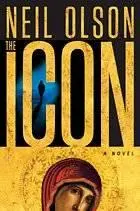
- Название:The Icon
- Автор:
- Жанр:
- Год:неизвестен
- ISBN:нет данных
- Рейтинг книги:5 / 5. Голосов: 1
-
Избранное:Добавить в избранное
- Отзывы:
-
Ваша оценка:
The Icon: краткое содержание, описание и аннотация
Предлагаем к чтению аннотацию, описание, краткое содержание или предисловие (зависит от того, что написал сам автор книги «The Icon»). Если вы не нашли необходимую информацию о книге — напишите в комментариях, мы постараемся отыскать её.
Literary agent Olson (of the Donadio Olson Literary Agency) moves to the other side of the desk with this gripping, intelligent first novel of art thievery, treachery and revenge. It's 1944, and a group of Greek partisans are hiding from the Germans near the village of Katarini. Their leader has put into play a scheme involving a German officer who wants to trade a cache of weapons that will be used to fight the Communists after the war for a painted icon known as the Holy Mother of Katarini. The plan goes awry, and the ancient Byzantine icon disappears, only to resurface 56 years later on the wall of a private chapel in the New York City home of a Swiss banker named Kessler. After Kessler dies, various parties-the Greek Orthodox Church, the Metropolitan Museum of Art, an elderly Greek gangster and other mysterious characters-vie to acquire the icon, which is said to posses paranormal powers. Kessler's granddaughter Ana and young Matthew Spear, an assistant curator at the Met, are swept up in the tangled plots to buy or steal the icon. The story twists back and forth between wartime Greece and the present day as the history of the icon and the men who lust for it is gradually revealed. Only the violent and inevitable end brings understanding and a measure of peace to those under the icon's spell.
From Booklist
In this debut thriller, the fast-paced action moves between a Greek village during World War II and the contemporary art scene in New York. There is also-no doubt with the popularity of The Da Vinci Code in mind-a patina of religious wonder shrouding the story. Two elderly friends/rivals, who fought both Communists and Nazis in Greece, are related by blood, broken dreams, and their quest to track down a religious icon, a Byzantine panel of the Virgin Mary reputed to have mystical healing powers. The grandson of one and the godson of another, Matthew Spear, is an art historian at the Met, and when the icon surfaces after the death of a collector, Matthew finds himself caught up in its deadly wake. Although both plot strands are nicely developed, it sometimes takes so long to get back to the World War II story that readers may forget who's who. Yet the evolution of the characters holds our attention, the action is gripping, and the quest for the ever-illusive icon provides just the right gossamer string to tie it all together.
The Icon — читать онлайн бесплатно полную книгу (весь текст) целиком
Ниже представлен текст книги, разбитый по страницам. Система сохранения места последней прочитанной страницы, позволяет с удобством читать онлайн бесплатно книгу «The Icon», без необходимости каждый раз заново искать на чём Вы остановились. Поставьте закладку, и сможете в любой момент перейти на страницу, на которой закончили чтение.
Интервал:
Закладка:
“I am sorry, Matthew. I am retired. My nephews do favors for me sometimes, but I do not want them getting near your godfather. He is too unpredictable.”
“Then I guess I’m on my own.”
“Will you attempt to see him again?”
“We’re supposed to meet tomorrow night. The Easter services at Saint Demetrios.”
“Is he well enough?”
“If he decides he is, not much will stop him.”
“Of course. And you will try to learn more of his plans.”
Matthew massaged his temples with both hands.
“‘Try’ is the word. I pushed him pretty hard yesterday. Dredged up some stuff from the war, but nothing about what he’s up to now.”
“I think it unlikely he will tell you anything useful.”
“I’ll just have to stay nearby, look for him to make a mistake.”
“You hope to catch him receiving the icon.”
“That would be convenient.”
“Why do you believe it will come at all? He does not live here. The chance of discovery and seizure is great. There is no logic to it.”
“You’re probably right, I don’t know that it’s coming. But the longer he stays, the more I think it must be for some reason.”
“He is ill.”
“Yes, but I wonder if that alone would stop him if he needed to be elsewhere. If the icon is in the possession of others in New York, even if they’re in business with him, he’s taking a big chance by being away for a week. They may get ideas. He’s not that trusting.”
“And what do you think he means to do with it?”
“Do with it?” Plastiris was younger than Andreas, Matthew figured, and measurably younger than Fotis. The story of the Holy Mother and what had happened during the war-to the extent that anyone really knew the true story-was an open secret in the Greek intelligence community, at least according to his grandfather. But it was a very old story now. Could it be that Sotir did not understand the icon’s power? “I think he means to keep it.”
“That’s a lot of trouble, and a lot of expense he has gone to, just to keep it. Are you sure he doesn’t intend to sell it?”
“He would never sell it.”
“I am sorry, I know that he is your godfather, but I have always understood that Dragoumis would sell his own mother if he saw the profit in it.”
“Not this. There’s no price high enough. He believes in the icon’s power.”
“Yet he was willing to trade it once.”
“I think,” Matthew said carefully, recalling the shame that still attached itself to his grandfather over the incident, “had it been left to Fotis alone, he would not have gone through with it. I think he always meant to keep it.”
“Yes,” Plastiris said wistfully, and then again with sudden anger, “yes. It was up to your Papou to do the dirty work, and take the blame. You would think, with all the terrible things that happened later, the civil war and the communists, you know the history?” Matthew nodded, and Sotir plowed on. “You would think everyone would have forgotten, but it’s not true. Friends, I call them friends, ohee, but men who know your Papou as well as any man could, who value his courage and intelligence, they still spit, you know, cross themselves, when this matter is mentioned. Many worked for the Germans. For profit, for safety, to sabotage the communists, that was allowed. But to turn over a religious treasure for guns was véveelos, how do you say, sacrilege. And Dragoumis, with his lies and his fatal interrogations, his friendship with the colonels, they never mention him. It was his idea, yes, but it was Captain Elias, and only Captain Elias, who handed over the icon. So that is it, your Papou will never live it down.”
Better a thief than a heretic, thought Matthew. Strangely, and despite his own distrust, it pleased him to hear someone defending his grandfather. Andreas’ stoicism, his refusal to explain, to defend himself, invited attack, but it wasn’t right. They were both quiet for a few moments.
“How does the German fit into this?” Sotir asked.
“The German?”
“Your Papou’s German, the SS officer, from the war.”
“Him, right. I don’t think he does. Fotis just used his ghost to distract Andreas away from what he was actually doing. Even hired an actor to play him, I guess.”
Plastiris shook his head and smiled grimly.
“He is a devil. So has Andreas given up on that, finally?”
“I don’t know. I never knew until recently what an obsession it was for him. Nobody ever spoke about it.”
“The trail was cold before you were born. He should forget it.”
“I still don’t have the whole story, but he says there are signs Müller is alive.”
“What signs?”
“Some aliases have shown up on passports going into or out of Bulgaria, Turkey, other places. Some have appeared as the names of buyers in dubious art deals.”
“He would be almost ninety.”
“Well, so is Fotis.”
“Ah,” Plastiris smiled, “but he is Greek. Germans don’t live so long.”
“Some of these Nazis have.”
“Yes. Sin would appear to be an excellent preserver of life. In which case, I expect to live forever.” They raised their glasses in a salute and finished the cognac. “Sleep well tonight, Matthew. The Resurrection service does not finish until after midnight, and you shall need your wits about you for dealing with Dragoumis.”
“Thanks for your help.”
“I have done nothing. I hope that you will call upon me if you require true help.”
“I’ll keep it in mind.”
“You have candles? For the service?”
“I’m sure there are a dozen places by my hotel to buy them.”
“No, no, I have a box here. Come. This, at least, I will do for you.”
16
Dark hair and eyes, olive skin, immaculately groomed and dressed in a black suit of Italian design. He would be handsome, thought Ana, if he were not so false and fawning in his manner. Across the gallery, he looked like a European movie star, but up close there was something about Emil Rosenthal that could only be described as sleazy.
“Ms. Kessler, I can’t tell you what a pleasure this is. We have many friends in common, and I’ve been meaning to ring you for ages. It was such a wonderful surprise to get your call.”
In fact, he had tried to reach her any number of ways, invitations to openings, messages passed through supposed mutual friends. Ana had acquired a reputation-unearned, she felt-for being a free spender. However, she bought contemporary work for the most part, and while Rosenthal had once dealt in modern, he had since inherited his father’s gallery, specializing in early European: medieval and Renaissance art and artifacts. It was her grandfather’s collection he was after, she was quite sure.
“Let me show you around. I know this stuff isn’t your first love, but it might intrigue you.”
The dark walls and soft lighting were comforting somehow, more like a museum than a gallery. There was little on display, so the tour was short. They looked at a fourteenth-century Spanish illuminated prayer book, moved on to a sixteenth-century Dutch portrait of a florid merchant, and finally moved to an older wooden sculpture of St. George on horseback, cracked, paint fading, but still glorious to behold with his golden armor and spear held high.
“From Syria,” said Rosenthal. “I already have two buyers lined up.”
“Two? How will they divide it? One gets the horse and the other the saint?”
The dealer laughed too loudly.
“No, no, I think that one will get both, certainly. Just a little healthy competition. Medieval art is still terribly undervalued. Sometimes we have to play little games. I have a bad habit of overpaying, so I have to make it up somehow. And of course, when I sell on commission, I owe it to my client to get the best price. We do very well for our clients here.”
Читать дальшеИнтервал:
Закладка:
Похожие книги на «The Icon»
Представляем Вашему вниманию похожие книги на «The Icon» списком для выбора. Мы отобрали схожую по названию и смыслу литературу в надежде предоставить читателям больше вариантов отыскать новые, интересные, ещё непрочитанные произведения.









Обсуждение, отзывы о книге «The Icon» и просто собственные мнения читателей. Оставьте ваши комментарии, напишите, что Вы думаете о произведении, его смысле или главных героях. Укажите что конкретно понравилось, а что нет, и почему Вы так считаете.