Stuart Woods - Santa Fe Dead
Здесь есть возможность читать онлайн «Stuart Woods - Santa Fe Dead» весь текст электронной книги совершенно бесплатно (целиком полную версию без сокращений). В некоторых случаях можно слушать аудио, скачать через торрент в формате fb2 и присутствует краткое содержание. Жанр: Триллер, на английском языке. Описание произведения, (предисловие) а так же отзывы посетителей доступны на портале библиотеки ЛибКат.
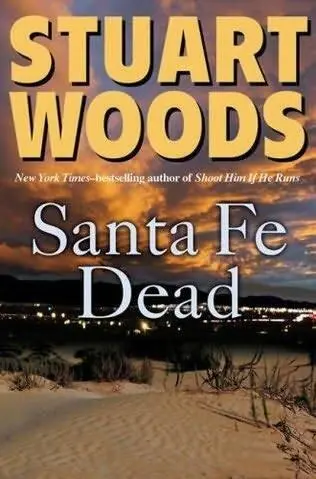
- Название:Santa Fe Dead
- Автор:
- Жанр:
- Год:неизвестен
- ISBN:нет данных
- Рейтинг книги:5 / 5. Голосов: 1
-
Избранное:Добавить в избранное
- Отзывы:
-
Ваша оценка:
Santa Fe Dead: краткое содержание, описание и аннотация
Предлагаем к чтению аннотацию, описание, краткое содержание или предисловие (зависит от того, что написал сам автор книги «Santa Fe Dead»). Если вы не нашли необходимую информацию о книге — напишите в комментариях, мы постараемся отыскать её.
From the posh resorts of southern California to the New Mexico desert and the seedy hotels of Tijuana, Ed Eagle will follow every lead – and hope that he doesn't wind up Santa Fe Dead.
Santa Fe Dead — читать онлайн бесплатно полную книгу (весь текст) целиком
Ниже представлен текст книги, разбитый по страницам. Система сохранения места последней прочитанной страницы, позволяет с удобством читать онлайн бесплатно книгу «Santa Fe Dead», без необходимости каждый раз заново искать на чём Вы остановились. Поставьте закладку, и сможете в любой момент перейти на страницу, на которой закончили чтение.
Интервал:
Закладка:
“How you doin’?”
“Pretty good. I hear we’ve been cleared on that thing.”
“Yeah? That’s great news. How do you know?”
“Let’s don’t talk about it on the phone. Are you working late?”
“Yeah, I’ve got a ring job on a ’38 Ford, and I need to finish it tonight. I should be done by ten, ten thirty.”
“When you finish, come over to the stable. I’ll tell you what’s going on. There’s going to be more money, too.”
“See you around ten.”
Jack got his pry bar and went out to the privy behind the barn. He got the floor up, brushed back the dirt and opened the safe. He removed all the money and put it into a small, plastic trash bag, then locked the safe, rearranged the dirt and hammered down the floorboards.
He returned to the stable and went through his desk drawers to see if there was anything he wanted to keep. He stuffed a few things into the trash bag, then he typed out a letter of resignation, saying he had gotten a better job offer and was leaving Centurion immediately.
He got into his truck and left by the main gate, taking particular care that the guard recognized him. He drove around the studio property to the back-lot gate and let himself in with his key, then returned and parked the truck in the stable, out of sight.
He put on a pair of thin driving gloves and typed two letters. He put one into an envelope but didn’t seal it, then put it into his inside coat pocket. He put the other letter, the money from the privy and the small tape recorder in a lockbox welded to the underside of his truck, then he wiped the typewriter clean of any of his old fingerprints that might remain.
Around ten o’clock, Grif Edwards showed up. “Hey, Jack,” he said.
“C’mere a second and try out this typewriter.” He handed Grif a sheet of paper.
Grif put the paper into the machine and typed, Now is the time for all good men to come to the aid of their country. “Yeah,” he said, “it’s okay.”
“You want it? I’ll give it to you.”
“Thanks. I guess I can use it.” Edwards picked up the typewriter and put it into his car, then came back. “Why are you getting rid of it?”
“Because I’m moving to Mexico. You want to go with me?”
“Why are you moving down there?”
“Because Don Wells told me if I don’t, I’m going to end up in prison.”
“Holy shit! I thought you said we were in the clear.”
“I thought we were, until Don came by here after I called you and told me the cops were on to me. That means you, too.”
“Jesus, Jack, I thought our alibis were airtight.”
“Something broke along the way. I don’t know what.”
“So you’re going to Mexico?”
“Tomorrow after work. I’m gonna go home tonight and load up my truck. You want to go?”
Edwards shook his head. “I don’t know, Jack.”
“Well, you let me know tomorrow. In the meantime, I want to give you a present.”
“What’s that?”
“Come on, I’ll show you. You’re gonna like it.”
The two men got into Edwards’s car and drove over to the armory. Cato let them in and led Edwards to the little office, where he opened the steel gun cabinet. He picked up a Colt Officer’s.45, shoved a clip into it and racked the slide. He picked up a soft cloth on the desk, wiped the gun down, picked it up with the cloth and handed it to Edwards. “Remember this? You always liked it.”
“Oh, yeah, I used it in that cop thing we did, remember?”
“It’s yours, now. They’ll never have any idea where it went.”
Edwards hefted the gun in his hand and aimed it.
“Let me show you something about this weapon,” Cato said, taking it from him. Quickly, he held the gun, wrapped in the cloth, an inch from Edwards’s temple and pulled the trigger. Blood and brains sprayed on the wall behind him, and the force knocked him to the floor.
Cato picked up Edwards’s right hand and put some more of his prints on the weapon, and on the letter and envelope from his pocket, then he put the armory key into Edwards’s pocket. Still wearing his driving gloves, Cato took the typewriter from the backseat of Edwards’s car, then walked back to the stable, showered again and rolled his clothes into a tight wad. He put on clean clothes, collected the remaining stationery and envelopes in his desk drawer, then got into his truck and drove to the back-lot gate and let himself out, chaining it shut again.
He drove to Edwards’s house, found the key under the flowerpot and let himself in. He put the stationery into a drawer in Edwards’s desk, then set the typewriter on the desktop. He removed the envelope from his pocket and leaned it against the telephone on the desk.
He let himself out, then, on the way home, he ditched his blood-spattered clothes in a street trash basket.
47
ALEX REESE WAS sitting at his desk the following morning when the phone rang. “Alex Reese.”
“Detective Reese? This is Dr. Anthony DeMarco in Los Angeles, returning your call. I’m sorry I didn’t get back to you earlier, but I’ve had a busy week.”
“Thank you for calling, Dr. DeMarco. Do you own a Beech Bonanza?” He gave him the registration number.
“Yes, I do.”
“Have you recently flown your airplane to Santa Fe?”
“No, I haven’t, but I lease the airplane to the Compton Flying Club at Compton Airport, and one of their members may have rented it and flown it there. I’ll give you their number.”
Reese wrote down the number. “Thank you very much, Dr. DeMarco,” he said, then hung up and phoned the club.
“Compton Flying Club. This is Margie,” a woman’s voice said.
“Good morning. My name is Detective Alex Reese, from the Santa Fe, New Mexico, Police Department.”
“What can I do for you?”
Reese gave her the relevant dates. “Did you rent Dr. Anthony DeMarco’s Beech Bonanza to a member that weekend?”
“Hang on, let me check the log.” She came back. “Yes, we rented it to a member named Jack Cato.”
Reese’s heart leapt, then he had another thought. He gave her some earlier dates.
“Yes, we rented the Bonanza to Mr. Cato then, too.”
“Were you there when Mr. Cato took off?”
“Not the second time; he asked me to fuel the airplane and leave the key under the nose wheel. But the first weekend I was there when they left.”
“Someone was with him?”
“Yes, another man.”
“Do you know the other man’s name?”
“Jack called him Grif. I don’t know his last name.”
“Would you be kind enough to write me a letter to that effect?” Reese gave her his address, then hung up. He went immediately to the D.A.’s office.
Bob Martínez waved Reese to a chair. “What’s up?”
“You’re not going to believe this: Jack Cato and Grif Edwards killed Donna Wells and her son, and Cato fired the shot that struck Susannah Wilde.”
“They did both ?”
“Well, I think Cato worked alone on the Wilde thing, but Edwards was with him for the Wells murders. I have a witness that saw them take off together in the Bonanza from Compton Airport, in L.A. I don’t have a witness yet who saw them in Santa Fe, but I’ve got one at the airport who puts Cato in the Bonanza the second time. She made him from a movie he was in, one of Don Wells’s pictures.”
“This is fantastic work, Alex, but I don’t get the Susannah Wilde thing. What connection does Wells have with her?”
“Well, they’re both in the movie business; maybe they know each other that way. That’s going to take some more investigating.”
“Oh, another thing,” Martínez said. “There’s a break in the murder case of Donna’s first husband. Wells’s alibi for that occasion now has a crack in it.”
Читать дальшеИнтервал:
Закладка:
Похожие книги на «Santa Fe Dead»
Представляем Вашему вниманию похожие книги на «Santa Fe Dead» списком для выбора. Мы отобрали схожую по названию и смыслу литературу в надежде предоставить читателям больше вариантов отыскать новые, интересные, ещё непрочитанные произведения.
Обсуждение, отзывы о книге «Santa Fe Dead» и просто собственные мнения читателей. Оставьте ваши комментарии, напишите, что Вы думаете о произведении, его смысле или главных героях. Укажите что конкретно понравилось, а что нет, и почему Вы так считаете.