Stuart Woods - Santa Fe Dead
Здесь есть возможность читать онлайн «Stuart Woods - Santa Fe Dead» весь текст электронной книги совершенно бесплатно (целиком полную версию без сокращений). В некоторых случаях можно слушать аудио, скачать через торрент в формате fb2 и присутствует краткое содержание. Жанр: Триллер, на английском языке. Описание произведения, (предисловие) а так же отзывы посетителей доступны на портале библиотеки ЛибКат.
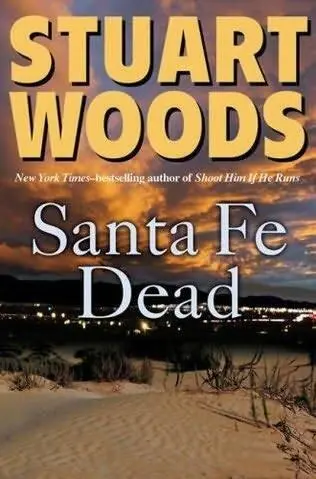
- Название:Santa Fe Dead
- Автор:
- Жанр:
- Год:неизвестен
- ISBN:нет данных
- Рейтинг книги:5 / 5. Голосов: 1
-
Избранное:Добавить в избранное
- Отзывы:
-
Ваша оценка:
Santa Fe Dead: краткое содержание, описание и аннотация
Предлагаем к чтению аннотацию, описание, краткое содержание или предисловие (зависит от того, что написал сам автор книги «Santa Fe Dead»). Если вы не нашли необходимую информацию о книге — напишите в комментариях, мы постараемся отыскать её.
From the posh resorts of southern California to the New Mexico desert and the seedy hotels of Tijuana, Ed Eagle will follow every lead – and hope that he doesn't wind up Santa Fe Dead.
Santa Fe Dead — читать онлайн бесплатно полную книгу (весь текст) целиком
Ниже представлен текст книги, разбитый по страницам. Система сохранения места последней прочитанной страницы, позволяет с удобством читать онлайн бесплатно книгу «Santa Fe Dead», без необходимости каждый раз заново искать на чём Вы остановились. Поставьте закладку, и сможете в любой момент перейти на страницу, на которой закончили чтение.
Интервал:
Закладка:
“The two houses he co-owned with his wife were bought entirely by her, but the deeds were recorded in both their names. This real estate co-ownership adds twenty million dollars to his net worth, as expressed on his financial statement. Apart from the houses, his net worth is under five million, and three million of that is expressed as accounts receivable from Centurion or his film distributors, and he has to perform to receive those funds, delivering scripts, mostly. Set those receivables aside and he’s worth less than two million bucks, not much for a supposedly successful film producer. His first benefit from his wife’s will is that her half of the real estate goes to him, nearly doubling his net worth. He does have a high income, though, from his company: an average of two and a half or three million a year.
“His wife’s will also leaves him five million dollars-more than enough for motive right there-but the fact that his wife and son died simultaneously leaves him in a much more favorable position, since her son was her principal heir. It’s only a guess right now- we’ll need to subpoena her financial records-but it looks like his inheritance could be in the region of half a billion dollars.”
“Wow,” Martínez said. “I’d certainly call that motive.”
“His alibi holds. I spoke to the manager of the Hassler Hotel in Rome, and he supports both Wells’s contention that he was in Rome when his wife died and that he received the phone call from his Santa Fe house when he said he did.”
“So, he would have had to hire somebody. Any candidates?”
“My best guess is somebody he worked with in the movies, either in L.A. or Santa Fe. He’s shot a couple of movies here. I’ve compiled a list of people who worked for him from the credits of his pictures. On the theory that anyone he knew well enough to ask to kill his wife would have worked for him more than once, I’ve come up with a list of thirty-one names of people who worked on two or more of his movies, and I’m running them through the New Mexico, California and federal databases for criminal records. I should have something by tomorrow that will give me the basis for interviews.”
“That’s good work, Alex. What if none of them pans out?”
“I’ll cross that bridge when I come to it.”
“Okay, let me know who in that list of thirty-one people looks good.”
“I’m likely to have to go to L.A. to question some of these people, so I’ll send you a travel authorization.”
“How long will you need there?”
“Probably no more than a week, but Wells isn’t going to be a flight risk. He’s going to sit tight and let the legal process work to get his wife’s will probated, which could take months.”
“Right. There’s something else I’d like you to look into, Alex.”
“What’s that?”
“Wells told us in his deposition that Mrs. Wells’s first husband was killed in a mugging in New York.”
“That’s right, he did.”
“I’d like to know if there’s any chance Wells had a hand in that. Call the NYPD and see if you can track down the detectives who investigated the killings and see if you can figure out where Wells was when it happened.”
“That’s a good idea, Bob; I’ll get on it.”
“Don’t talk to Wells about it just yet. If he was involved, I want him to think he skated on that one.”
“I won’t talk to Wells again until I’ve come to you first.”
“Good. I don’t want Ed Eagle to know how interested we are in his client, either.”
“Yeah, it’s interesting that when Wells got the kidnapping threat, he didn’t call the police but called a lawyer, instead.”
“Yeah, I find that very, very interesting.”
26
JOE WILEN, after a night of little sleep, arrived at his office and found a message from his contact at the state police. He returned the call.
“Good morning, Mr. Wilen,” the colonel said.
“Good morning, Colonel. Do you have any news for me?”
“Yes, the dental records you sent us match the teeth of the corpse carrying Walter Keeler’s driver’s license.”
“Would you send me the coroner’s report and a death certificate?”
“Of course, I’ll do it right away. My condolences on the loss of your friend. We’ll be releasing the names of the deceased today.”
“By the way, Colonel, did anything in the car survive the fire? Any papers or other contents of Walter’s pockets?”
“No, the fire consumed the car and its contents entirely. The only reason the driver’s license fragment survived was that Mr. Keeler was thrown clear of the car.”
“Thank you, Colonel, and thank you very much for your assistance in this matter. I wonder if I could ask your help on another matter?”
“Anything I can do, Mr. Wilen.”
“I’m going to fax you a letter concerning Mrs. Keeler. I’d be grateful if you could ascertain or refute the assertions made in the letter.”
“I’ll do what I can.”
“This must be held in the strictest confidence, Colonel, as you will see, and I’d like you to destroy the letter afterward.”
“As you wish.”
Wilen thanked him, faxed the letter, then called his secretary. “Margie, please get Lee Hight and the two of you come into my office.”
“Yes, sir.”
Lee Hight was the associate who had drafted Walter Keeler’s will, and Margie had proofed it on her computer. The two women knocked and entered Wilen’s office.
“Please sit down,” Wilen said. “Lee, Margie, I have some bad news: Walter Keeler was killed in an automobile accident on the way to San Francisco after our meeting here yesterday.”
The two women looked shocked.
“I’m very sorry, Joe,” Lee said.
“So am I, Mr. Wilen,” Margie echoed.
“I’ve asked you in here, because I have to make an important decision, and before I do, I want to get your opinion. First, I want to read you a letter from a Santa Fe attorney named Ed Eagle. Mr. Eagle gave me the letter a few days ago, when I was in Santa Fe, and asked me to deliver it to Walter. He did not tell me the contents of the letter, only that it concerned the woman Walter married last week. I assumed that the contents were unfavorable to her, because Eagle asked me to deliver the letter to Walter before he signed his will.
“I gave Walter the letter, but he declined to read it. He walked over to my shredder and fed the unopened letter into it. At that point I called the two of you and Helen Brock in here to witness the will. I haven’t asked Helen to join us. Lee, when you were drafting the document, did Helen see any of it?”
“No, Joe, she didn’t.”
“So only the three of us know the contents of the will.”
The two women nodded.
“Here is the letter from Ed Eagle.” Wilen read the entire letter to the two women.
The two women sat in stunned silence for a moment. “That’s appalling,” Lee said finally.
“Now, here’s my question to both of you. You were both well acquainted with Walter Keeler. Do you think that, if he had been in possession of this information about his wife, he would have signed his will in its present form?”
“No,” Margie said. “Of course not.”
“Not unless he was out of his mind,” Lee said.
“I knew him better than either of you, and I entirely agree. If I had known the contents of the letter from Eagle, I would have insisted that Walter read it before signing, but I didn’t. Eagle faxed me the letter yesterday, after I told him of Walter’s death.”
“Joe,” Lee said, “I want to remind you that Walter’s will, after all his other bequests, leaves his wife more than a billion dollars in liquid assets.”
“Thank you, Lee, but I don’t need reminding. Now, the three of us have to make a decision together, and it has to be a unanimous decision. I warn you now that what I am talking about here is nothing less than a criminal conspiracy, a felony punishable by years in prison. I am considering altering the terms of Walter’s will by replacing two pages of it with new pages which will accomplish two things: one, I will set up a trust that will pay Mrs. Keeler fifty thousand dollars a month for life, contingent on her noncriminal behavior, and give her possession for life, but not ownership, of the San Francisco apartment, which Walter paid seven million dollars for. Two, it will reduce to one dollar the inheritance of any beneficiary, including Mrs. Keeler, who contests the terms of the will or who complains about it to the press.
Читать дальшеИнтервал:
Закладка:
Похожие книги на «Santa Fe Dead»
Представляем Вашему вниманию похожие книги на «Santa Fe Dead» списком для выбора. Мы отобрали схожую по названию и смыслу литературу в надежде предоставить читателям больше вариантов отыскать новые, интересные, ещё непрочитанные произведения.

Обсуждение, отзывы о книге «Santa Fe Dead» и просто собственные мнения читателей. Оставьте ваши комментарии, напишите, что Вы думаете о произведении, его смысле или главных героях. Укажите что конкретно понравилось, а что нет, и почему Вы так считаете.