John Case - Ghost Dancer aka Dance of Death
Здесь есть возможность читать онлайн «John Case - Ghost Dancer aka Dance of Death» весь текст электронной книги совершенно бесплатно (целиком полную версию без сокращений). В некоторых случаях можно слушать аудио, скачать через торрент в формате fb2 и присутствует краткое содержание. Жанр: Триллер, на английском языке. Описание произведения, (предисловие) а так же отзывы посетителей доступны на портале библиотеки ЛибКат.
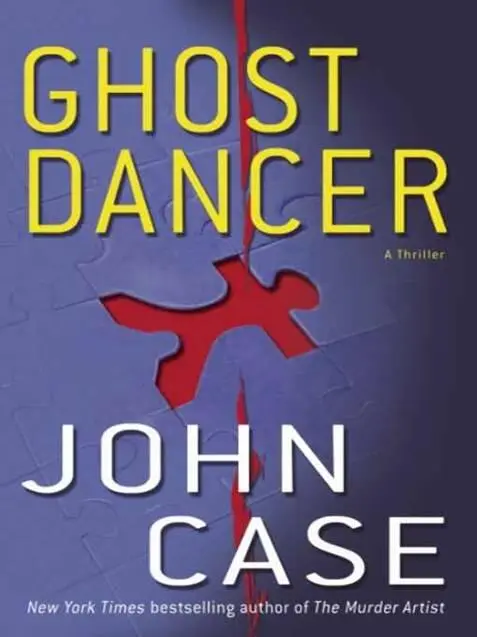
- Название:Ghost Dancer aka Dance of Death
- Автор:
- Жанр:
- Год:неизвестен
- ISBN:нет данных
- Рейтинг книги:4 / 5. Голосов: 1
-
Избранное:Добавить в избранное
- Отзывы:
-
Ваша оценка:
Ghost Dancer aka Dance of Death: краткое содержание, описание и аннотация
Предлагаем к чтению аннотацию, описание, краткое содержание или предисловие (зависит от того, что написал сам автор книги «Ghost Dancer aka Dance of Death»). Если вы не нашли необходимую информацию о книге — напишите в комментариях, мы постараемся отыскать её.
An ocean away, Jack Wilson leaves prison burning for revenge. Like Burke, Wilson has had something taken from him. And he, too, dreams of starting over. Only Wilson ’s dream is the rest of the world’s nightmare. Driven by his obsession with a Native American visionary, and guided by the secret notebooks of Nikola Tesla, the man who is said to have “invented the twentieth century,” Wilson dreams of the Apocalypse – and plans to make it happen.
As a terrifying worldwide chain reaction is set in motion, Burke alone grasps the impending horror of Wilson ’s malevolent plan. With nothing left to lose, Burke pursues an American terrorist – a twisted genius who journeys from a lawless weapons arsenal in the Transdneister to the diamond fields of the Congo… to an isolated Nevada ranch. It is here, in a climactic showdown, that a determined Mike Burke faces a nemesis who knows no fear.
Ghost Dancer aka Dance of Death — читать онлайн бесплатно полную книгу (весь текст) целиком
Ниже представлен текст книги, разбитый по страницам. Система сохранения места последней прочитанной страницы, позволяет с удобством читать онлайн бесплатно книгу «Ghost Dancer aka Dance of Death», без необходимости каждый раз заново искать на чём Вы остановились. Поставьте закладку, и сможете в любой момент перейти на страницу, на которой закончили чтение.
Интервал:
Закладка:
“There was a rope across the road,” Ibrahim told him. “They tie it to a tree.”
“So?”
“When cars come, they raise the rope. This means you’re supposed to stop.”
“ You didn’t stop,” Wilson said.
“I have an armored personnel carrier. Why the fuck would I stop?”
Belov chuckled. Ibrahim laughed.
“They call themselves ‘tax collectors,’” the commander said, his smile fading to black. “So I guess they think they’re the government. But I don’t think so. You ever see a tax collector sitting beside the road with a rope?”
Wilson shook his head.
“Well,” Ibrahim said, “I see it every day. And it pisses me off.”
They continued on their way for nearly an hour, until they arrived at a compound of prefabricated buildings, huddled together behind a concrete wall topped with razor wire and broken glass. Half a mile from the mining camp, the compound was Commander Ibrahim’s “executive offices and military headquarters.”
“You might as well get some sleep,” Ibrahim said, “while my friend and I go over the cargo. I’ll show you around this afternoon.”
This was fine with Wilson, who was tired from the long flight. Trailed by Zero and Khalid, he followed a bare-chested pygmy up a staircase to the building’s second floor, where half a dozen rooms were set aside for visitors. The rooms were simple but well kept. Wilson’s came with an air conditioner that sounded like a truck with a thrown rod. Even so, it brought the temperature down to the eighties, and wrung a steady stream of moisture from the air.
Wilson kicked his shoes off, and lay down on the bed. As tired as he was, sleep was hard to come by. He felt a mosquito land on the hairs of his arm and, opening his eyes, watched as it began to feed. When it seemed to Wilson that the bug was engorged, he closed his fingers into a fist, and tightened the muscles in his arm. The mosquito was trapped, its proboscis pinned beneath the skin. Wilson’s veins stood out in low relief. His arm trembled. The insect popped.
It was one of the games he’d played in Supermax.
He closed his eyes again, then just as quickly opened them when he heard a quarrel in the hallway outside his room. Getting to his feet, Wilson stepped into his shoes, went to the door, and pulled it open.
Zero and Khalid were arguing with a pygmy who, fierce and terrified, was threatening them with a knife. A Ugandan soldier came pounding up the stairs, yelling at everyone to “Knock it off!”
Wilson pulled his bodyguards away, while the soldier did his best to calm the pygmy.
“What’s going on?” Wilson asked.
The soldier looked up. “He says your friends insulted him.”
Khalid scoffed.
The soldier turned to Khalid. “You’re lucky he didn’t kill you.”
Khalid hefted his Heckler and Koch, as if to say, Not likely.
It was the soldier’s turn to scoff. “He would have filleted you.”
“Fuck that,” Wilson said. “What’s he talking about? How did they insult him?”
“He’s supposed to guard your room,” the soldier replied.
“So?”
“Your friends wouldn’t let him.”
“It’s our job,” Khalid insisted. “We sit outside – in a chair – with the H.K.’s. We take turns, you know?”
“So what’s the problem?” Wilson asked.
“He wants the chair. So he pulls a knife.”
The pygmy started to say something, but Wilson waved him off. “Tell him we’re sorry,” Wilson told the soldier. “Tell him he can guard my room.” As the soldier translated, Wilson turned to Khalid. “Why don’t you just get another chair?”
Khalid shrugged. “We could do that.”
“There’s one downstairs,” the soldier said.
Wilson nodded. “I’ll go with you.”
As they walked down the corridor, the soldier laughed. “Your boys are pretty good!” he said. “Or pretty dumb.”
“Why do you say that?” Wilson asked.
The soldier laughed again. “This pygmy, he’ll kill you in a heartbeat. Everybody knows that. So your boys took a big chance for you!”
As they went down the stairs to the main offices, a wave of laughter and shouting rolled toward them. The source of the noise turned out to be a clutch of boys, none of them more than thirteen years old, hovering over a laptop computer in an empty office. At first, Wilson thought they were playing a video game, but then he saw they were online and at a porn site.
The soldier screamed “Out! Get out!” and threw a head-fake at them. They ran.
Wilson turned to the soldier, who was laughing. “You have a satellite connection out here?”
The soldier nodded.
“All right if I use it?”
The soldier shrugged. “Sure,” he said, and went off in search of a chair.
Wilson sat down before the monitor, cracked his knuckles, and typed: www.yahoo.com.
He was hoping for news of Hakim.
Clicked on Check Mail. Clicked on Draft. The page appeared. And to his surprise, he found not one message, but two. I can’t find Hakim had yet to be deleted – which pissed him off. It was a small thing, but an irritating one. Now was not the time to get sloppy about security. God knows, the protocols were simple enough. Wilson checked the deletion box, and went on to the more recent message which, like its predecessor, was addressed to no one and had a Subject line that read “None.”
Found Hakim. No problem.
He was meeting with friends.
Wants you to get in touch.
Wilson stared at the message. He felt as if he’d been punched in the stomach. “Found Hakim”? The words – or more accurately, the number of words in the first sentence – pushed him back in his chair.
He tried to rationalize it. Maybe Bo had forgotten… But no. How do you forget a protocol as simple as theirs? You don’t. Which meant that Bobojon hadn’t written the message. Someone else had. Someone who knew enough about Bobojon’s e-mail to know that he was using Draft mode to communicate. But how could that be?
Wilson flashed back to the Marmara Queen, when the ship had been at anchor off Istanbul, waiting for the dock strike to end. Zero and Khalid had been watching television – some Arab channel – and someone was getting busted on camera. There was a man with a hood over his head. Men with guns. Wilson said: What’s this? And Khalid said: Malaysia. Not Berlin. Malaysia.
Wilson’s ass tightened. He thought hard. I can’t find Hakim. That was Bobojon, no question. Four words. And then this phony message about getting in touch. Who was that ? Wilson thought about it for all of about fifteen seconds, and began to put it together. There weren’t a lot of possibilities. I can’t find Hakim. Obviously, Hakim had gone missing, and Bobojon had worried about it. Now, Bobojon was missing, or if not missing, no longer in control of his own communications. So Hakim must have given him up. And now the police were looking for Wilson.
Or someone.
Did they know who he was? Did they know his name – where he was – what he was doing? Maybe.
Or maybe not. If Bobojon talked (and everyone talked if you tortured them enough), they would know everything. And that would be the end of it.
But they didn’t know everything. For example, they didn’t know about the protocol he and Bobojon had used, so maybe Bo had gotten away. Or maybe he’d been killed.
Hakim was a different story. To Hakim, Wilson was a sideshow – a guy named “Frank d’Anconia,” one of Bobojon’s projects. An American with crazy ideas. How much could Hakim actually tell them? How much did he actually know?
Well, Wilson thought, he knows everything about the hash, the guns, and the diamonds. He can tell them where I am and what I’m doing, and he can tell them where I’m going. He can tell them what I look like, but he can’t tell them who I am – not exactly. The most he could say was that I’d been in prison with Bobojon. But that could be a lot of guys. Bo had done a lot of time.
Читать дальшеИнтервал:
Закладка:
Похожие книги на «Ghost Dancer aka Dance of Death»
Представляем Вашему вниманию похожие книги на «Ghost Dancer aka Dance of Death» списком для выбора. Мы отобрали схожую по названию и смыслу литературу в надежде предоставить читателям больше вариантов отыскать новые, интересные, ещё непрочитанные произведения.


Обсуждение, отзывы о книге «Ghost Dancer aka Dance of Death» и просто собственные мнения читателей. Оставьте ваши комментарии, напишите, что Вы думаете о произведении, его смысле или главных героях. Укажите что конкретно понравилось, а что нет, и почему Вы так считаете.