Faye Kellerman - The Burnt House
Здесь есть возможность читать онлайн «Faye Kellerman - The Burnt House» — ознакомительный отрывок электронной книги совершенно бесплатно, а после прочтения отрывка купить полную версию. В некоторых случаях можно слушать аудио, скачать через торрент в формате fb2 и присутствует краткое содержание. Жанр: Триллер, на английском языке. Описание произведения, (предисловие) а так же отзывы посетителей доступны на портале библиотеки ЛибКат.
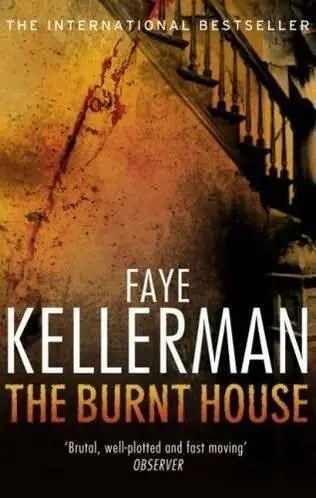
- Название:The Burnt House
- Автор:
- Жанр:
- Год:неизвестен
- ISBN:нет данных
- Рейтинг книги:4 / 5. Голосов: 1
-
Избранное:Добавить в избранное
- Отзывы:
-
Ваша оценка:
The Burnt House: краткое содержание, описание и аннотация
Предлагаем к чтению аннотацию, описание, краткое содержание или предисловие (зависит от того, что написал сам автор книги «The Burnt House»). Если вы не нашли необходимую информацию о книге — напишите в комментариях, мы постараемся отыскать её.
Decker and his wife, Rina, have personal reasons for being profoundly shaken by the tragedy, since the "accident" occurred frighteningly close to their daughter Hannah's school. Luckily, their child and her schoolmates escaped unscathed. But the fate of the unaccounted-for flight attendant-twenty-eight-year-old Roseanne Dresden-remains a question mark more than a month after the horrific event, when the young woman's irate stepfather calls, insisting that she was never onboard the doomed plane. Instead, he claims, she was most likely murdered by her abusive, unfaithful husband. But why, then, was Roseanne's name included on the passenger list?
Under intense pressure from the department to come up with answers, Decker launches an investigation that carries him down a path of tragic history, dangerous secrets, and deadly lies-and leads him to the corpse of a three-decades-missing murder victim. And as the jagged pieces slowly fall into place, a frightening picture begins to form: a mind-searing portrait of unimaginable evil that will challenge Decker's and Rina's own beliefs about guilt and innocence and justice.
The Burnt House — читать онлайн ознакомительный отрывок
Ниже представлен текст книги, разбитый по страницам. Система сохранения места последней прочитанной страницы, позволяет с удобством читать онлайн бесплатно книгу «The Burnt House», без необходимости каждый раз заново искать на чём Вы остановились. Поставьте закладку, и сможете в любой момент перейти на страницу, на которой закончили чтение.
Интервал:
Закладка:
PRISCILLA LED THEM up the grand staircase into a twenty-by-twenty square room: pink walls, pink carpet, pink ceiling, pink light fixtures, and pink furniture that included a desk and chair, and two love seats facing each other with a pink coffee table between them. The walls hosted a slew of framed vinyl records, three of them platinum, three of them gold, and a complete archival history-print and photographs-of Priscilla and the Major-with a big emphasis on Priscilla. There were hundreds of black-and-white snapshots: the duo with two presidents, with senators, governors, mayors, foreign dignitaries including royalty, and countless other celebrities. At least six major magazine covers, six covers of Sunday magazine inserts of all the major newspapers. Space not taken up by photographs was occupied by newspaper clips and reviews, everything framed in pink.
Marge felt her heart beat a little harder. The piece of nylon fabric that had been salvaged from the charred body had pink threads. She carefully looked over the room and even read a few articles. She was amazed that the duo had been that big. Oliver had told her that their music was a little corny, coming out in a time when political protest anthems were all the rage. Later, the folkies and acid bands had given way to sex-heated thump-a-minute disco and dance music, made even more frenetic by the frequent use of cocaine by the clubbers. Priscilla and the Major didn’t fall into that genre, either, yet they spanned the late sixties through the seventies and into the early eighties before they were done in by familiarity and age.
“Wow,” Marge said, “this is something else!”
“Why bother having the stalkers build me shrines when I can build my own?” Priscilla said.
“You have stalkers?”
“In my heyday, I had many, young lady. I had everything from fans that waited hours to buy Priscilla and the Major tickets to bodyguards and gigolos. I had the paparazzi and journalists hounding me all the time. I met the most important people of the decades, including several queens, a couple of kings, and a few presidents. And I thought it would never end.” A wry smile. “But it did.”
“This is amazing,” Marge said.
“It is a constant reminder that it is better to have made it and gone downhill than to have never made it at all. And there is quite a bit of recompense even when one fades into the woodwork. I still have money and I can shop without being mauled. I don’t live in my memories, but I sure as hell enjoy them. Whenever I feel blue, I come in here and feel very pink. Now sit down-both of you-and tell me why you’re here.”
Since Oliver was clearly on the woman’s A-list, Marge decided to let him handle the details. He rooted in his briefcase and came up with the colored pictures of the scanty forensic evidence they had gathered from charred Jane Doe. “This is really going to tax your memory.” He handed her the pictures. “We found this bit of fabric. We were wondering if you could possibly identify it.”
She scanned through the photographs very quickly. “What am I looking at?”
“We thought maybe you could tell us.”
“And why did you think I could help you?”
“Honestly, we were thinking that the fabric came from a rock band souvenir tour jacket.”
“One of my souvenir tour jackets?”
“You tell us,” Oliver answered.
“C’mon, handsome. My memory’s good but not that good!”
Oliver came over and picked out one of the snapshots. “See up here in the left-hand corner. We were thinking that this was part of the word major.”
“Yes, I see it…maybe.” She handed him back the photographs. “Why do you want to know?”
“We found an unidentified body, Ms. Barrett,” Marge said. “We’re trying to date the bones from this piece of cloth. If it was one of your souvenir pieces of clothing, we would have a starting point.”
“I couldn’t possibly tell you yes or no or even maybe,” Priscilla said.
Marge tried to hide her disappointment. “It’s important, Ms. Barrett. Maybe you could take another look?”
“I can’t help, but don’t look so down, Sergeant. I’ve got something to show you.”
THE ROOM NEXT door was identical in size and also pink.
No furniture.
Instead, the space was filled top to bottom, and right to left, with racks and shelving units stuffed with clothing and souvenir memorabilia, probably everything that had ever been sold by Priscilla and the Major. There were racks of sweatshirts, sweatpants, T-shirts, and jackets, along with cases of hats, scarves, flags, banners, pins, posters, and cases of vinyl records, eight-track tapes (that went way back, Scott thought), cassette tapes, and newer-cut CDs. Everything was done in shades of pink, the most prevalent hue being powder-puff.
The room was a paean to Priscilla’s compulsiveness, and a blessing for the detectives. Everything was sorted by item and by year. It was going to take a while to find the right piece of cloth, but with time it was a task that was doable.
Oliver said, “This is incredible!”
“I have clones in storage. I used to have even more until I donated about half of the clothing to victims of Katrina and the Phuket tsunami. My accountant and agent were happy with the decision. I got a big write-off and some free publicity.”
“How much time do we have to look?”
“Take as much time as you need, handsome. And if either of you see anything you’d like or you can use, help yourself.” She turned to Marge. “How about a sweatshirt?”
Marge didn’t want to seem impolite, but felt uncomfortable with freebies. “Sure.”
“Take my newest one. What are you? Medium?”
“Large.”
Priscilla fished out a sweatshirt and gave it to Marge. Oliver picked up a CD in the 1998 section. “I don’t think I’ve ever seen this.”
“It was my first foray into jazz. Gimme. I’ll autograph it for you.”
“That would be great! I really like jazz.”
She signed it and handed it over to him. “This was my first solo album in over a decade. It brought me out of retirement. It also got great reviews.”
Oliver noticed that it had been produced nine years ago. Good reviews but no doubt lousy sales. Marge was already comparing sweatshirts to the photographs that they had taken at the Crypt.
Priscilla said, “Let me see those pictures again, Sergeant.”
Marge looked up from a rack of clothing dated 1968. She gave her the snapshots along with a piece of paper with tour-city names that might correspond to the fabric’s abbreviated letters. “We were thinking it’s a tour jacket and these cities might have been on the tour.”
Priscilla looked at the list of the cities and then sorted through the photographs, this time studying them with a determined gaze. “Hmm…this narrows it down a little. We did play Galveston. Start at around 1973.”
SITTING AT HIS desk, Decker looked at the jacket from Priscilla and the Major’s America the Beautiful tour, comparing it to the forensic photographs taken off the piece of fabric. He specifically liked the way the configuration of cities had been handled, how the s in Galveston was over the p in Indianapolis, but was just slightly to the left of the p. If he had an overlay of the fabric-the next step-he was sure the letters would have lined up perfectly.
“So if we’re correct, the body is no older than 1974. But that doesn’t mean the murder was committed in 1974. Our victim could have been wearing the jacket long after the tour.”
Marge said, “It still shaves a couple of years off the front end. The building was put up in 1971. As far as the back end, I give it maybe five years to own a jacket like this.”
“Let’s get a list of all women in the area who went missing since 1974. Our next step is to find out which ones are still missing. Of those verified as still missing, first concentrate on the women who lived near the apartment or had a boyfriend, friend, or relative who lived near the apartment. It’s going to mean calling families and opening up wounds. Sorry, but it has to be done. Also, we need that list of all the tenants who have ever lived in the apartment. Did we do that yet?”
Читать дальшеИнтервал:
Закладка:
Похожие книги на «The Burnt House»
Представляем Вашему вниманию похожие книги на «The Burnt House» списком для выбора. Мы отобрали схожую по названию и смыслу литературу в надежде предоставить читателям больше вариантов отыскать новые, интересные, ещё непрочитанные произведения.




Обсуждение, отзывы о книге «The Burnt House» и просто собственные мнения читателей. Оставьте ваши комментарии, напишите, что Вы думаете о произведении, его смысле или главных героях. Укажите что конкретно понравилось, а что нет, и почему Вы так считаете.