Jonathan Kellerman - Time Bomb
Здесь есть возможность читать онлайн «Jonathan Kellerman - Time Bomb» весь текст электронной книги совершенно бесплатно (целиком полную версию без сокращений). В некоторых случаях можно слушать аудио, скачать через торрент в формате fb2 и присутствует краткое содержание. Жанр: Триллер, на английском языке. Описание произведения, (предисловие) а так же отзывы посетителей доступны на портале библиотеки ЛибКат.
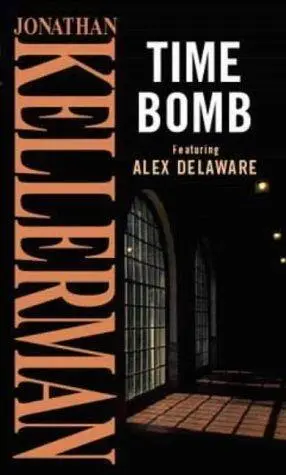
- Название:Time Bomb
- Автор:
- Жанр:
- Год:неизвестен
- ISBN:нет данных
- Рейтинг книги:3 / 5. Голосов: 1
-
Избранное:Добавить в избранное
- Отзывы:
-
Ваша оценка:
Time Bomb: краткое содержание, описание и аннотация
Предлагаем к чтению аннотацию, описание, краткое содержание или предисловие (зависит от того, что написал сам автор книги «Time Bomb»). Если вы не нашли необходимую информацию о книге — напишите в комментариях, мы постараемся отыскать её.
Time Bomb — читать онлайн бесплатно полную книгу (весь текст) целиком
Ниже представлен текст книги, разбитый по страницам. Система сохранения места последней прочитанной страницы, позволяет с удобством читать онлайн бесплатно книгу «Time Bomb», без необходимости каждый раз заново искать на чём Вы остановились. Поставьте закладку, и сможете в любой момент перейти на страницу, на которой закончили чтение.
Интервал:
Закладка:
“Milo asked me to look through Ike Novato’s books. I just came across something Ike wrote in one of the margins and thought you might be able to explain it to me.”
“What is it?”
“Wannsee Two. He wrote it in the margin of a chapter on the original Wannsee conference.”
“Wannsee Two,” she said, pronouncing it Vahn-say . “He never mentioned that to me. Strange that he should even know about that.”
“Whys that?”
“Wannsee Two’s pretty esoteric. Just a rumor, really, that circulated years ago- back in the seventies. Supposedly, there was a secret meeting between elements of the radical right and those of the radical left- white leftists who’d broken with the black militants and turned heavily racist. The alleged goal was to set up a national socialist confederation- plant the roots of a neo-Nazi party in this country.”
“Sounds like the Bund, reborn.”
“More like the Hitler-Stalin pact,” she said. “The extremes crushing the middle. We checked it out, never found any evidence it had happened. The prevailing wisdom is that it’s apocryphal- one of those urban folk myths, like alligators in the sewer system. But chances are this particular myth got a little special help. The rumor began circulating just around the time of Cointelpro- the counterintelligence program the Nixon administration set up to sabotage radical movements.”
“Where was this conference supposed to have taken place?”
“I’ve heard different versions, ranging from Germany to right here in the U.S. I’ve even heard claims that it took place on a military base- the confederation was supposed to have lots of members in the armed forces and in various police forces around the country. How’s that for something to feed your paranoia?” Pause. “Wannsee Two. This is the first I’ve heard of it in a very long time. I wonder how Ike knew about it.”
“His landlady was an old radical with an interest in the Holocaust,” I said. “The two of them used to talk politics. She may have told him about Wannsee Two and he may have decided to research it.”
“Well, given that, I can see why he’d pursue it. Blacks were a prime target of Wannsee Two. The way the story goes, one of the intentions of the confederation was to foment hatred between the minorities, Pit the blacks against the Jews- have the blacks kill the Jews, which would be easy because the Jews were passive wimps, ready to march into the ovens again. Once the blacks had served their purpose, they would be annihilated. Also a snap, because they were so gullible and stupid. And of course, when the cowardly Hispanics and Asians saw what was going on, they’d leave the country of their own accord- go back where they came from- and the borders of White America would be hermetically sealed.”
“Sounds pretty nuts.”
“So did Hitler, at the beginning. That’s why we investigated the Wannsee Two thing as thoroughly as we’ve ever investigated anything. But we never came up with anything to support it.”
I said, “There was something else in the margin. Crevolin. And a phone number. I called it and got the office of someone named Terry Crevolin, at one of the TV networks.”
“I know Terry!” she said. “He works in development- screening scripts. He worked with us last year on our war-criminal special- The Hidden. We won an Emmy.”
“I remember. Did Ike know him?”
“Not as far as I know, but I’m starting to see there were lots of things I didn’t know about Ike.”
“Could they have met at the Center?”
“No. Terry was just here a couple of times, for meetings. And that was last year, months before Ike showed up. Though I suppose there could have been a chance meeting if Terry dropped in without my knowing it. What exactly did Ike write in that book?”
“Wannsee Two?- the two in roman numerals- followed by the word Possible? Then Crevolin again? Maybe. And Crevolin’s number. It could mean he tried to talk to Crevolin once- about Wannsee Two- hadn’t been able to reach him, and was thinking of trying it again. Any idea why?”
“The only thing that comes to mind is that Terry used to be involved with the New Left- even wrote a book about it. I recall his mentioning that. He seemed kind of embarrassed and proud at the same time. I guess Ike could have seen him as a source, though how Ike would know that, I have no idea.”
“A source on the New Left?”
“Maybe. Certainly not on the Holocaust. Terry wasn’t especially knowledgeable about that until we educated him. You’ve really got my curiosity piqued. If you find out anything useful, please let me know.”
I called the network again and got patched through to Crevolin’s office. He was still out. This time I left my name and said it was about Ike Novato. Then I phoned Milo at the West L.A. station, planning to play Show and Tell. He wasn’t in either. I called his home number, got Rick’s recorded voice on a machine, and recited what I’d learned about Wannsee II. Saying it out loud made me realize it wasn’t much: a dead boy’s exploration of an urban myth.
I searched through the rest of Ike’s books, found no more marginal notes or Wannsee references, and repacked them. It was close to six by the third time I called the network. This time no one answered.
Crevolin again?
Instead of implying Ike had been unsuccessful in reaching the network man, it might mean they’d talked and Crevolin hadn’t given him what he wanted.
But why had Ike believed Crevolin would he helpful?
A New Left veteran. And author.
Perhaps Ike had gotten hold of Crevolin’s book and found something interesting.
I looked at my watch. An hour until I was supposed to pick up Linda.
I called a bookstore in Westwood Village. The clerk checked Books in Print and told me no book by anyone named Crevolin was current and the store had no record of ever having stocked it.
“Any idea where I might get hold of it?”
“What’s it about?”
“The New Left, the sixties.”
“Vagabond Books has a big sixties section.”
I knew Vagabond- Westwood Boulevard just above Olympic. Right on the way to Linda’s. A warm, cluttered place with the dusty, easy-browsing feel of a campus-area bookstore, the kind of place L.A. campuses rarely have. I’d bought a few Chandler and MacDonald and Leonard first editions there, some art and psych and poetry books. I looked up the number, called, waited ten rings and was about to hang up when a man answered:
“Vagabond.”
I told him what I was looking for.
“Yup, we have it.”
“Great. I’ll come by right now and pick it up.”
“Sorry, we’re closed.”
“What time do you open tomorrow?”
“Eleven.”
“Okay. See you at eleven.”
“It’s pretty important to you?”
“Yes, it is.”
“You a writer?”
“Researcher.”
“Tell you what: come around through the back, I’ll give it to you for ten bucks.”
I thanked him, did a quick change, and left, picking up Westwood Boulevard at Wilshire and taking it south. I reached the back entrance to the bookstore by 6:25. The door was bolted. After a couple of hard raps, I heard the bolt slide back. A tall lean man in his thirties, with a boyishly handsome face framed by long wavy hair parted in the middle, stood holding a grimy-looking paperback book in one hand. The book’s cover was gray and unmarked. The man wore sneakers and cords and a Harvard sweat shirt. A tenor sax hung from a string around his neck.
He gave a warm smile and said, “I looked for a cleaner one, but this was all we had.”
I said, “No problem. I appreciate your doing this.”
Читать дальшеИнтервал:
Закладка:
Похожие книги на «Time Bomb»
Представляем Вашему вниманию похожие книги на «Time Bomb» списком для выбора. Мы отобрали схожую по названию и смыслу литературу в надежде предоставить читателям больше вариантов отыскать новые, интересные, ещё непрочитанные произведения.


Обсуждение, отзывы о книге «Time Bomb» и просто собственные мнения читателей. Оставьте ваши комментарии, напишите, что Вы думаете о произведении, его смысле или главных героях. Укажите что конкретно понравилось, а что нет, и почему Вы так считаете.