Steve Berry - The Paris Vendetta
Здесь есть возможность читать онлайн «Steve Berry - The Paris Vendetta» весь текст электронной книги совершенно бесплатно (целиком полную версию без сокращений). В некоторых случаях можно слушать аудио, скачать через торрент в формате fb2 и присутствует краткое содержание. Жанр: Триллер, на английском языке. Описание произведения, (предисловие) а так же отзывы посетителей доступны на портале библиотеки ЛибКат.
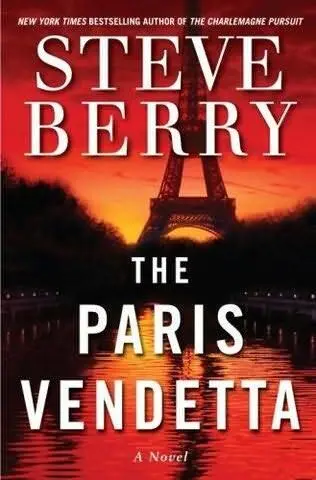
- Название:The Paris Vendetta
- Автор:
- Жанр:
- Год:неизвестен
- ISBN:нет данных
- Рейтинг книги:4 / 5. Голосов: 1
-
Избранное:Добавить в избранное
- Отзывы:
-
Ваша оценка:
The Paris Vendetta: краткое содержание, описание и аннотация
Предлагаем к чтению аннотацию, описание, краткое содержание или предисловие (зависит от того, что написал сам автор книги «The Paris Vendetta»). Если вы не нашли необходимую информацию о книге — напишите в комментариях, мы постараемся отыскать её.
Back home in Denmark, Malone's barely had a chance to rest and regroup after his last high-risk mission when trouble comes knocking again. Actually, it breaks and enters-in the form of an American Secret Service agent with a pair of would-be assassins on his heels. Malone has his doubts about the anxious young man, but narrowly surviving a ferocious firefight convinces Malone to follow his unexpected new ally into the night-and into another all-too-close encounter with certain danger.
Their first stop is the secluded country estate of Malone's good friend Henrik Thorvaldsen. The wily Danish tycoon's eyes and ears around the world have uncovered the insidious plans of the Paris Club, a cabal of multimillionaires out to manipulate the global economy. Only by matching wits with a murderous terrorist-for-hire, foiling a catastrophic attack, and plunging into a desperate hunt for the legendary lost treasure of Napoleon Bonaparte can Malone hope to avert international financial anarchy. But Thorvaldsen's objective is much more personal: to avenge at any cost the murder of his beloved son by the larcenous aristocrat at the heart of the conspiracy. Through the storied streets and cathedrals of Paris, a breathless game of duplicity and death will be played, all to claim a prize of untold value-or to suffer consequences of unthinkable magnitude.
The Paris Vendetta — читать онлайн бесплатно полную книгу (весь текст) целиком
Ниже представлен текст книги, разбитый по страницам. Система сохранения места последней прочитанной страницы, позволяет с удобством читать онлайн бесплатно книгу «The Paris Vendetta», без необходимости каждый раз заново искать на чём Вы остановились. Поставьте закладку, и сможете в любой момент перейти на страницу, на которой закончили чтение.
Интервал:
Закладка:
And field agents helped one another.
He came to the top.
A wide archway opened to his left into a tall room with bloodred walls. Directly ahead of him was an entrance to an exhibit labeled LA DAME à LA LICORNE.
The Lady and the Unicorn.
He stopped and carefully peered around the archway into the red room.
Three shots cracked.
Bullets pinged off stone, inches from his face, stirring up dust, and he reeled back.
Bad idea.
Another shot came his way. Windows to his right, adjacent to the stairway landing, shattered from an impact.
“Hey,” a voice said, nearly in a whisper.
His eyes shot right and he spotted the same woman from before, the one who’d started the mayhem with her scream, standing inside the recessed entrance for the Lady and the Unicorn exhibit. Her short hair was now pushed back from her face, her eyes bright and alert. Her two open palms displayed a gun.
She tossed him the weapon, which he caught.
His left hand clamped the grip, finger on the trigger. He hadn’t fired a weapon since his last visit to the Secret Service shooting range. What, four months ago? But he was glad to have the thing.
He met her intense gaze and she motioned that he should fire.
He sucked a deep breath, swung the gun around the archway’s edge, and pulled the trigger.
Glass broke somewhere in the red room.
He fired again.
“You could at least try and hit one of them,” she said from her hiding place.
“If you’re so damn good, you do it.”
“Toss it back and I will.”
TWENTY-NINE
LOIRE VALLEY
ELIZA SAT IN THE DRAWING ROOM, CONCERNED BY THE UNEXPECTED complications that had arisen during the past few hours. Thorvaldsen had left for Paris. Tomorrow they’d talk more.
Right now she needed guidance.
She’d ordered a fire and the hearth now burned with a lively blaze, illuminating the motto carved into its mantel by one of her ancestors.
S’IL VIENT À POINT, ME SOUVIENDRA.
If this castle is finished, I will be remembered.
She sat in one of the upholstered armchairs. The display case, which held the four papyri, stood to her right. Only the crackling embers disturbed the silence. She’d been told that it might snow this evening. She loved winter, especially here, in the country, near all that she held dear.
Two days.
Ashby was in England, preparing. Months ago, she’d delegated an array of tasks to him, relying on his supposed expertise. Now she wondered if that trust had been misplaced. A lot depended on what he was doing.
Everything, in fact.
She’d dodged Thorvaldsen’s questions and not allowed him to read the papyri. He hadn’t earned that right. None of the club members had, to this point. That knowledge was sacred to her family, obtained by Pozzo di Borgo himself when his agents stole the documents from shipments scheduled for St. Helena, part of Napoleon’s personal effects sent into exile with him. Napoleon had noticed their omission and officially protested, but any improprieties had been imputed to his British captors.
Besides, no one cared.
By then, Napoleon was impotent. All European leaders wanted was for the once mighty emperor to die a quick, natural death. No foul play, no execution. He could not be allowed to become a martyr, so imprisoning him on a remote south Atlantic island seemed the best way to achieve the desired result.
And it worked.
Napoleon had, indeed, faded away.
Dead within five years.
She stood, approached the glass case, and studied the four ancient writings, safe in their cocoon. They’d long ago been translated and she’d committed every word to memory. Pozzo di Borgo had been quick to realize their potential, but he lived in a post-Napoleonic world, during a time when France stayed in constant upheaval, distrustful of monarchy, incapable of democracy.
So they’d been of little use.
She was truthful when she told Thorvaldsen that it was impossible to know who’d written them. All she knew was that the words made sense.
She slid open a drawer beneath the case. Inside lay translations of the original Coptic into French. Two days from now she’d share these words with the Paris Club. For now she shuffled through the typed pages, reacquainting herself with their wisdom, marveling at their simplicity.
War is a progressive force, naturally generating that which would not otherwise have taken place. Free thinking and innovation are but two of the many positive aspects that war creates. War is an active force for society, a stabilizing and dependable tool. The possibility of war forms the strongest foundation for any ruler’s authority, the extent of which grows in direct relationship to the ever-increasing threat war poses. Subjects will willingly obey so long as there is at least the promise of protection granted them from invaders. Lose the threat of war, or breach the promise of protection, and all authority ends. War can bind the social allegiance of a people like no other institution. Central authority simply would not exist without war and the extent of any ruler’s ability to govern depends on the ability to wage war. Collective aggression is a positive force that both controls dissent and binds social allegiance. War is the best method for channeling collective aggression. Lasting peace is not in the best interest of maintaining central authority, nor is constant, never-ending war. Best is the mere possibility of war, since the perceived threat provides a sense of external necessity, without which no central authority can exist. Lasting stability can come simply from the organization of any society for war.
Amazing that an ancient mind possessed such modern thoughts.
A feared external menace is essential for any central authority to persevere. Such a menace must be believable and of a sufficient magnitude to instill absolute fear, and must affect society as a whole. Without such fear, central authority could well collapse. A societal transition from war to peace will fail if a ruler does not fill the sociological and political void created by the lack of war. Substitutions for the channeling of collective aggression must be found, but these surrogates must be both realistic and compelling.
She laid the translation atop the case.
In Pozzo di Borgo’s time, the mid-19th century, there were no adequate substitutes, so war itself prevailed. First regional conflicts, then two world conflagrations. Today was different. Plenty of substitutes were available. In fact, too many. Had she chosen the right one?
Hard to say.
She returned to her chair.
There was something else she still must know.
After Thorvaldsen departed, she’d retrieved the oracle from her satchel. Now she reverently opened the book and prepared herself with a few deep breaths. From the list of questions she selected Will the friend I most reckon upon prove faithful or treacherous? For friend she substituted Thorvaldsen and then posed the question, out loud, to the burning fire.
She closed her eyes and concentrated.
Then she grasped a pen and slashed vertical lines in five rows, counting each set, determining the proper list of dots.

She quickly consulted the chart and saw that the answer to her question lay on page H. There the oracle proclaimed, The friend will be unto thee a shield against danger .
She shut her eyes.
She’d trusted Graham Ashby, allowed him into her confidence, knowing little about him except that he was of old money and an accomplished treasure hunter. She’d offered him a unique opportunity, and provided information that no one else in the world knew, clues passed down through her family starting with Pozzo di Borgo.
Читать дальшеИнтервал:
Закладка:
Похожие книги на «The Paris Vendetta»
Представляем Вашему вниманию похожие книги на «The Paris Vendetta» списком для выбора. Мы отобрали схожую по названию и смыслу литературу в надежде предоставить читателям больше вариантов отыскать новые, интересные, ещё непрочитанные произведения.

Обсуждение, отзывы о книге «The Paris Vendetta» и просто собственные мнения читателей. Оставьте ваши комментарии, напишите, что Вы думаете о произведении, его смысле или главных героях. Укажите что конкретно понравилось, а что нет, и почему Вы так считаете.