James Bell - Deadlock
Здесь есть возможность читать онлайн «James Bell - Deadlock» весь текст электронной книги совершенно бесплатно (целиком полную версию без сокращений). В некоторых случаях можно слушать аудио, скачать через торрент в формате fb2 и присутствует краткое содержание. Жанр: Триллер, на английском языке. Описание произведения, (предисловие) а так же отзывы посетителей доступны на портале библиотеки ЛибКат.
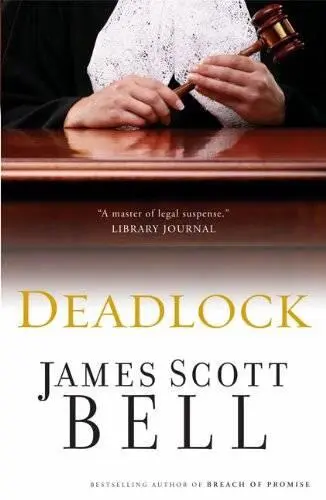
- Название:Deadlock
- Автор:
- Жанр:
- Год:неизвестен
- ISBN:нет данных
- Рейтинг книги:3 / 5. Голосов: 1
-
Избранное:Добавить в избранное
- Отзывы:
-
Ваша оценка:
Deadlock: краткое содержание, описание и аннотация
Предлагаем к чтению аннотацию, описание, краткое содержание или предисловие (зависит от того, что написал сам автор книги «Deadlock»). Если вы не нашли необходимую информацию о книге — напишите в комментариях, мы постараемся отыскать её.
Deadlock — читать онлайн бесплатно полную книгу (весь текст) целиком
Ниже представлен текст книги, разбитый по страницам. Система сохранения места последней прочитанной страницы, позволяет с удобством читать онлайн бесплатно книгу «Deadlock», без необходимости каждый раз заново искать на чём Вы остановились. Поставьте закладку, и сможете в любой момент перейти на страницу, на которой закончили чтение.
Интервал:
Закладка:
She had not cried like this since she was a little girl. And no one was going to help her. She had no family, and those with whom she had so carefully networked over the years were dropping her faster than a politician’s promise. Even Cosmo had not contacted her since the arrest.
Damaged goods was a generous description of what she was now.
Her crying drew a response from Sheela, her cell mate. She had been a prostitute who sold crack to an undercover agent and got twenty-five years. She seemed strangely serene about it. “Won’t do you no good to keep on like that, honey,” Sheela said.
Anne couldn’t help it. Maybe part of it was the irony of this day. She’d seen the Post, which she got days late in the prison library . Arguments were scheduled today in that abortion clinic case, and one of the lawyers was Millicent Mannings Hollander! Unbelievable, after all she and Levering had gone through over her.
Yet there Hollander would be, standing in front of the Supreme Court, while Anne was locked away in a cell, losing the best years of her life.
She kept her face in her pillow, wondering if Levering’s way out was perhaps the best solution after all.
The whole thing with his son had been so weird. It was like he knew something, knew her. Those times she had seen him had been creepy. But creepy in a way that was almost too real. It’s not too late, he had said.
How did he know she was going to end up in here? Now it really was too late.
The tears kept coming.
3
And then it was Millie’s turn.
As she stood she gave a quick glance into the gallery. Charlene Moore sat with Sarah Mae and Aggie, all three looking nervous. Jack was in the back, having flown out with Rosalind from Santa Lucia for this slice of American history. The rest of the place was packed with reporters, politicians, and a handful of the public, the ones who had lined up at 3 a.m. in order to get a seat for the show.
And what a show Larry Graebner had just put on. He was brilliant. Millie had heard him argue half a dozen cases when she was a justice. Never had he been more eloquent, more on top of the issues. Every question he was asked gave him another opportunity to demonstrate his legal virtuosity.
Millie placed her notes on the podium and looked up at her former colleagues. For a second their faces seemed to melt into one another. The chamber seemed suddenly as silent as a tomb. But she was ready. “May it please the Court,” she said. “The informed consent law at the heart of this case has one purpose, as clear from its language as its statutory history. That purpose is to protect the health of women who are considering the most important moral choice of their lives, the decision to end a life.”
Justice Arlene Prager Weiss immediately interrupted. “Counsel,” she said, “aren’t you assuming the very question you ask us to decide? Part of your argument, it seems to me, assumes that a fetus constitutes a life in the sense of personhood. The statute says unborn child. But we have rejected that argument in the past. You yourself penned an eloquent defense of Roe in the Messier case to that effect, did you not?”
Millie had anticipated this query, either from Weiss or Riley.
“My rationale in Messier ,” she said, “was expediency. The question now is whether that rationale was sound. Yes, the case itself is precedent, but this Court has not hesitated to overturn precedent when convinced the rationale should no longer hold. It happened when Brown overturned Plessey v. Ferguson and brought equal justice to people of color. I am suggesting that this case is another of those times.”
“But Justice Hollander,” Preston Atkins said, “to do that we would have to find that the fetus is a person within the meaning of the Fourteenth Amendment, would we not?”
The question cut right to the heart of things. Of course Atkins – and Weiss and Riley – were right to put that challenge to her.
But as she opened her mouth to answer, the words stopped in her throat. She looked back at Atkins, then, to his left, caught the eye of Thomas J. Riley. He was staring, almost as if looking through her.
She found herself answering Atkins’s question while looking at Riley. “That inquiry must be secondary, Your Honor, it seems to me. There is a preliminary question that must be answered. This Court must decide, once and for all, what first principles will be used to decide these issues.”
Riley’s eyes ignited with fire. “Just what first principles are you talking about, Counsel?” he asked.
4
Anne Deveraux got that feeling again, the one she’d experienced right before she’d been arrested.
That called-to feeling, from somewhere beyond her understanding.
What was that all about?
She was alone for a moment now, her cell mate out for yard time. It was eerie, and she thought for a moment she was going to go certifiably crazy.
Wouldn’t that be cute? Get out on a mental, and spend the rest of your life on drugs, shuffling around in slippers down white-walled corridors?
The image reminded her, for the first time in years, of her room as a little girl. The one time she could remember being happy in her childhood. Her stepfather was gone, her mother was there, and she wasn’t drinking.
She came into Anne’s room, where the walls were painted white, and Anne was almost asleep. And her mother rocked her in her arms and sang a song. It was a silly song, Anne couldn’t even remember the words. But the words were not important. Her mother’s arms were.
No more arms. Not here. Not ever.
5
“We must start with the founding documents,” Millie said. “All men are created equal, and endowed by their Creator with certain inalienable rights.”
“The Declaration of Independence is not the Constitution,” Riley snapped.
“That is not the view of the Court in the past,” Millie said, marveling at her own words. A year ago such a sentiment would have been unthinkable coming from her. “Our decisions throughout the 1800s consistently called the Declaration ‘part of the fundamental law of our nation.’ Only in the last forty years have we drifted from that view. Are we going to say now that our predecessors on the Court were wrong or naive?”
Millie glanced left and saw Larry Graebner watching her, a look of complete bafflement on his face. He seemed to be thinking, Are you absolutely crazy? That only emboldened her. “I am calling upon this Court,” she said, “to reaffirm the basic tenets of our founding. Without those principles, we will continue to be a nation on a collision course with itself. This case makes that clear. That a young woman can be denied – ”
“We’ve guided our ship of state pretty well under the law of the past thirty years,” Weiss interrupted. “Shouldn’t we consider the drastic political consequences of changing course?”
“The decisions of this Court do have political consequences,” Millie said. “We all know that. But the Court was never meant to have political intentions. In a Constitutional democracy, this Court was not conceived as the institution that creates law. Or that overturns laws duly passed, so long as such laws do not violate any Constitutional provision.”
For the next few minutes several of the justices asked questions about that very thing – the constitutionality of the informed consent law and its various sections. The larger issue Millie had begun to argue was lost. But she knew she had to answer the questions asked. In the back of her mind, she was hoping for – praying for – one more chance to return to the issue.
Читать дальшеИнтервал:
Закладка:
Похожие книги на «Deadlock»
Представляем Вашему вниманию похожие книги на «Deadlock» списком для выбора. Мы отобрали схожую по названию и смыслу литературу в надежде предоставить читателям больше вариантов отыскать новые, интересные, ещё непрочитанные произведения.









Обсуждение, отзывы о книге «Deadlock» и просто собственные мнения читателей. Оставьте ваши комментарии, напишите, что Вы думаете о произведении, его смысле или главных героях. Укажите что конкретно понравилось, а что нет, и почему Вы так считаете.