Linda Fairstein - Hell Gate
Здесь есть возможность читать онлайн «Linda Fairstein - Hell Gate» весь текст электронной книги совершенно бесплатно (целиком полную версию без сокращений). В некоторых случаях можно слушать аудио, скачать через торрент в формате fb2 и присутствует краткое содержание. Жанр: Триллер, на английском языке. Описание произведения, (предисловие) а так же отзывы посетителей доступны на портале библиотеки ЛибКат.
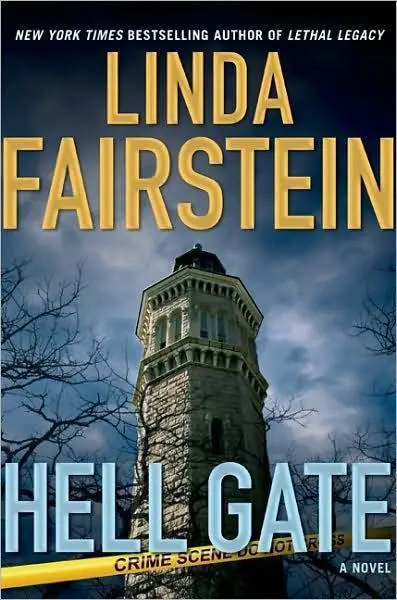
- Название:Hell Gate
- Автор:
- Жанр:
- Год:неизвестен
- ISBN:нет данных
- Рейтинг книги:4 / 5. Голосов: 1
-
Избранное:Добавить в избранное
- Отзывы:
-
Ваша оценка:
Hell Gate: краткое содержание, описание и аннотация
Предлагаем к чтению аннотацию, описание, краткое содержание или предисловие (зависит от того, что написал сам автор книги «Hell Gate»). Если вы не нашли необходимую информацию о книге — напишите в комментариях, мы постараемся отыскать её.
Hell Gate — читать онлайн бесплатно полную книгу (весь текст) целиком
Ниже представлен текст книги, разбитый по страницам. Система сохранения места последней прочитанной страницы, позволяет с удобством читать онлайн бесплатно книгу «Hell Gate», без необходимости каждый раз заново искать на чём Вы остановились. Поставьте закладку, и сможете в любой момент перейти на страницу, на которой закончили чтение.
Интервал:
Закладка:
I followed her inside, through the large reception space with its distinctive black-and-white diamond-shaped flooring. “I think you’ll be most comfortable here in the library,” she said, depositing us in the handsome room with floor-to-ceiling windows, denticulated cornices, and furniture that looked original to the building.
“I don’t believe in coincidence,” Mike said. “Not on this scale.”
“Neither do I.”
“So go back to the night before last. You’ve got a shipload of immigrants desperate to get ashore, who panic when they can see the land, smell it, practically touch it, but nobody shows up to take them ashore.”
“Except what looks like a government boat coming to intercept them,” Mercer said.
“And right up the street from the mayor’s house, a congressman goes nuts about something. Was it a baby who wasn’t really sick by the time she got to the hospital?”
“And if it wasn’t Leighton’s baby, why would he care so much?” I asked.
“We know for sure he was drunk and flying downtown on the highway,” Mercer said, “which is when he got into an accident.”
“One girl with a rose tattoo, probably Ukrainian, washes up in Queens. Her Mexican comadre starts playing phone tag with emergency operators, then someone shows up to visit her last night and sticks a corkscrew in her throat before he takes her out for a stroll,” Mike said, fingering one of the old cannonballs that sat on the mantel over the fireplace. “And deposits her here, in a well at Gracie Mansion.”
“Where, for some reason, the mayor most definitely did not want Scully to post his men this morning,” I said.
“We need to get back to the squad and chart this all out,” Mike said. “It’s part of one big pie, and we just got to figure out who the baker is. What’s holding Hizzoner up?”
Mercer was staring out the window, then abruptly walked out of the library without saying a word.
“Maybe we can get the housekeeper to show us around before Statler gets here,” I said. “You think it would help your noncoincidental theory to see any other parts of the house?”
“Better to do it without telling her. Where did Mercer go?”
The elegant building with its custard yellow frame and green trim was one of the only Federal Period wooden houses still standing in Manhattan.
Several years ago when I was dating a reporter who worked at NBC, we were frequently included in cocktail parties and dinners hosted by the former administration. I knew a few things about America’s first official mayoral residence and its careful restoration a decade ago, but I couldn’t figure how it would play as a site in this widening investigation.
“Give him a minute. He must have seen something going on outside,” I said.
The housekeeper appeared in the doorway. “Excuse me, miss. We’re expecting fifty people for tea at four o’clock. Will that be fine?”
“No, no, no,” Mike said. “Tea?”
“Yes, sir. We have tea tours several times a week.”
“Well, there’ll be no tea today. You call out to the guardhouse and tell them no one comes in this afternoon until Mayor Statler gets here.”
She appeared to be thinking about talking back to Mike, but changed her mind and withdrew.
“Want to look upstairs?” Mike asked me. “That’s the private quarters. The master suite and guest bedrooms.”
I stepped to the doorway and saw the velvet rope that blocked the staircase off from public access. “I’d rather not be snooping around without Statler’s permission.”
“Coop, it’s ‘the people’s house.’ That’s what the mayor always says.”
“Wait.”
Mercer came back inside, rubbing his hands together for warmth. “I’m not sure I agree with you, Mike. I mean about this whole mess being connected to Gracie Mansion. Look out the window.”
We both followed Mercer there.
“See the well? And the fence right behind it? I’ll bet whoever did this was on his way to the river with the body. You dump the girl in there, just over the fence, let the currents of Hell Gate do their job, and nobody sees her again till it’s spring and she floats to the surface.”
“Maybe so,” Mike said. “Maybe the river was the final destination. That makes sense. But what, you think the killer just got lucky and found a well? Nope, it’s not that coincidental. Too convenient.”
“Please don’t tell me you’re looking to jam up the mayor,” I said.
“Course not. I just think we need to spend a little more time getting him to answer questions, before you have to wind up inviting him to the grand jury to do that.”
“Battaglia would probably pay admission to see him testify.”
Mike was pacing impatiently, rolling the heavy cannon shot in his hands like Captain Queeg nervously playing with steel balls while his crew planned their mutiny. “The city gives you a house like this to live in, with all its history, and most of these guys would rather crib somewhere else. Can’t figure it. I’ll give him another fifteen minutes and we’re out of here. We got work to do.”
“You’ve never been assigned to the mansion, have you?” I asked. Every detail of the house was a perfect reflection of the Federal Period. The antique convex mirror facing the windows was topped with a gilded eagle. Each sofa and chair had been upholstered in fabric copied from old designs and paintings. A block away from Salma Zunega’s modern high-rise was this graceful step back in time that looked like it belonged on a movie set.
“Dignitaries and protocol, Coop? Not exactly my bailiwick. But when I was in the Academy and the British prime minister stayed here for a week, they needed extra men for the detail.”
“Let me guess. Mr. Gracie was a warrior, right? That’s how come you know so much.”
“Nope. It really started long before Gracie,” Mike said, replacing the cannonball on the mantel and leading me back to the window. “You’re standing on one of the most historic sites in the entire city, which has owned the mansion and this point of land since 1896. Back in the 1640s, when New Amsterdam was a little village on the southern tip of Manhattan, this was a farm owned by a Dutchman and called Horn’s Hook. An English family took it over a century later, since it was one of the choicest properties in the city.”
“Why so?”
“Can’t you see for yourself?” Mike said, pulling back the curtain. “Think like a general once in a while, not like a lit major.”
“I’ll try,” I said, shrugging while Mercer tugged at a strand of my hair.
“First you’ve got this high promontory of land, looking out on the turbulent body of water. From the roof of this building, you can actually see all the other boroughs in the city. It was rich soil for farming and there were oysters and fish of all kinds teeming right down on the shore. Sort of like your place on the Vineyard, kid.”
“I get that.”
“The family that owned the land was named Walton, and they picked the wrong side during the Revolution.”
“Loyalists?” Mercer asked.
“Exactly. When Washington sent his men to New York in 1776 to prepare the defense against the British, American troops seized this home and built two forts-one here at Horn’s Hook and one across the way at Hallett’s Point in Queens-to block the passage by boat through Hell Gate.”
“So the front lawn right out here was a major battleground in the Revolutionary War?” Mercer asked.
“Yeah. The king’s army attacked from Long Island, and from all these little islands in the river, bombing the life out of our rebels. The Walton house, tucked inside the fort right here, was set on fire by a shell and burned to the ground. Cannonballs just like this one brought the place down. This point remained occupied by the British until 1783.”
Читать дальшеИнтервал:
Закладка:
Похожие книги на «Hell Gate»
Представляем Вашему вниманию похожие книги на «Hell Gate» списком для выбора. Мы отобрали схожую по названию и смыслу литературу в надежде предоставить читателям больше вариантов отыскать новые, интересные, ещё непрочитанные произведения.











Обсуждение, отзывы о книге «Hell Gate» и просто собственные мнения читателей. Оставьте ваши комментарии, напишите, что Вы думаете о произведении, его смысле или главных героях. Укажите что конкретно понравилось, а что нет, и почему Вы так считаете.