T. Parker - Iron River
Здесь есть возможность читать онлайн «T. Parker - Iron River» весь текст электронной книги совершенно бесплатно (целиком полную версию без сокращений). В некоторых случаях можно слушать аудио, скачать через торрент в формате fb2 и присутствует краткое содержание. Жанр: Триллер, на английском языке. Описание произведения, (предисловие) а так же отзывы посетителей доступны на портале библиотеки ЛибКат.
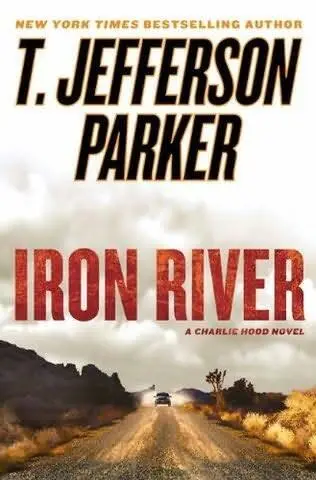
- Название:Iron River
- Автор:
- Жанр:
- Год:неизвестен
- ISBN:нет данных
- Рейтинг книги:3 / 5. Голосов: 1
-
Избранное:Добавить в избранное
- Отзывы:
-
Ваша оценка:
Iron River: краткое содержание, описание и аннотация
Предлагаем к чтению аннотацию, описание, краткое содержание или предисловие (зависит от того, что написал сам автор книги «Iron River»). Если вы не нашли необходимую информацию о книге — напишите в комментариях, мы постараемся отыскать её.
Iron River — читать онлайн бесплатно полную книгу (весь текст) целиком
Ниже представлен текст книги, разбитый по страницам. Система сохранения места последней прочитанной страницы, позволяет с удобством читать онлайн бесплатно книгу «Iron River», без необходимости каждый раз заново искать на чём Вы остановились. Поставьте закладку, и сможете в любой момент перейти на страницу, на которой закончили чтение.
Интервал:
Закладка:
The kitchen was neat and foodless. The refrigerator had ice cube trays in the freezer and that was all. There was a small kitchen table and two chairs, and on the table was a telephone and answering machine. Hood pushed the PLAY button and listened to the one new message, from Owens, saying she was sorry to have left so abruptly but she was in a good place in a desert and happy and not to worry. Hood pictured her lovely face and arresting eyes and the scars on her wrists. You will have a reason. There were no old messages.
The bedroom was curtained with bamboo-look plastic blinds and contained a twin bed neatly made up. The olive-colored bedspread was without wrinkle and the pillow was plump and perfectly centered. Hood saw his own military training in this, wondered if Uncle Sam might have more information on Mr. Finnegan. There was a small dresser and more bookshelves. In the closet were pants and shirts on hangers, a heavy canvas jacket with fleece lining, a few pairs of shoes.
Hood saw an odd glint beneath the canvas jacket and he lifted it open for a look. Hanging under it was a garment of dull gray mesh. Hood lifted out the coat and the gray garment. They were surprisingly heavy. Hood peeled off the jacket and tossed it to the bed. The garment was a vest, apparently made for a tall and slender man. Hood held it to his nose and smelled the flat metallic scent of steel. Down one side were buttons made from large silver Mexican fifty-peso coins. Down the other were thickly braided steel loops. Hood let the hanger drop and shrugged on the vest and buttoned up the side. It was snug and weighty but also supportive, the tail firm against his lumbar vertebrae. The arm holes were small, so the vest rode up almost to his armpits. He could imagine no use for such a thing except to repel bullets or blades. He wondered if it would work.
He walked back and stood in the patch of sunlight in the living room, and when he looked down, he could see rounded indentations roughly the size of bullets. The steel mesh had spread and flattened but held. One mark was right over his heart. There were sharper dents that could have been made by knives. He took off the vest and read the date on the top button: 1851. In the bedroom he hung it back up, then photographed it with his cell phone, then hung the canvas jacket over it and set the hanger back on the dowel.
Hood thought about the 1849 bullet in Mike’s head and the 1851 vest in his closet and Mike’s detailed recounting of the hanging of Tiburcio Vasquez and Mike’s tales of drinking in Wyatt Earp’s San Diego saloon. Here was a pattern that Hood’s ATFE task force trainers would have loved. But a pattern establishing what? Mike the history buff? Mike the collector of Western lore and things? But there were other Mikes. Such as Mike the bathroom products guru who knew far too much about Operation Blowdown and Jimmy and Benjamin Armenta. And Mike who wondered what Zetas dream about. And Mike who had been at the Ambassador Hotel when Bobby Kennedy was murdered and could describe a sunset viewed from Spahn Ranch with Charlie Manson. And of course, perhaps the simplest and most definitive Mike-the Mike pronounced insane by his own daughter.
But in the second bedroom, Hood found no evidence that Owens or anyone else had recently lived there. The cot bed was neatly made, but the dresser and closet were empty of clothes. There were eight pasteboard boxes stacked in the closet and Hood found them full of books. The walls were bare and there was no TV and no reading lamp and no radio and no clock. He took more pictures.
Hood walked into the bathroom, wondering what a bath products broker would have in his own home. There were mismatched bath and hand towels, some old enough that threads dangled at the edges, a faded green oval rug, shaving products, and a large bar of blue soap in an upturned clamshell on the sink. The shower had a sliding glass door, frosted and clean, and inside was nothing but one economy-size bottle of shampoo. There was an ornate brass towel hook in the shape of a horse’s head on the wall near the shower, but this single item was the only thing in the room that wasn’t commonplace.
Back in the living room, Hood sat at the card table and browsed the top notebook. Inside he found a handwritten ledger that was cramped but legible-billables and receivables, dates and dollar amounts, notes. The most recent entry was two months ago and the oldest dated back to early last year. The largest transaction involved $5,999. There were illustrations of various bathroom products, such as shower curtains and rings, soap dishes, standing and built-in toilet paper dispensers, bath mats for tub and shower, medicine chests and wall cabinets, towel racks. These drawings were rendered in the same small tight hand as the notes, but they were simple and expressive. The other ten notebooks stacked there contained nothing but blank pages and folded clippings from newspapers and magazines. Hood opened and read through them. Finnegan had written the source and date on the top of each clip. Most of the stories were from small California towns, many of which Hood had never been in: Ravendale, Tollhouse, Ivanhoe, Trona. He made a note of these.
Some clippings dealt with small-time crime, most of it white collar-embezzling, fraud, forgery. Most of the perps were women. Some dealt with violent criminals and most of these were men, and educated. Some were about precocious children. Some dealt with quirky inventions such as a personal jet pack, a machine that could synthesize water from the air, a time-released multivitamin and mineral tablet that had to be taken only once a year. One was a feature titled “Saturday Night Special,” about Ron Pace, a seventeen-year-old high school dropout manufacturing/design whiz who was running his family’s hugely profitable gun company. This was Pace’s second unscheduled flight into Hood’s airspace in the last two weeks, so Hood read the article slowly and carefully. Pace was quoted as saying that “making guns is harder than making pizza but what I’d really like to make is history.” Company president and CEO Chester Pace said that Pace guns were “the workingman’s equalizer.” The article touched on the suicide of Ron’s father. There were pictures of Ron and Chester and Ron’s pretty, unhappy mother, Maureen. Hood rose and stood back from the table and he took pictures of it and of the room.
He heard the knock on the apartment door and he rose and answered it. A small boy stood outside. He looked ten. He wore a Kobe jersey and shorts to his skinny calves and basketball shoes that made his feet look gigantic.
“Where’s Finn?”
“In a hospital.”
“Been gone a long time. He okay?”
“He’s doing fine. I’m a friend.”
“You look like a cop.”
“What about you? Are you his friend?”
The boy looked past him into the apartment, then at Hood. “Yeah. He’s gone a lot so this is no surprise. He gave me this.”
The boy pulled his hand from his pocket and showed Hood the knife. It was an old-fashioned pocketknife with an elk horn-look handle and blades at opposite ends.
“It needs sharpening. Mike sharpens it. He says a dull knife is more dangerous than a sharp one. He’s got a sharpenin’ stone in the kitchen drawer where the forks are.”
“Come in.”
Hood found the stone and whet the knife, circling one blade then the other across the grinding surface while the boy watched.
“Mike does it slow like that.”
“There’s no hurry. I’m Charlie. What’s your name?”
“Marlowe.”
“Your mom know you have this?”
“She’s dead so she don’t know anything. Dad’s cool.”
“How long have you known Mike?”
“Since forever. He sleeps all day sometimes. Mostly he’s gone at night. Sells them towel holders and dishes you put your soap in.”
Читать дальшеИнтервал:
Закладка:
Похожие книги на «Iron River»
Представляем Вашему вниманию похожие книги на «Iron River» списком для выбора. Мы отобрали схожую по названию и смыслу литературу в надежде предоставить читателям больше вариантов отыскать новые, интересные, ещё непрочитанные произведения.







Обсуждение, отзывы о книге «Iron River» и просто собственные мнения читателей. Оставьте ваши комментарии, напишите, что Вы думаете о произведении, его смысле или главных героях. Укажите что конкретно понравилось, а что нет, и почему Вы так считаете.