Will Staeger - Public Enemy
Здесь есть возможность читать онлайн «Will Staeger - Public Enemy» весь текст электронной книги совершенно бесплатно (целиком полную версию без сокращений). В некоторых случаях можно слушать аудио, скачать через торрент в формате fb2 и присутствует краткое содержание. Жанр: Триллер, на английском языке. Описание произведения, (предисловие) а так же отзывы посетителей доступны на портале библиотеки ЛибКат.
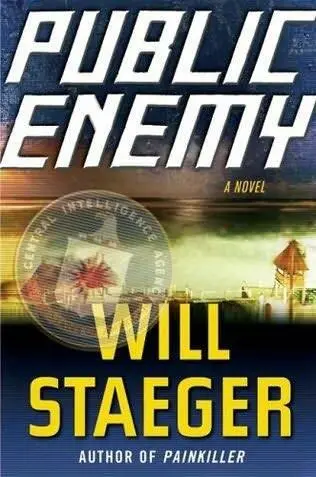
- Название:Public Enemy
- Автор:
- Жанр:
- Год:неизвестен
- ISBN:нет данных
- Рейтинг книги:3 / 5. Голосов: 1
-
Избранное:Добавить в избранное
- Отзывы:
-
Ваша оценка:
Public Enemy: краткое содержание, описание и аннотация
Предлагаем к чтению аннотацию, описание, краткое содержание или предисловие (зависит от того, что написал сам автор книги «Public Enemy»). Если вы не нашли необходимую информацию о книге — напишите в комментариях, мы постараемся отыскать её.
Public Enemy — читать онлайн бесплатно полную книгу (весь текст) целиком
Ниже представлен текст книги, разбитый по страницам. Система сохранения места последней прочитанной страницы, позволяет с удобством читать онлайн бесплатно книгу «Public Enemy», без необходимости каждый раз заново искать на чём Вы остановились. Поставьте закладку, и сможете в любой момент перейти на страницу, на которой закончили чтение.
Интервал:
Закладка:
“In selecting the team,” she said, “will I be able to work from both a pool of recruits, or volunteers, as well as from my own, independently generated choices? Of personnel, I mean.”
“Yes. We are not organized precisely as your paper proposed, but in this respect the setup is similar. The pool of recruits includes a roster of ordinary citizens, government officials, and military personnel, each of whom has been identified, approached, then solicited to volunteer, or vice versa. Most offered themselves in some capacity during the immediate aftermath of 9/11. Each has been background-checked to their birth, often further back than that. With regards to the independently generated choices you may pick, we would of course need to conduct similar background checks on each of your choices before such personnel are approved. I have the feeling, however, that you know the answer to your next question already.”
“Did-did I have a next question?” Laramie said.
After a while, confronted by the volume of the silence, Laramie decided she might as well give up on her short-lived facade.
“Christ,” she said. “If you’re saying you believe there’s somebody I would call first, then you’re correct. My next question was going to be whether you know him, and whether you think he’d check out. But of course you know him.”
“He’s already on the approved list.”
“Of course.”
They know pretty much everything, don’t they, she thought, and if they knew pretty much everything, they certainly knew about him. They knew he’d be the first one she’d think about reaching out to, at least if this was the kind of job they were giving her. She wondered whether the reason Ebbers picked her in the first place for the assignment had more to do with him than anything she’d written in school, or analyzed afterward.
One of the only things they don’t know is that he might well be on their approved list, but he certainly isn’t on mine. Actually, he was on her least-approved, most annoying list-a list that spanned one person.
Still, his expertise could prove highly valuable, and she had a pretty good idea she could trust the son of a bitch.
“You can go ahead and place the call,” Ebbers said.
Laramie didn’t say anything.
Ebbers too was silent again for a minute, or maybe ten, Laramie couldn’t tell, until his voice crackled through the speakerphone one last time.
“Nice talkin’ to you, Miss Laramie,” he said. “Break a leg.”
Then he hung up.
21
Planted on oil reserves more bountiful than those beneath most OPEC states, Venezuela had, by the early twenty-first century, failed to lift more than a token percentage of its people from abject poverty. The oil revenues were routed through the government-owned Petróleos de Venezuela S.A., with profits promised to the poor but usually distributed only according to the whim of the nation’s chief politician. So despite the black gold mined from beneath it, for each of its six decades of independence from Spanish territorial status, the Bolívarian Republic of Venezuela remained a nation of high-profile leaders, sleek, modern city centers, and-mostly-shantytown barrios.
The latest chief politician was Hugo Chávez, a man imprisoned for leading a failed military coup before he went on to win a pair of presidential elections. Along the way, he managed to snuff out the standard South American sort of political challenges-a referendum seeking his ouster, a successful but short-lived coup, a few assassination attempts. Chávez routinely conducted a number of foreign-affairs initiatives geared solely, it seemed, toward alienating U.S. officials, with considerable success. Americans consumed the majority of Venezuela’s oil, and probably always would-but the discord resulting from Chávez’s anti-American bravado was enough to make a visit to Venezuela by any American citizen a tremendous pain in the ass.
Cooper circumvented the would-be four-hour customs detainment of American tourists by buying his ticket at the Copa Airlines counter in San Juan with a MasterCard under the name of Armando Guttierez-which name the ticket agent also found printed alongside Cooper’s picture on the Colombian passport he was breaking in today.
He rented a car, and after a stroll through the soupy heat to the vehicle, found his way to the autopista and headed south for Caracas. It took him about an hour in the gridlocked traffic to reach the exit he’d pinned down as the correct choice in an online atlas search from the porch of his bungalow.
He’d pinned down some other things too with a phone call or three, namely that Ernesto Borrego, aka El Oso Blanco, was, in fact, as Po Keeler had claimed, into a lot of shit. Borrego’s businesses, operating under the Borrego Industries banner, included trucking, intermodal shipping, home electronics and personal computer importing and exporting, wholesale distribution, and order fulfillment. This according to the backgrounder Cooper had ordered up from Langley, which he presumed to be far from comprehensive.
He’d called some other people and learned that Borrego liked to hunker down in his rat-trap of an office within the confines of the Borrego Industries distribution center south of the city. Apparently Borrego rarely left the place, and instead preferred to all but live out of the facility. It was from the Caracas distribution center that he took his meetings-of which there were few-while logging fourteen or fifteen hours of phone calls a day. He was said to hold frequent video teleconferences, the man’s preferred meeting format.
It was also well known locally that Borrego consumed massive quantities of takeout. Rarely leaving the windowless office space in his massive warehouse building, he cycled through a set delivery rotation of offerings from local eateries, his favorite being the two-foot hoagies stacked high with meat that a nearby deli ordinarily made for birthday parties and corporate events.
Once he found the distribution center, Cooper drove around the perimeter of the place for a look around. It was a massive facility that made Cooper think suddenly of New Jersey-a vast, sprawling campus of one-story buildings equipped with loading docks, surrounded by what had to be ten square miles of parking lot. The place appeared to be accessible, from the road anyway, via two secure entrances, each equipped with a guard booth and gate. One was much bigger than the other, the larger serving as the egress point for tractor-trailers, Cooper losing count at 237 rigs being loaded or unloaded behind the sea of buildings. He saw a couple of the semis leave, and a couple others come in. The guards granting this access didn’t seem too diligent, but Cooper didn’t have an eighteen-wheeler on hand.
The second gate was your standard corporate-campus security booth, same in any country-swipe your pass card across the black panel on the post astride the guard booth and the gate would open to let you in. While Cooper watched, he saw the guard manning the booth wave to or otherwise greet every driver coming in. That was the nature of the second entrance-it was the administrative parking lot, all cars and no rigs, the autos lined up outside the only building on the lot that lacked loading docks.
This would be where Borrego kept his office.
Cooper had some trouble devising a painless way in, but on his ninth loop around the complex, he noticed the trains. There was a switching engine pulling container cars in and out of the facility, five or six at a time. Even Cooper, beach denizen though he was, could admire the intermodal transportation system Borrego had going: rail cars held the shipping containers today, but a truck or ship might hold them tomorrow. The switching locomotive was busy plucking select cars from a pair of mile-long trains parked on a set of spurs, set off to the side of the main rail thoroughfare. The tracks may well have served other facilities in the area, but the main stop appeared to be Borrego Industries.
Читать дальшеИнтервал:
Закладка:
Похожие книги на «Public Enemy»
Представляем Вашему вниманию похожие книги на «Public Enemy» списком для выбора. Мы отобрали схожую по названию и смыслу литературу в надежде предоставить читателям больше вариантов отыскать новые, интересные, ещё непрочитанные произведения.

![Томас Гарди - Джуд неудачник [Литрес, Public Domain]](/books/437392/tomas-gardi-dzhud-neudachnik-litres-public-domain-thumb.webp)






Обсуждение, отзывы о книге «Public Enemy» и просто собственные мнения читателей. Оставьте ваши комментарии, напишите, что Вы думаете о произведении, его смысле или главных героях. Укажите что конкретно понравилось, а что нет, и почему Вы так считаете.