Patrick Lee - Ghost Country
Здесь есть возможность читать онлайн «Patrick Lee - Ghost Country» весь текст электронной книги совершенно бесплатно (целиком полную версию без сокращений). В некоторых случаях можно слушать аудио, скачать через торрент в формате fb2 и присутствует краткое содержание. Жанр: Триллер, на английском языке. Описание произведения, (предисловие) а так же отзывы посетителей доступны на портале библиотеки ЛибКат.
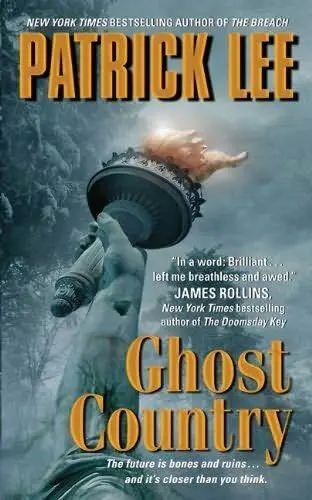
- Название:Ghost Country
- Автор:
- Жанр:
- Год:неизвестен
- ISBN:нет данных
- Рейтинг книги:3 / 5. Голосов: 1
-
Избранное:Добавить в избранное
- Отзывы:
-
Ваша оценка:
Ghost Country: краткое содержание, описание и аннотация
Предлагаем к чтению аннотацию, описание, краткое содержание или предисловие (зависит от того, что написал сам автор книги «Ghost Country»). Если вы не нашли необходимую информацию о книге — напишите в комментариях, мы постараемся отыскать её.
Ghost Country — читать онлайн бесплатно полную книгу (весь текст) целиком
Ниже представлен текст книги, разбитый по страницам. Система сохранения места последней прочитанной страницы, позволяет с удобством читать онлайн бесплатно книгу «Ghost Country», без необходимости каждый раз заново искать на чём Вы остановились. Поставьте закладку, и сможете в любой момент перейти на страницу, на которой закончили чтение.
Интервал:
Закладка:
"That's a lot to cram into twenty years," Paige said.
"Actually he crammed it into fifteen. His resume goes blank in 2006, right around the time the high-rise on M Street is built. If Muller has any income beyond that point, I can't find it. It may be that the company has made all his purchases for him these past five years. And that's it, for him."
There was a long silence as she pulled up the information on the second man.
"Isaac Finn," she said. She exhaled, the sound edged with a laugh. "You're not gonna believe this guy's background."
"Try us," Travis said.
"Relief work."
Paige turned in her seat. "What?"
"He's fifty-five. He has no formal education beyond high school. He graduated in 1973 and went straight into the Peace Corps, qualifying for it based on years of charity work in his teens. Stayed in the Corps for ten years, then came back to the States and spent a year rounding up financing to create his own organization, For Good International. At its peak, the group had over five thousand volunteers and paid staff, and an endowment of about seventy million dollars."
"Are you sure this isn't a different Isaac Finn?" Paige said.
Bethany double-clicked something on her phone. "Here's his passport photo." She handed the phone to Paige.
"That's him," Paige said. She stared at it a moment longer. She looked like she was trying to align the new information with what little she'd already known about the man. She gave it up after a few seconds and handed the phone back.
Bethany clicked to the bio information again. Her eyes roamed over it.
"He structured his group-and his approach-based on things he'd learned in the Corps. He'd seen that famines were generally not caused by weather, but by conflict, and the resulting breakdown of infrastructure. So his organization would try to reestablish stability in certain places, strengthen key communities in the hope that others around them would follow suit. He gave it a hell of a try, and he wasn't shy about using outside-the-box methods. He brought in psychological profilers to study the local leadership within villages, trying to determine which ones were cut out for actual governing, as opposed to just hoarding power. Then Finn would put his financial support behind the good guys, try to steer things onto the right track. He'd even apply that kind of thinking to entire communities. Try to exclude troublemakers, and empower those with certain basic attributes: kindness, concern for others, aversion to violence. Just anything to jump-start stability in enough places, and try to get the broader infrastructure back on its feet. Worth a shot, I guess."
"Did it work?" Travis said.
"I wouldn't say so. He tried it for a decade, in every place that seemed to need it. Ethiopia. Yugoslavia. Somalia. Then there was Rwanda. I think that was some kind of breaking point, for him. He was in the country for the first month of the genocide, April of 1994. And then he just left. He handed over control of his organization to those below him, cut all his ties to it, and walked away. For the next several years he didn't do much. He lived in D.C. Did some consulting, stateside, for humanitarian groups, but not a lot. In the late nineties he stopped doing even that, and as far as public or even private records are concerned, he more or less disappeared at that point. By the end of the decade his name was on no bank accounts, no property, no holdings of any kind. As far as I know, the next place anyone saw it written was on the door of that office on the sixteenth floor. How the hell it ended up there, I don't know."
She went silent.
"Anything else?" Travis said.
"Not about Finn. I found something interesting about his wife, but I'm not sure it's relevant." She navigated to the information. "Audra Nash Finn. Interesting background. Two doctorates: one in aerospace engineering from MIT, the other from Harvard, in philosophy."
"I build rockets, therefore I am?" Travis said.
"She didn't build much of anything for a while. She took a professorship at Harvard teaching philosophy, once she finished that degree. That was 1987. Held that position for quite a few years. Spent her summers abroad, involved in relief work. Met Finn somewhere along the way. Married him in 1990. Continued her teaching work but traveled often to help Finn in his efforts over the next four years. Then, Rwanda. That was the end of Audra's humanitarian streak too. The following year, summer of 1995, something strange happened. She co-authored an op-ed piece with Finn, and submitted it to the Harvard Independent for publication."
"What was it about?" Paige said.
"Nobody knows. It was rejected, and apparently before they could submit it elsewhere, certain influential people convinced them to sit on it. Mainly Audra's father, who was the governor of Massachusetts at the time. I guess he felt the piece was controversial, and could end up in attack ads against him. Everything I learned about this came from the Independent 's rival paper on campus, the Crimson. The staff over there tried like hell to get a copy of the op-ed, or a statement from someone who'd read it, but by then the fan was pretty well caked with shit, and nobody was talking."
"How bad could the thing have been?" Travis said.
"All the Crimson could pry out of their sources was that it was more than just an op-ed. That it was a proposal paper of some kind. Given that both Audra and Finn had just come away from Rwanda disillusioned to no end, we can guess what the subject was. Maybe not that crisis in particular, but it had to be some kind of policy suggestion about international relief. Some new idea. Maybe a pretty big idea. Whatever it was, it scared the hell out of her father. And to all appearances, that was the last anyone saw of the proposal. Audra resigned her position at Harvard that fall and went to work for Longbow Aerospace designing satellites. Finally decided to use her other degree, I guess. She died in a car accident two years later."
For the next minute they rode in silence. Travis was sure they were all thinking the same thing.
"The proposal paper could be unrelated to what's going on now," he said. "It could be just an interesting dot that doesn't actually connect. But if it does connect, then that paper was the origin of the plan Finn and his people are hiding now; in which case that proposal was Umbra. Maybe it was just talk back in 'ninety-five, and maybe it was small scale at the time. But if it's still in play, then it's become something bigger since then."
Paige thought it over. "Hard to believe a policy suggestion about refugee relief could lead to the end of the world."
"What if it's something that only touches on relief?" Bethany said. "Something involving food supplies, or crop growth in other parts of the world. Maybe Umbra is about genetic engineering of plants. That could go wrong on a large scale, theoretically."
"But neither of them had a background in genetics," Paige said. "And that kind of work is common now anyway, whatever the risks."
"We know this much," Travis said. "When you turned on the cylinder for the president, and he saw the ruins of D.C., he knew at a glance that Umbra was responsible. That's why he ordered the hit on the motorcade. But that only makes sense if he was already aware of the plan's potential to go wrong in some big, specific way. That could be the same risk that Audra's father saw, way back when he covered up the op-ed at Harvard. Whatever it was, it spooked him. Him and everyone on staff at the Independent."
Another long silence settled. The desert wind coursed through the Jeep, arid as blast-furnace exhaust. A few miles further on, Travis heard Bethany shift around in the backseat. He heard the zipper of her backpack open. He glanced and saw her take the cylinder into her lap.
Читать дальшеИнтервал:
Закладка:
Похожие книги на «Ghost Country»
Представляем Вашему вниманию похожие книги на «Ghost Country» списком для выбора. Мы отобрали схожую по названию и смыслу литературу в надежде предоставить читателям больше вариантов отыскать новые, интересные, ещё непрочитанные произведения.











Обсуждение, отзывы о книге «Ghost Country» и просто собственные мнения читателей. Оставьте ваши комментарии, напишите, что Вы думаете о произведении, его смысле или главных героях. Укажите что конкретно понравилось, а что нет, и почему Вы так считаете.