Tom Smith - Secret speech
Здесь есть возможность читать онлайн «Tom Smith - Secret speech» весь текст электронной книги совершенно бесплатно (целиком полную версию без сокращений). В некоторых случаях можно слушать аудио, скачать через торрент в формате fb2 и присутствует краткое содержание. Жанр: Триллер, на английском языке. Описание произведения, (предисловие) а так же отзывы посетителей доступны на портале библиотеки ЛибКат.
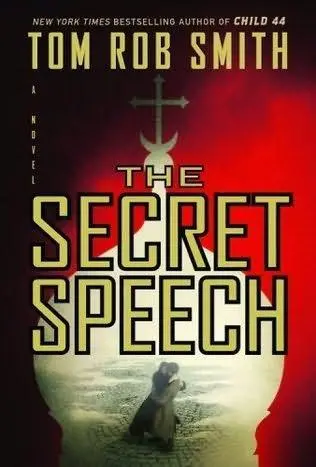
- Название:Secret speech
- Автор:
- Жанр:
- Год:неизвестен
- ISBN:нет данных
- Рейтинг книги:5 / 5. Голосов: 1
-
Избранное:Добавить в избранное
- Отзывы:
-
Ваша оценка:
Secret speech: краткое содержание, описание и аннотация
Предлагаем к чтению аннотацию, описание, краткое содержание или предисловие (зависит от того, что написал сам автор книги «Secret speech»). Если вы не нашли необходимую информацию о книге — напишите в комментариях, мы постараемся отыскать её.
Secret speech — читать онлайн бесплатно полную книгу (весь текст) целиком
Ниже представлен текст книги, разбитый по страницам. Система сохранения места последней прочитанной страницы, позволяет с удобством читать онлайн бесплатно книгу «Secret speech», без необходимости каждый раз заново искать на чём Вы остановились. Поставьте закладку, и сможете в любой момент перейти на страницу, на которой закончили чтение.
Интервал:
Закладка:
The surviving guards and Gulag personnel, some fifty in total, had been gathered in the center of the administration zone. Most were injured. Without blankets or medical care, huddled on the snow, their discomfort was met with indifference, a lesson well learned by the prisoners. In evaluation of Leo’s ambiguous status he’d been classified as a guard rather than a prisoner, forced to sit, shaking with cold, observing the old power structures collapse and new ones form.
As far as he could ascertain there were three unelected leaders, men whose authority had been established within the microcosm of their barracks. Each man had his own band of followers, distinctly defined. Lazar was one leader. Those who followed him were older prisoners, the arrested intellectuals, craftsmen-the chess players. The second leader was a younger man, athletic, handsome, perhaps a former factory worker-the perfect Soviet, and yet imprisoned all the same. His followers were younger, men of action. The third leader was a vory. He was perhaps forty, with thin eyes and jagged teeth, a shark’s smile. He’d taken possession of the commander’s coat. Too long for him, it dragged across the snow. His followers were the other vory: thieves and murderers. Three groups, each represented by their leader, each with competing points of view. The clashes of opinion were immediate. Lazar, voiced by red-haired Georgi, counseled caution and order:
– We must establish lookouts. We must take up arms along the perimeter.
After many years of practice Georgi was able to speak at the same time as listening to Lazar:
– Furthermore, we must protect and ration our food supplies. We cannot run amok.
The square-jawed worker, clipped from a reel of a propaganda movie, disagreed:
– We are entitled to as much food as we can get our hands on and any drink we can find as compensation for lost wages, as a reward for winning our freedom!
The reindeer-coat vory made only one demand:
– After a lifetime of rules, disobedience must be tolerated.
There was a fourth group of prisoners, or rather a nongroup, individuals who followed no leader, intoxicated on liberty, some running like wild horses, bolting from barrack to barrack, exploring, whooping at unidentifiable pleasures, either turned mad by the violence or mad all along and able to express it at last. Some were asleep in the guards’ comfortable beds: freedom being the ability to close their eyes when they were tired. Others were doped up on morphine, or drunk on their former captors’ vodka. Laughing, these men cut strips out of the wire fences, turning the hated barbed wire into ornamental trinkets with which they decorated the guards who once commanded them, pressing barbed-wire crowns onto their heads, mockingly referring to them as the sons of God and calling out:
– Crucify the fuckers!
Witnessing the anarchy orbiting them, Lazar pressed his argument, whispering to Georgi, who repeated:
– We must protect supplies as a matter of urgency. A starving man will eat himself to death. We must stop cutting the wire. It is protection from the forces that will inevitably arrive. We cannot counsel absolute freedom. We will not survive.
Judging from the reindeer-coat vory ’s muted reaction, much of the looting had already been done. The most precious resources were already in his group’s hands.
The square-jawed worker, whose name Leo didn’t know, agreed to take some of the steps proposed, practical measures, as long as they dealt with the pressing matter of punishments for the captured guards:
– My men must have justice! They have waited years! They have suffered! They cannot wait a moment longer!
He spoke in slogans, every sentence ending in an exclamation mark. Though Lazar was reluctant to postpone the practical measures, he compromised in order to win support. The guards were to be placed on trial. Leo was to be placed on trial.
One of Lazar’s followers had once been a lawyer, in his former life, as he referred to it, and took a prominent role in setting up the tribunal by which Leo and the others were to be judged. He devised his system with relish. After years of submissive groveling, the lawyer delighted in returning to a tone of authority and expertise, a tone that he considered naturally his:
– We agree that only the guards will be tried. The medical staff and the former prisoners who now work for the Gulag administration are exempt.
This proposal was agreed. The lawyer continued:
– The steps to the commander’s office will serve as the court’s stage. The guard will be led to the bottom step. We, the free men, will call out examples of their brutality. If an incident is considered valid the guard will take a step up. If the guard reaches the top they will be executed. If they do not, even if they reach the penultimate step and no more crimes can be found against them, the guard will be allowed to descend the stairs and sit down.
Leo counted the steps. There were thirteen in total. Since they started on the bottom step, that meant twelve crimes to reach the top: twelve to die, eleven or less to live.
Dropping his voice, striking a note of deliberate gravitas, the lawyer called out:
– Commander Zhores Sinyavksy.
Led to the first step, Sinyavksy faced his court. His shoulder had been crudely bandaged, the bleeding stopped in order to keep him alive long enough that he might face justice. His arm hung uselessly. Despite this, he was smiling like a child in a school play, searching for a friendly face among the gathered prisoners. There was no single representative for defense or the prosecution: both sides were to be debated by the assembled prisoners. Judgment was collective.
Almost immediately a chorus of voices called out. There were insults, examples of his crimes, overlapping, unintelligible. The lawyer raised his arms, calling for silence:
– One at a time! You raise your hand, I will point, and then you will speak. Everyone will have a say.
He pointed at a prisoner, an older man. The prisoner’s hand remained raised. The lawyer remarked:
– You can lower your hand. You’re free to speak.
– My hand is the proof of his crime.
Two fingers were cut off at the knuckles, blackened stumps.
– Frostbite. No gloves. Minus fifty degrees: so cold that when you spit, the spit turns to ice before it hits the ground. He still sent us out, in conditions not suitable for spit! He sent us out! Day after day after day! Two fingers, two steps!
Everyone cheered in agreement. The lawyer straightened his gray prison-issue cotton coat, as if it were a formal frock:
– It is not about the number of fingers you lost. You cite inhumane work conditions. The crime has been agreed. But that is one example and therefore one step.
A voice from the crowd:
– I lost a toe! Why doesn’t my toe count for a step?
There were more than enough deformed and blackened fingers and toes to force the commander to the top. The lawyer was losing control, unable to scramble enough rules into place to sedate the animated crowd.
Cutting across the debate, the commander called out:
– You are right! Your injury is a crime. Each of the injuries you have suffered is a crime.
The commander took another step up. The interjections faded, the arguments silenced as they listened:
– The truth is that I have committed more crimes than there are steps. Were there steps up to the mountaintop, I would have to climb them all.
Aggrieved that his system had been bypassed by this confession, the lawyer responded:
– You accept that you deserve to die?
The commander answered indirectly:
– If you can take a step up, can you not also take a step down? If you can do wrong can you not also do good? Can I not try and put right the wrongs that I have done?
Читать дальшеИнтервал:
Закладка:
Похожие книги на «Secret speech»
Представляем Вашему вниманию похожие книги на «Secret speech» списком для выбора. Мы отобрали схожую по названию и смыслу литературу в надежде предоставить читателям больше вариантов отыскать новые, интересные, ещё непрочитанные произведения.





Обсуждение, отзывы о книге «Secret speech» и просто собственные мнения читателей. Оставьте ваши комментарии, напишите, что Вы думаете о произведении, его смысле или главных героях. Укажите что конкретно понравилось, а что нет, и почему Вы так считаете.