Gerald Seymour - Holding the Zero
Здесь есть возможность читать онлайн «Gerald Seymour - Holding the Zero» весь текст электронной книги совершенно бесплатно (целиком полную версию без сокращений). В некоторых случаях можно слушать аудио, скачать через торрент в формате fb2 и присутствует краткое содержание. Жанр: Триллер, на английском языке. Описание произведения, (предисловие) а так же отзывы посетителей доступны на портале библиотеки ЛибКат.
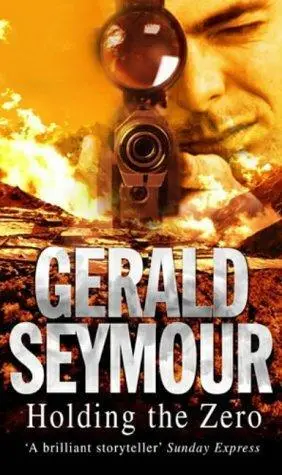
- Название:Holding the Zero
- Автор:
- Жанр:
- Год:неизвестен
- ISBN:нет данных
- Рейтинг книги:3 / 5. Голосов: 1
-
Избранное:Добавить в избранное
- Отзывы:
-
Ваша оценка:
Holding the Zero: краткое содержание, описание и аннотация
Предлагаем к чтению аннотацию, описание, краткое содержание или предисловие (зависит от того, что написал сам автор книги «Holding the Zero»). Если вы не нашли необходимую информацию о книге — напишите в комментариях, мы постараемся отыскать её.
Holding the Zero — читать онлайн бесплатно полную книгу (весь текст) целиком
Ниже представлен текст книги, разбитый по страницам. Система сохранения места последней прочитанной страницы, позволяет с удобством читать онлайн бесплатно книгу «Holding the Zero», без необходимости каждый раз заново искать на чём Вы остановились. Поставьте закладку, и сможете в любой момент перейти на страницу, на которой закончили чтение.
Интервал:
Закладка:
He had not yet broken, not yet given names.
The brigadier knew of the reputation of the little puny bastard with the voice that was never raised, and with the thin-boned fingers that had held the pliers. The reputation said his patience was great and failure was never accepted. He had tried not to cry out, even when the pain ran like rivers in him, because to cry out was to weaken her as she waited for them to return to her cell. He heard sometimes her whimpered cries, and once he heard her scream, and he thought that they burned her. What they had done to him, what they now did to her, was as nothing to the agony that awaited them both if they did not break, because the bastard’s reputation was for a refusal to be beaten.
When he had seen her first, she had been vibrant and so patronizing of him – but his ears heard her fear and the eyes of his mind saw the cigarettes ground out on her, the fingers prising into her. And when she had cried, screamed, weakened him, they would come back to his cell. He did not know how long he could last, but he knew that when he broke, others, now trusting in his courage, would follow him into the dark cells to await the coming of Commander Yusuf.
Isaac Cohen heard the radio transmissions as they were decyphered by his computers.
He felt a crippling weight of sadness. She was not one of their own, but the grief was as acute as if she had been.
In Tel Aviv, there were old men of the Mossad, retired and gathering now in the pavement cafes on Ben Yehuda, who had spoken of that pitiful and helpless sadness when the news had leaked of Elie Cohen’s capture in Damascus and of his execution in Simiramis Square. So much power at their disposal and none of it able to pluck out a patriot from a cell and from the gallows’ platform… There were the veterans of the Agency, whom he had met on Washington visits, who had spoken of that same burden of sadness when the news had filtered through of the taking in Beirut, and the subsequent death, of Bill Buckley – and a greater power had been worthless.
He remembered her as she had been when he had seen her in the mountains: certain, confident, at the edge of conceit, dismissive of his help. The torches had played on her eyes, and he had known why men followed her. He wanted to remember the certainty, the confidence, because then he did not imagine her in the cells of Fifth Army. The old men that he’d known had said to him that when Elie Cohen was in the cells in Damascus, they could not sleep, rest, laugh, make love to their women, could not live. He would talk to the sniper when the remnant army straggled back and hear how it had happened, and he might curse him for allowing it to happen… He was not the lapdog of the Americans. If his sadness permitted it, he would call them in the morning, but that night he would think of her, and say a prayer for her.
Gus asked, ‘Will you go to see the old man, Hoyshar, for me?’
‘I will.’ Haquim’s hawk eyes beaded on him.
‘Tell the old man everything that has happened.’
Haquim nodded.
‘And he should write about it, and what he writes he should send to my grandfather.’
‘I will do what you ask – but I tell you, Mr Peake, this death wish will achieve nothing.’ There was a choke in Haquim’s voice.
The column had begun to march away. The wounded were carried on the strongest men’s backs and on litters. Over Haquim’s shoulder, Gus could see the long straggle of the fighters. They were slow going, at the start, but he thought that when they sniffed the fine air of the high ground their pace would quicken, and they would have the goal of home to stretch their strides.
Gus said, ‘I am grateful for your advice, and I want your forgiveness.’
‘For what?’ Haquim asked gruffly.
Simply said, ‘For the insults I heaped on you.’
Their hands clasped, locked, the gnarled, blistered hands of the older man and those of the younger man. Gus could see the laid-out lights of Kirkuk and the silhouettes of the higher buildings, the towering flame that had been the unattainable target. It was about respect, which was precious to him.
Haquim said, ‘There is a remote possibility that I can save her. I have to attempt it, but I have little time.’
Their hands slipped apart. Haquim leaned over Gus and whipped his fist against Omar’s face. That, too, was about respect. Then he was on his way. Gus thought that a lesser man than Haquim would have turned, hesitated, waved a final time, but there was no such gesture. There was no stolen moment for the softness of sentiment. He watched Haquim hobbling away into the fading light to catch the tail of the column.
Gus twisted towards Omar and said, ‘You can still go…’
Stubbornly, his face lowered, the boy shook his head.
‘There is a life for you, stealing and thieving and pilfering, looting from the dead, there is still a chance of a life for you.’
‘Major Herbert Hesketh-Prichard always needed an observer.’
Gus’s voice shrilled in the dark space under the overhang, into the infuriating calm of the boy’s eyes: ‘You can go, damn you, and feel no shame. You can run, reach them, and live.’
He watched the column merge into the gloom. For Gus, it was like the breaking of a linked chain, which, while secure, led to Hoyshar and on from Hoyshar to another old man, and from his grandfather to his parents, his woman, his work and the long weekend days on Stickledown Range. But the column had disappeared into the last traces of grey light and he could no longer hear the shuffling of their boots, or the scrape of the litters.
A chain was broken, but new chains were fastened. There would be chains on her ankles; a chain held him to her, a chain held the boy to him. He snatched at Omar’s tunic top, caught it at the collar, wrenched the boy up then pushed him hard away from him, away towards where the column had gone. The boy sat beyond his reach. Gus picked up a stone and hurled it savagely at him, then another. They scudded past the small body with his patient, staring eyes.
Gus shouted, ‘Go, you little bastard, and live! Thieve from the dead and the wounded.
I don’t need you. I don’t want you. Head away out of here – do as you’re bloody told!
Go.’
His voice, trapped by the overhang, boomed around him. He threw one more stone and hit the boy’s shoulder. He saw Omar wince, but any cry was stifled and the boy did not rub the place where the stone had struck.
‘We are all not happy, Mr Gus, not only you.’ Then the cheek came, and the grin cracked across the boy’s smooth face. ‘Did you fuck her?’
Gus shook his head, slowly and miserably. He could not remember the taste of her or the feel of her. ‘I kissed her, I loved her.’
‘We all loved her, Mr Gus, not only you. Please, tell me a story from Major Hesketh-Prichard.’
Gus jerked his back straight. He recognized that the argument was ended, settled. The link to the past had gone with the column. They would be in Kirkuk by dawn.
‘No man’s land – where there were shell craters and fallen trees – was the best place for observers, where they were most valuable, and any unit with an aggressive commander always tried to dominate there. An intelligence officer with the 4th Battalion of the Royal Berkshire Regiment called Mr Gaythorne-Hardy thought it was necessary to know the exact layout of the German defences on Hill Sixty-three at a place called Messines. There was no point going at night across the four hundred yards of no man’s land because at night he wouldn’t be able to see the plan of their trenches and their defences so he went in daylight. It would have taken him hours to cross the open ground, and all the time the German snipers and sentries would have been watching it, but he was good enough in his fieldcraft to get right up to the enemy wire, to learn everything there was to know about their position. He was under their noses, but they did not see him.
Читать дальшеИнтервал:
Закладка:
Похожие книги на «Holding the Zero»
Представляем Вашему вниманию похожие книги на «Holding the Zero» списком для выбора. Мы отобрали схожую по названию и смыслу литературу в надежде предоставить читателям больше вариантов отыскать новые, интересные, ещё непрочитанные произведения.







Обсуждение, отзывы о книге «Holding the Zero» и просто собственные мнения читателей. Оставьте ваши комментарии, напишите, что Вы думаете о произведении, его смысле или главных героях. Укажите что конкретно понравилось, а что нет, и почему Вы так считаете.