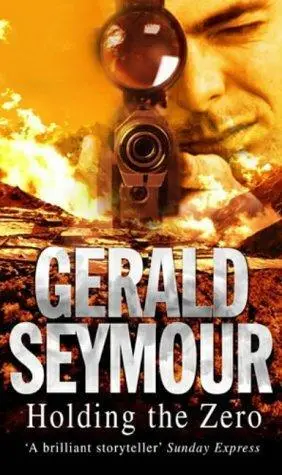
Gerald Seymour - Holding the Zero
Здесь есть возможность читать онлайн «Gerald Seymour - Holding the Zero» весь текст электронной книги совершенно бесплатно (целиком полную версию без сокращений). В некоторых случаях можно слушать аудио, скачать через торрент в формате fb2 и присутствует краткое содержание. Жанр: Триллер, на английском языке. Описание произведения, (предисловие) а так же отзывы посетителей доступны на портале библиотеки ЛибКат.
- Название:Holding the Zero
- Автор:
- Жанр:
- Год:неизвестен
- ISBN:нет данных
- Рейтинг книги:3 / 5. Голосов: 1
-
Избранное:Добавить в избранное
- Отзывы:
-
Ваша оценка:
Holding the Zero: краткое содержание, описание и аннотация
Предлагаем к чтению аннотацию, описание, краткое содержание или предисловие (зависит от того, что написал сам автор книги «Holding the Zero»). Если вы не нашли необходимую информацию о книге — напишите в комментариях, мы постараемся отыскать её.
Holding the Zero — читать онлайн бесплатно полную книгу (весь текст) целиком
Ниже представлен текст книги, разбитый по страницам. Система сохранения места последней прочитанной страницы, позволяет с удобством читать онлайн бесплатно книгу «Holding the Zero», без необходимости каждый раз заново искать на чём Вы остановились. Поставьте закладку, и сможете в любой момент перейти на страницу, на которой закончили чтение.
Интервал:
Закладка:
Aziz found a place close to the command bunker where a small shaft of light spilled out from a narrow firing slit. Also, a part of his routine was to carry in his backpack a few sheets of crumpled writing-paper, with envelopes. He was hunched down so that the spear of light was on his raised thigh, where the paper rested. He wrote only a half-dozen lines. He had written the same letters many times, for fear of not saying goodbye, in Kirkuk, in Basra, and in Kuwait City. The following morning, or a week afterwards, each of those letters had been destroyed, ripped to shreds, because he had lived. He wrote of his love for her, and for the boys – they were jewels on which fell the golden sun – and he thanked her for the happiness she had given him. When he had finished he sealed the sheet of paper in an envelope, put her name on it and placed it in the breast pocket of his shirt, where it would be close to his heartbeat. If he were killed, if he died the next day, or the day after, he held the hope that the letter would be retrieved from his body, perhaps stained in blood, and that it would be taken back to her. Once it was in his pocket, the moments of self-doubt evaporated, the time for reflection was finished.
He slipped into the command bunker. It was buried in the sandy soil, roofed by heavy timbers that were, in turn, covered with bulldozed earth. There was quiet inside, as if the staff officers had already made their preparations. Aziz asked for the plan for the morning, and guidance as to where he and his Dragunov should be positioned. He explained where he believed the enemy’s sniper would be. *** Joe Denton’s voice dripped at him – where he should be, how he should lay the mines, and how and at what point he should arm them.
The column had formed in the darkness outside the police station. Gus said that he understood the plan and thanked Joe for it. Denton reached up, caught at the hessian straps on Gus’s shoulders and kissed his cheek, not wet but a brush of the lips against the stubble and the patina of dirt and paint, then turned away. He saw Denton climb into a truck beside the aid-worker. The headlights led a convoy of lorries away to the north; more wounded from the battle for Tarjil were being moved to safety. If he had been able to see the man’s face, Denton’s, then he thought there might have been tears in the eyes.
It was Gus’s duty to go forward, but not Denton’s, nor was his the responsibility of a grandfather’s friendship: he was the victim of destiny, but Joe Denton was not.
After the convoy’s lights had slipped away into the darkness, he heard Meda’s hectoring voice at the front of the column. When she paused for breath, there was the coughed, spluttered echo of approval. There was a last declaiming shout from her, an exhortation, and the answering bellow of loyalty.
Shuffling at first, but growing in speed, the column surged out of the town. There were no doors open, no upper windows unshuttered, no knots of civilians to watch them go. It was as though they had come as liberators and left as a conquering army of occupation.
He remembered the tide of vengeance that had accompanied them. The tramping feet of the column marched over the place where the tarmacadam had been scorched, and under the doused light on the lamp-post over which the noose had been hooked. He walked with Omar and the four men carrying the grain sacks that held the mines. Whether they were liberators or occupiers was the judgement to be made by the people who did not wish them well. Their judgement hammered him. If they were victors they would be liberators; if they were losers they would be occupiers. It hammered him because the people of Tarjil had branded them, sunk the fire into the flesh, as losers. No man or woman would shout support for a loser and wish them well. Dirty, fetid, the column left the town and its darkened, empty streets.
Gus thought the mood of the town, its judgement, had caught many of the peshmerga.
It was not until they were out of the town that the men began to sing. Again and again, with the deep power of their voices, the refrain of the anthem was howled into the night.
It was the sound of hungry wolves that came in winter from the high ground to stalk beside barricaded homes in search of food. It was the sound of a predator. Omar sang with them, a high shrill note, as if to prove his adulthood.
‘What do they sing?’
He could not see the boy’s face in the darkness.
‘We are the peshmerga, brave heroes of Kurdistan, We will never lay down our arms, We fight until victory or death.’
Gus grimaced. ‘That’s bloody cheerful, Omar.’
‘We are not frightened of death, Mr Gus. You cannot be frightened of death or you would not have come. We have the power, we have Meda
…’
Gus marched on. It was strange to him that the bold words Meda had used in the town to the peshmerga, and the repetition of the anthem, demonstrated a willingness to face death. He had seen her with the aid-worker when he had been receiving the instructions from Joe Denton. He wondered if Meda had shown the flesh wound to her, whether it had been dressed again, whether it was poisoned or clean. His blister hurt but the pace of the march did not allow him to slow and hobble. It seemed a lifetime since he had last slept decently or eaten well. He thought the civilization of an old life was being steadily stripped from him.
When they were well clear of the town, when no torches were used, when they moved in thin moonlight, the singing died. Haquim had been along the line and demanded quiet.
A discipline had settled on the column. Gus wondered, in the quiet broken only by the scrape of weapons’ metal and the tramp of feet, if the men thought of home and families
– or were their minds as empty as the wolves’, the predators’? His own mind, except for the pain of the blister, was void of emotion.
Haquim materialized from the milky darkness. They had reached the point where Gus, Omar, the men carrying the mines and the mustashar would break away from the main march towards the crossroads. Meda was beside him.
Meda said, sarcastic, ‘Do you need a chair to sit on?’
‘I’ll send down for room-service and get a beer.’
‘You will be comfortable away from the real work, fighting.’
‘I’ve a good book to read.’
She was brittle, contemptuous. ‘There will be no tanks.’
‘Then I’ll enjoy my beer and get on with my book. It’ll be a pleasant day out.’
She flounced away, strode off up the column, and in a moment was lost among her men. It was a bad parting. If either of them did not survive the day ahead, the last memory would be of contempt and mockery. The column was going south, but the small group edged to the east and started the big loop that would take them to where Joe Denton advised they should be. Omar led. He had no compass, and had never crossed that featureless, dark-shrouded ground before. He had only been shown on the map but did not pause or look around him. Gus thought it the innate genius of the young dog-wolf.
The boy stopped, crouched, his arm held back, hand open, demanding their total stillness and silence. Gus heard the approaching sounds, the wind over dried leaves. They were huddled together, low on the open ground as the sounds grew closer. At first it merged with the night then, clear in the moonlight, a great caravan passed them. Sheep, men, goats, women, donkeys, children, dogs, all slipped by, never wavering in the path of their journey. Gus was awestruck at the simplicity of what he saw. A nomad tribe on the move, as they had whispered over the ground at night in the time of Cyrus and Salah alDin Yusuf, nothing changed, secure against the predators, the newer dictators and demagogues. Maybe they had heard, as their forebears would have, that a battle was to be fought, and they moved on. Their dark line passed. As the sounds faded into the night, Omar started out again.
Читать дальшеИнтервал:
Закладка:
Похожие книги на «Holding the Zero»
Представляем Вашему вниманию похожие книги на «Holding the Zero» списком для выбора. Мы отобрали схожую по названию и смыслу литературу в надежде предоставить читателям больше вариантов отыскать новые, интересные, ещё непрочитанные произведения.

Обсуждение, отзывы о книге «Holding the Zero» и просто собственные мнения читателей. Оставьте ваши комментарии, напишите, что Вы думаете о произведении, его смысле или главных героях. Укажите что конкретно понравилось, а что нет, и почему Вы так считаете.