Louis L'Amour - Last of the Breed
Здесь есть возможность читать онлайн «Louis L'Amour - Last of the Breed» весь текст электронной книги совершенно бесплатно (целиком полную версию без сокращений). В некоторых случаях можно слушать аудио, скачать через торрент в формате fb2 и присутствует краткое содержание. Город: New York, Год выпуска: 2010, ISBN: 2010, Издательство: Random House Publishing Group, Жанр: Триллер, Историческая проза, Приключения про индейцев, на английском языке. Описание произведения, (предисловие) а так же отзывы посетителей доступны на портале библиотеки ЛибКат.
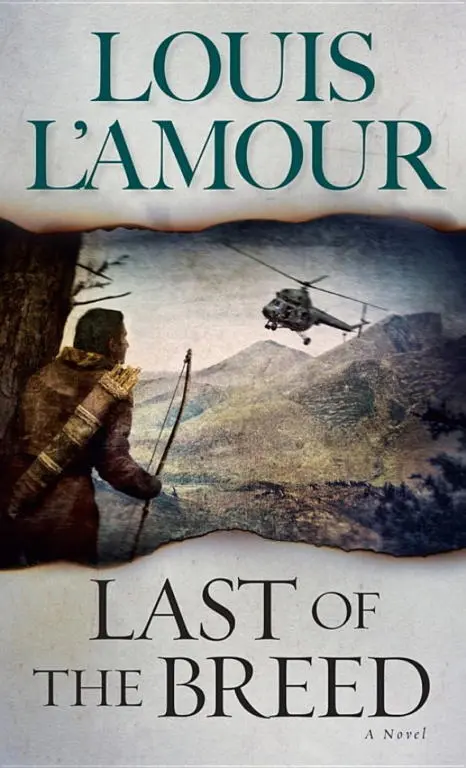
- Название:Last of the Breed
- Автор:
- Издательство:Random House Publishing Group
- Жанр:
- Год:2010
- Город:New York
- ISBN:978-0-553-89935-1
- Рейтинг книги:3 / 5. Голосов: 1
-
Избранное:Добавить в избранное
- Отзывы:
-
Ваша оценка:
Last of the Breed: краткое содержание, описание и аннотация
Предлагаем к чтению аннотацию, описание, краткое содержание или предисловие (зависит от того, что написал сам автор книги «Last of the Breed»). Если вы не нашли необходимую информацию о книге — напишите в комментариях, мы постараемся отыскать её.
Last of the Breed — читать онлайн бесплатно полную книгу (весь текст) целиком
Ниже представлен текст книги, разбитый по страницам. Система сохранения места последней прочитанной страницы, позволяет с удобством читать онлайн бесплатно книгу «Last of the Breed», без необходимости каждый раз заново искать на чём Вы остановились. Поставьте закладку, и сможете в любой момент перейти на страницу, на которой закончили чтение.
Интервал:
Закладка:
“I shall be expecting him.”
“You are not afraid?”
“He is a man. I am a man. We will see.”
He added a few sticks to the fire. “Good luck, Russian. Next time, tell your pilot to stay out of matters that do not concern him.”
He walked away into the darkness.
Of course, he had delayed too long. When there was no word from the helicopter, a search would begin. Once the helicopter was found, they would know where he was, approximately.
Khonuu? It was a town on the Indigirka, and Yakov was a prisoner there.
Yakov, who had helped him, gone out of his way to guide him. Yakov, who was a free spirit and partly of Tungus blood. Yakov, who refused to be harnessed. Yakov was a prisoner. Yet what could he, Joe Mack, do? He did not know the town or the airfield. The chances were great, however, that Yakov would be held at the airfield awaiting transportation to wherever the KGB wanted him. After interrogation, Yakov would be killed. Of that there could be no question.
Khonuu was not that far out of his way, yet he had avoided populated districts, knowing he would be recognized for who he was almost at once.
When it was light enough to see, he began to run. He ran easily, smoothly, careful of each step. Black, bare trees stretched bare black arms against the lightening sky. He ran into the dawn, an Indian, feeling himself an Indian, and when he found a dim game trail he went along it, finding it led him down the mountain.
The long hard months had left him lean and strong. As a cold sun arose from the far-distant gray clouds, he ran toward it, and then the trail took him north. He was going the way he must. Was it fate? He did not believe in fate, but something seemed to be guiding him as he ran.
He was a warrior, and another warrior, brother to him in spirit, was in trouble. He knew the risk, knew the slight chance he had of even finding where Yakov was held, but he took the chance freely.
Once, long ago, he had seen a young Chinese on the gallows waiting for the noose. He had said, “Some mans spend nice new money. I spend nice new life.”
“If I must, I will,” he told himself. “I am alone, and nobody awaits me.”
Nobody? What of her? What of Natalya? Did she await him somewhere? Or was he forgotten, something that had drifted across her life like a passing cloud?
What had she promised? Nothing. What had he offered? To come for her, when both knew it was a vain, desperate promise to which no sane person would hold him. Yet in that respect he might not be sane, for he truly expected to return, to take her from the shore at Plastun Bay.
Foolish? Of course, but so many things worth doing may seem foolish to others, may seem impossible.
He ran down the mountain in the morning’s gray light and found his way into the shadowed firs, the black guardian firs that clustered along his way. He crossed frozen streams and ran through patches of thin snow where his moccasins barely left a track behind.
When the sun was warm he found a place among the willows and slept, and when the sun was higher still he awakened. For a long time he stood, listening to the wind, hearing what was moving, watching the flight of birds, and they seemed unafraid and undisturbed. He began to run once more, for he had far to go and did not know how much time he had.
He saw no one and heard nothing but, once, far off, the ring of an ax chopping wood.
The morning opened wide before him, and the forest thinned again. In the distance he saw the smoke of cooking fires in the homes of those he did not know, and far off a city against the sky and a river between.
He slowed to a walk. A running man would be seen and would invite questions to which he had no answers. Now he must find the airfield. He was guessing, judging Yakov would be held waiting for the transportation to take him away. Now to scout the field and see where such a man might be held. And after that?
He was a warrior, and for a warrior any day was a good day to die.
Only he expected to live. He needed to live to free Yakov, to count coup on his enemies, and to meet a golden lady on a distant shore.
He was no longer an officer and a gentleman, no longer a flyer for the American Air Force; he was, for now, an Indian. And he had enemies.
There were scattered houses. One man, carrying an armful of wood, glanced at him, then went inside.
He walked steadily on. He saw a small plane take off and knew where the airfield was. He changed direction, walked among some houses, and crossed a bridge. His heart was pounding, his mouth dry. His AK-47 was hidden under his coat, his bow appeared to be a staff, no more than that.
It was very early and very cold. Nobody went willingly into the cold on such a day.
Two men walked before him, two thick men in thick coats and dark fur hats. They walked steadily and did not look back, but the walk of one was familiar. He unfastened the string that tied his coat and let his hand touch the butt of the AK-47. He was ready, but he took longer strides to move faster without seeming to hurry.
The man turned around, and it was Botev.
Chapter 40
For a moment Botev stood still. Then he reached out and touched his companion. The other man turned, and it was Borowsky.
Were they to be considered friends or enemies? They were, after all, Russians. Yet they had differences with their government. He walked closer.
“You are still free,” Botev said. “It is an achievement.”
“Yakov is a prisoner.”
“That is why we are here.”
“He is at the airfield?”
Botev’s eyes swept the area around to see if they were attracting attention. Nobody was in sight.
“He is there. There are four KGB men with him. They are in a small waiting room near the control center, waiting for the plane to come and take them away. It will be a helicopter, I believe.”
“You have a plan?”
Botev shrugged. “How can we plan? We know so little. He is there and we wish to free him. If we free him, we can escape into the taiga. We have friends there, scattered friends. We also have friends in Magadan.”
“I did not know there were so many of you.”
Borowsky shrugged. “We are few, comrade, very few. We are not seeking to overthrow the government, even if that were possible. We only want some freedom for ourselves and to protect our own. Yakov is one of the best. We need him. He has helped all of us from time to time.”
“Our choice is limited,” Botev said. “The taiga or a prison camp, and for Borowsky and me, they would put us to work that would soon kill us. If they did not torture us to death. We can expect nothing less. Neither can Yakov.”
“We had better move on,” Borowsky said. “To stand talking in the cold is unreasonable. We will attract attention.”
“Four men, you say? There will be others about?”
Borowsky shrugged. “Perhaps, Most of them will not like the KGB, but we cannot tell what they might do.”
They walked on in silence along the snow-covered road. They passed a long building like a warehouse and then some smaller buildings. They could see the field now. It had several hangars, a building that was probably an administration building with a tower, and a smaller building nearby with a Volga standing before it.
Joe Mack said, “There’s a chopper coming in now. Will that be it?”
“It will. When they start for the chopper, we had better take them.”
“No,” Joe Mack said. “Let’s take the chopper. I can fly it.”
“Well—”
“It will get us out of town. There will be planes after us, but we can ditch it and take to the woods.”
They paused beside a hangar. “When it lands,” Botev said, “they will drive out in the Volga. They will not expect trouble.”
Читать дальшеИнтервал:
Закладка:
Похожие книги на «Last of the Breed»
Представляем Вашему вниманию похожие книги на «Last of the Breed» списком для выбора. Мы отобрали схожую по названию и смыслу литературу в надежде предоставить читателям больше вариантов отыскать новые, интересные, ещё непрочитанные произведения.



Обсуждение, отзывы о книге «Last of the Breed» и просто собственные мнения читателей. Оставьте ваши комментарии, напишите, что Вы думаете о произведении, его смысле или главных героях. Укажите что конкретно понравилось, а что нет, и почему Вы так считаете.