Gordon Reece - Mice
Здесь есть возможность читать онлайн «Gordon Reece - Mice» весь текст электронной книги совершенно бесплатно (целиком полную версию без сокращений). В некоторых случаях можно слушать аудио, скачать через торрент в формате fb2 и присутствует краткое содержание. Год выпуска: 2009, ISBN: 2009, Жанр: Триллер, на английском языке. Описание произведения, (предисловие) а так же отзывы посетителей доступны на портале библиотеки ЛибКат.
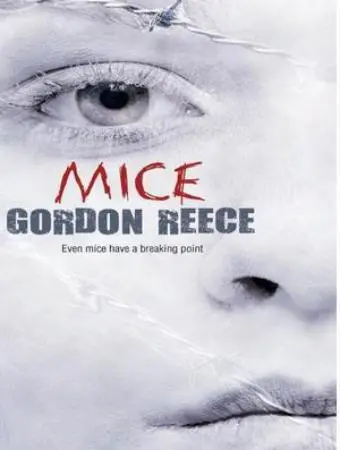
- Название:Mice
- Автор:
- Жанр:
- Год:2009
- ISBN:978-1-10151771-0
- Рейтинг книги:3 / 5. Голосов: 1
-
Избранное:Добавить в избранное
- Отзывы:
-
Ваша оценка:
Mice: краткое содержание, описание и аннотация
Предлагаем к чтению аннотацию, описание, краткое содержание или предисловие (зависит от того, что написал сам автор книги «Mice»). Если вы не нашли необходимую информацию о книге — напишите в комментариях, мы постараемся отыскать её.
Debut novelist Gordon Reece has written a taut tale of gripping suspense, packed with action both comic and terrifying. Shelley is a spellbinding narrator, and her delectable mix of wit, irony, and innocence transforms the major current issue of bullying into an edge- of-your-seat story of fear, violence, family loyalty, and the outer reaches of right and wrong.
Mice — читать онлайн бесплатно полную книгу (весь текст) целиком
Ниже представлен текст книги, разбитый по страницам. Система сохранения места последней прочитанной страницы, позволяет с удобством читать онлайн бесплатно книгу «Mice», без необходимости каждый раз заново искать на чём Вы остановились. Поставьте закладку, и сможете в любой момент перейти на страницу, на которой закончили чтение.
Интервал:
Закладка:
There’d be a quote from a relative (his mother? his wife?) asking him to make contact as they were ‘worried sick about him’, and adding, ‘It’s not like Paul to disappear without telling anyone where he was going.’ And then would come the devastating sentence that would make my blood run cold, the sentence that would spell the beginning of the end for Mum and me: ‘Mr Hannigan’s car was seen badly parked in a country lane on the twelfth of April and reported to the police by a local farmer. .’
Or even worse: Police are looking for two women, possibly a mother and daughter, who were seen leaving Mr Hannigan’s car in the car park of the Farmer’s Harvest two days after his disappearance; an eyewitness who spoke to them has given police a detailed description of the women. . the police investigation is continuing.
They’d only have to interview the taxi driver who brought us home that night to know exactly where to find us.
But there was nothing in the papers about Paul Hannigan, absolutely nothing.
I was relieved, of course. I didn’t want to see that weasel face smiling back at me from some blurry family snapshot, I didn’t want to be caught. Yet, at the same time, I found the silence strangely disconcerting.
It was as if a terrible earthquake had struck Honeysuckle Cottage in the early hours of my sixteenth birthday, collapsing the ceiling and bringing the walls down on top of us. But when we’d staggered shell-shocked from the house, we’d found the rest of the world completely unaffected, everyone going about their business as usual. It was impossible to accept that the shockwaves from that night hadn’t been felt anywhere else, that it had only been our earthquake — our secret earthquake.
And there was something else about this silence that was even more disturbing. That Paul Hannigan could disappear from the face of the earth without apparently arousing the slightest interest or concern seemed to go against everything I’d been taught to believe about the sanctity of human life.
Surely it wasn’t meant to be like that? The loss of just one person, one individual, no matter how worthless their existence had been, was meant to matter. Our religious education teacher had asked us once: Imagine that you could end the life of some stranger by simply pressing a button on your armchair. You could never be found out, never punished. Would you do it? Would you press the button? I’d answered with an emphatic ‘no’ because I was convinced that the loss of just one individual mattered, that in some subtle but profound way the fabric of the universe would be changed for the worse if that hypothetical stranger died.
Yet Paul Hannigan had vanished off the face of the earth, and, as far as I could see, nothing whatsoever had changed. Life carried on just as it always had. His disappearance hadn’t been reported in the national papers. It hadn’t even been reported in the local paper — Paul Hannigan hadn’t merited so much as two lines amid the council’s plans to extend the local library or the success of the Rotary Club raffle or the opening of two high-class takeaway outlets in the shopping precinct.
For the first time in my life I began to think that perhaps the loss of an individual wasn’t of very much significance after all. Perhaps it was as meaningless as the casual crushing of a fly against a windowpane. Perhaps the fabric of the universe didn’t change one iota.
When I thought about the religious education teacher’s question now, I found myself thinking: Why not press the button? What difference would it really make?
32
Time lived up to its reputation as the great healer, and our life in Honeysuckle Cottage slowly returned to normal.
It began with small things, such as going back to eating our meals on the pine table in the kitchen, and re-establishing our old morning routine — two kisses in the hallway and the reminder to drive carefully, Mum’s glance back and wave as she drove away. We took the garden furniture out of the shed and sat out on the patio again. Over our evening meals we — cautiously at first — started to describe our daily highs and lows to one another like we used to. We ate spaghetti bolognese again. One Sunday morning we picked cherries in the back garden and made a gorgeous pie, which we ate with vanilla ice-cream — just as we’d planned to do before our uninvited guest arrived. We began to rent DVDs again and one Saturday night watched two George Clooney movies ( O Brother, Where Art Thou? and Leatherheads ) back to back as we munched our way through an enormous bowl of buttered popcorn.
On our weekly shopping trips into town, we gradually replaced everything that had been tainted that night and had ended up at the bottom of the mine shaft: we bought new curtains for the kitchen, new tea towels, a new mop and bucket. In response to an instinct too strong to resist, we often sought replacements that were markedly different from what we’d had before: a thin rubber doormat instead of another coir fibre one: brightly coloured — almost garish — wellington boots instead of black ones. And Mum didn’t look for another marble chopping board — she insisted on getting a cheap plastic one from a discount store.
As each tiny gap in the jigsaw was filled in — new bath towels, new nighties, new dressing gowns — I felt as if our home was being reconstituted, made whole again, and it surprised me how much this made me feel whole again. I’d never realized until then how important these small things were in our lives. The puzzle was finally complete when Mum found the miniature thatched cottage’s chimney in the bowl of potpourri and sat at the dining-room table one night and patiently superglued it back in place.
The bruises on my neck gradually faded away to nothing, and at last I was able to put away the scarves I’d had to wear whenever I was with Roger and Mrs Harris. The bruise on my coccyx also lost its angry red halo and shrank in size until it was no bigger than a charcoal-grey coin, and eventually disappeared altogether. Strangely, as my bruises went, my scars started to show real signs of improvement too. The burns to my left hand and right ear were invisible in all but the brightest lights, and even then showed as nothing more than sheeny patches on the skin. And the scars on my forehead and neck lightened from a dirty coffee colour to more of a honey tone, and were far less noticeable than before.
As my physical injuries healed, so too did my mental wounds. The flashbacks’ grip on me grew weaker and weaker. They didn’t stop (they’ve never stopped altogether), but they became less frequent. It was as if my mind had slowly begun to absorb, to accept, what had happened. The periods when I didn’t think about that night grew longer and longer — ten minutes, twenty minutes, half an hour, a whole hour. My ability to concentrate began to return. I could write a good essay at one sitting rather than in broken snatches over several days; I could lose myself in a movie; for long periods of time I could actually forget who I was, where I was and — miracle of miracles — what I’d done .
To my immense relief, the recurring nightmare eventually stopped too. After one final chilling performance it never came back again. I still had dark dreams (sitting astride Emma Townley on the floor of the school toilets, pounding her head into a red jelly with the marble chopping board), but the important thing was that I began to have normal dreams as well. I had anxiety dreams about my approaching exams (I couldn’t read the exam questions because the print was so minuscule; I’d been set the medieval history paper instead of the modern history paper I’d revised for); comic, surreal dreams (walking across the desert on stilts with a litter of baby hamsters squirming around down my shirt front; Mum turning into a giant hen able to lay eggs the size of cars). I had romantic dreams again too: flirting with George Clooney on the back seat of a New York cab after Mum and I had watched One Fine Day for the fifth time. (We were both talking on mobiles — ostensibly to other people, but really to each other. He said into his phone, ‘Do you want me to kiss you?’ and I said into mine, ‘I’d like that very much.’) I even had a romantic dream — I suppose erotic would be more honest — about Roger, of all people, a dream whose explicitness shocked me and left me feeling a little shamefaced around him for several days.
Читать дальшеИнтервал:
Закладка:
Похожие книги на «Mice»
Представляем Вашему вниманию похожие книги на «Mice» списком для выбора. Мы отобрали схожую по названию и смыслу литературу в надежде предоставить читателям больше вариантов отыскать новые, интересные, ещё непрочитанные произведения.











Обсуждение, отзывы о книге «Mice» и просто собственные мнения читателей. Оставьте ваши комментарии, напишите, что Вы думаете о произведении, его смысле или главных героях. Укажите что конкретно понравилось, а что нет, и почему Вы так считаете.