John Lindqvist - Harbour
Здесь есть возможность читать онлайн «John Lindqvist - Harbour» весь текст электронной книги совершенно бесплатно (целиком полную версию без сокращений). В некоторых случаях можно слушать аудио, скачать через торрент в формате fb2 и присутствует краткое содержание. Жанр: Триллер, на английском языке. Описание произведения, (предисловие) а так же отзывы посетителей доступны на портале библиотеки ЛибКат.
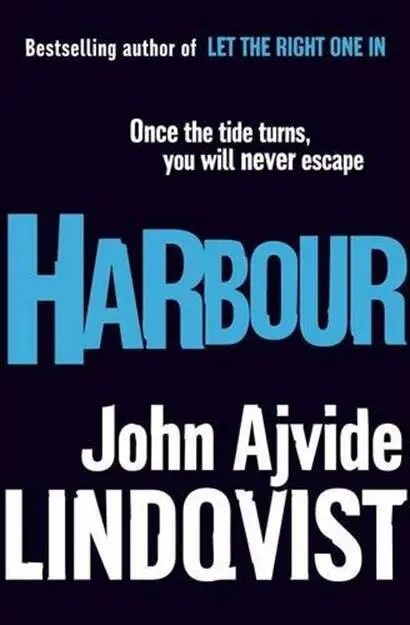
- Название:Harbour
- Автор:
- Жанр:
- Год:неизвестен
- ISBN:нет данных
- Рейтинг книги:3 / 5. Голосов: 1
-
Избранное:Добавить в избранное
- Отзывы:
-
Ваша оценка:
Harbour: краткое содержание, описание и аннотация
Предлагаем к чтению аннотацию, описание, краткое содержание или предисловие (зависит от того, что написал сам автор книги «Harbour»). Если вы не нашли необходимую информацию о книге — напишите в комментариях, мы постараемся отыскать её.
Harbour — читать онлайн бесплатно полную книгу (весь текст) целиком
Ниже представлен текст книги, разбитый по страницам. Система сохранения места последней прочитанной страницы, позволяет с удобством читать онлайн бесплатно книгу «Harbour», без необходимости каждый раз заново искать на чём Вы остановились. Поставьте закладку, и сможете в любой момент перейти на страницу, на которой закончили чтение.
Интервал:
Закладка:
'Who was that?' asked Simon.
'Only Elof,' said Anna-Greta. 'Coffee?'
Simon turned the leaf between his fingers and tried to sound unconcerned as he asked, 'So what were you talking about?'
Anna-Greta got up, fetched the cups, brought the coffee pot over from the stove. Simon had asked his question so quietly that she might not have heard it. But he thought she had. He twisted the leaf and felt like a small child as he asked again, 'What were you talking about?'
Anna-Greta put down the coffee pot and snorted, as if the question amused her. 'Why do you ask?'
'I'm just curious, that's all.'
'Come and sit down. Would you like a biscuit?'
The joy that had been bubbling through Simon withdrew, leaving behind a dry riverbed in his stomach. Stones and thorny bushes. Something was wrong, and the worst thing was that he had experienced this before, on a couple of occasions. Anna-Greta had been away, and when he asked her where she had been, she avoided his questions until he gave up.
This time he had no intention of giving up. He sat down at the table and put a hand over his cup when Anna-Greta tried to pour him some coffee. When she raised her eyes to meet his, he said, 'Anna- Greta. I want to know what you and Elof were talking about.'
She tried a smile. When it found no response whatsoever in Simon's face, it died away. She looked at him and for a second something…dangerous crossed her expression. Simon waited. Anna- Greta shook her head. 'This and that. I don't understand why you're so interested.'
'I'm interested,' said Simon, 'because I didn't know that you and Elof had that kind of relationship.' Anna-Greta opened her mouth to give some kind of answer, but Simon carried on, 'I'm interested because I heard you talking about Sigrid. About the fact that something has changed.'
Anna-Greta abandoned the attempt to keep the conversation on an everyday level. She put down the coffee pot, sat up straight and folded her arms. 'You were listening.'
'I just happened to hear.'
'In that case,' said Anna-Greta, 'I think you should forget that you just happened to hear. And leave this alone.'
'Why?'
Anna-Greta sucked in her cheeks as if she had something sour in her mouth that she was just about to spit out. Then her whole posture softened and she sank down a fraction. She said, 'Because I'm asking you to.'
'But this is crazy. What is it that's so secret?'
That hint of danger, of something alien, appeared in Anna-Greta's eyes once again. She poured herself a cup of coffee, sat down at the table and said calmly and reasonably, 'Regardless of what you say. However disappointed you might be. I have no intention of discussing it. End of story.'
Nothing more was said. A minute later Simon was standing on Anna-Greta's porch. He still had the maple leaf in his hand. He looked at it and could hardly remember what he had thought was so special about it, what had made him come here. He threw it away and walked down towards his house.
'End of story,' he mumbled to himself. 'End of story.'
Old Acquaintances
Way back in the Bible
our nursery teachers
had made a note of our real origin:
floated ashore out of the shadows.
Anna Ståbi -Flux
About the sea
Land and sea.
We may think of them as opposites; as complements. But there is a difference in how we think of them: the sea, and the land.
If we are walking around in a forest, a meadow or a town, we see our surroundings as being made up of individual elements. There are this many different kinds of trees in varying sizes, those buildings, these streets. The meadow, the flowers, the bushes. Our gaze lingers on details, and if we are standing in a forest in the autumn, we become tongue-tied if we try to describe the richness around us. All this exists on land.
But the sea. The sea is something completely different. The sea is one.
We may note the shifting moods of the sea. What the sea looks like when the wind is blowing, how the sea plays with the light, how it rises and falls. But still it is always the sea we are talking about. We have given different parts of the sea different names for navigation and identification, but if we are standing before the sea, there is only one whole. The sea.
If we are taken so far out in a small boat that no land is visible in any direction, we may catch sight of the sea. It is not a pleasant experience. The sea is a god, an unseeing, unhearing deity that surrounds us and has all imaginable power over us, yet does not even know we exist. We mean less than a grain of sand on an elephant's back, and if the sea wants us, it will take us. That's just the way it is. The sea knows no limits, makes no concessions. It has given us everything and it can take everything away from us.
To other gods we send our prayer: Protect us from the sea.
Whispers in your ear
Two days after the storm, Anders was standing down in the wormwood meadow inspecting his boat. It was upside down on blocks, and it was a depressing sight. There were good reasons why he had got it for nothing five years ago.
Since there was no system for the disposal of worn-out plastic boats, they were either left lying around, or given away to someone in need. The last resort, if you were really determined to get rid of the wretched thing, was to tow the boat out into the bay, drill holes in it and let it sink. Anders' boat looked as if it might be ready for that final journey.
There were cracks all over the hull, and the engine mounting was split. The fibreglass around the rowlocks was so brittle that it would probably splinter if you attempted to row. Anders did actually have an engine, an old ten-horsepower Johnson up in the shed, but he wasn't sure if he'd be able to get it started.
The boat was really beyond repair, it was just a matter of having some kind of vessel, something to put in the water so he didn't have to borrow Simon's boat when he wanted to stock up on supplies.
He walked out on to the jetty, mainly to see if it was strong enough to bear his weight. Oh yes. Some of the planks were rotten and a log had come loose from the lower section, but the jetty would probably last for another couple of years at least.
A light breeze was blowing from the south-west, and he had to cup his hand around his lighter in order to light a cigarette. He blew smoke into the wind, pulled out the plastic bottle of diluted wine, took a couple of swigs and listened to the sighing of the wind in the reeds in the inlet. It was only eleven o'clock in the morning, but he was already pleasantly mellow, able to contemplate without a trace of anxiety the green reeds rippling in the breeze.
Without the wine he would probably have started imagining things. Sigrid's body had been found in the reeds a couple of days earlier. There was no end to what he might have been able to come up with to scare himself witless. Simon had told him it was as he suspected. Sigrid had been lying in the water for less than twenty-four hours when he found her. Where she had been lying before that, no one knew.
A couple of forensic technicians in waders had prodded around in the reeds. Anders had stood at the bedroom window watching them, but it hadn't looked as if they had found anything that might solve the mystery. They had left trampled reeds behind them and returned to the mainland.
After checking the piece of chipboard he had nailed over the broken window, Anders went inside, poured himself a cup of coffee and sat down at the kitchen table. The number of beads on the tile had now reached a good hundred. Apart from the very first ones, he hadn't put one single bead there himself. It happened at night, after he had gone to bed.
Читать дальшеИнтервал:
Закладка:
Похожие книги на «Harbour»
Представляем Вашему вниманию похожие книги на «Harbour» списком для выбора. Мы отобрали схожую по названию и смыслу литературу в надежде предоставить читателям больше вариантов отыскать новые, интересные, ещё непрочитанные произведения.










Обсуждение, отзывы о книге «Harbour» и просто собственные мнения читателей. Оставьте ваши комментарии, напишите, что Вы думаете о произведении, его смысле или главных героях. Укажите что конкретно понравилось, а что нет, и почему Вы так считаете.