John Lindqvist - Harbour
Здесь есть возможность читать онлайн «John Lindqvist - Harbour» весь текст электронной книги совершенно бесплатно (целиком полную версию без сокращений). В некоторых случаях можно слушать аудио, скачать через торрент в формате fb2 и присутствует краткое содержание. Жанр: Триллер, на английском языке. Описание произведения, (предисловие) а так же отзывы посетителей доступны на портале библиотеки ЛибКат.
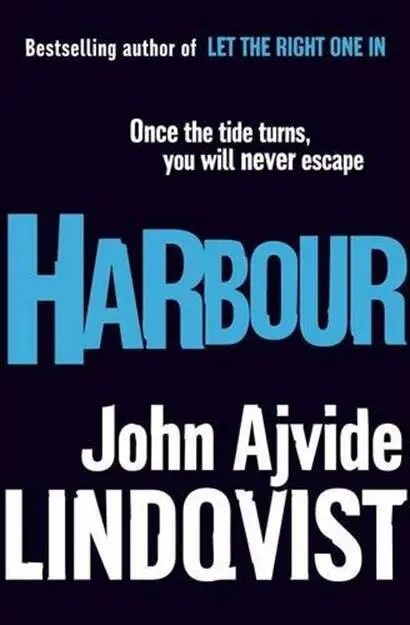
- Название:Harbour
- Автор:
- Жанр:
- Год:неизвестен
- ISBN:нет данных
- Рейтинг книги:3 / 5. Голосов: 1
-
Избранное:Добавить в избранное
- Отзывы:
-
Ваша оценка:
Harbour: краткое содержание, описание и аннотация
Предлагаем к чтению аннотацию, описание, краткое содержание или предисловие (зависит от того, что написал сам автор книги «Harbour»). Если вы не нашли необходимую информацию о книге — напишите в комментариях, мы постараемся отыскать её.
Harbour — читать онлайн бесплатно полную книгу (весь текст) целиком
Ниже представлен текст книги, разбитый по страницам. Система сохранения места последней прочитанной страницы, позволяет с удобством читать онлайн бесплатно книгу «Harbour», без необходимости каждый раз заново искать на чём Вы остановились. Поставьте закладку, и сможете в любой момент перейти на страницу, на которой закончили чтение.
Интервал:
Закладка:
Marita was cut from a different cloth. When Simon met her in the mid-1940s, she had been a bright, energetic woman with ambitions to be a dancer, and she moved through the nightclubs of Stockholm like a wisp of smoke.
It was not until a year or so after they joined forces that Simon discovered her secret box. A shoebox containing some twenty Benzedrine inhalers. Simon assumed she was using it as an aid to slimming, and didn't mention the matter.
But he became vigilant, and soon he could see what she was doing. They might be having a drink, spirits or wine, and he would notice her fiddling with something in her handbag. Eventually one night he grabbed her hand, pulled it out of her bag and found…a strip of paper. He didn't understand.
By this stage Marita was quite drunk. She began to sneer at him in front of their companions at the table. How blind and stupid he was, and above all how boring. As Marita staggered off in the direction of the ladies' toilets, someone explained it to Simon: his wife was a drug user.
The strip of paper was what you found if you broke open an inhaler. It was impregnated with Benzedrine, a kind of amphetamine. All you had to do was roll up the strip of paper and swallow it: suddenly you had a spring in your step.
Simon left before Marita came back from the toilet. He went straight home and threw her destructive metal tubes down the rubbish chute. Marita went crazy when she found out what he'd done, but soon calmed down. Far too soon. Simon suspected she was confident she could replace the stash he had thrown away.
It took a few weeks for him to track down her supplier, a former boyfriend who had been a quartermaster in the army. He had stolen from the stores a huge quantity of inhalers meant to keep fatigue at bay during long watches. He had initiated Marita in the use of the drug and its effect on the central nervous system, and had carried on supplying her after their love affair ended.
Simon issued what threats he could muster. The police, a beating, public humiliation. He didn't know if it would have any effect, but he did his best.
The effect was that Marita's underhand ways took more dramatic forms. She could disappear for days on end, and refuse to say where she had been. She made it clear to Simon that he could sit and rot in their apartment if he wanted to, but she had a life to live.
She never missed a performance, though. Her disappearances always coincided with a gap between engagements. When it was time for her entrance she was there, sparkling as she always had, tripping lightly on to the stage. It was partly for this reason that Simon tried to keep their calendar as full as possible.
But he wasn't happy.
He needed Marita. She was his partner and the other half of his act-without her he would probably be no more than a competent conjuror. And she was his wife. He still loved her, in some ways. But he wasn't happy.
And so in the spring of 1953 Simon was at the peak of his career, leafing through their booking schedule with a feeling of unease in the pit of his stomach. The engagement at the Chinese Theatre lay ahead, and the summer was looking good. But the way things had turned out, there were three completely blank weeks in July. June and August were more or less full, but those weeks in July were bothering him.
He could see himself sitting there in the summer heat in Stockholm with a great lump of fear in his chest, while Marita was out enjoying herself God knows where or how. He didn't want that. He definitely didn't want that.
However, there was one possibility. Perhaps it was finally time to take action? He picked up the daily newspaper, Dagens Nyheter, and turned to the ads for accommodation. Under the heading 'Summer Cottages' he read:
'Well-maintained house on the island of Domarö in southern Roslagen. Sea frontage with own jetty. Hire boat available. 80 square metres. Large garden. Rented on an annual basis. Contact: Anna- Greta Ivarsson.'
Domarö.
Hopefully it really was an island, without a direct link to the mainland. If he could get Marita away from the destructive influence of Stockholm, then perhaps things would work out. And it wouldn't do any harm to have a place to get away to when life was moving too fast.
He made the call.
The woman who answered explained politely that no one else had expressed an interest, so all he had to do was come out and take a look. The rent was one thousand kronor per year, and that was non- negotiable. Would he like her to tell him how to get there?
'Yes please,' said Simon. 'But there was one other thing I was wondering about. Is it an island?'
'You're asking me if it's an island?'
'Yes, is there…is there water all around it?'
There was silence on the other end of the line for a few seconds. Then the woman cleared her throat and said, 'Yes, it is an island. With water all around it. Rather a lot of water, in fact.'
Simon closed his eyes as if he were in pain. 'I was just wondering.'
'Oh, we've just got a telephone link to the mainland, if that's what you were thinking?'
'No, it was just…so how do people get there?'
'There's a tender. From Nåten, which is on a bus route. Would you like more details?'
'Yes…please.'
Simon made a note of the numbers of buses to and from Norrtälje, and said that he would ring in advance and come over one day. When he hung up he was sweating profusely. He had made himself sound ridiculous and felt very uncomfortable. Her voice alone had been enough to make him realise he didn't want to look ridiculous in front of this woman. Anna-Greta.
Marita made no comment on his plans for the summer, but he had to go out and take a look at the place by himself. One day at the end of April, Simon followed Anna-Greta's instructions, and after two and a half hours travelling by bus and by boat, he was standing by the waiting room on the steamboat jetty on Domarö.
The woman who came to meet him was wearing a knitted hat, with two long, dark brown plaits emerging from underneath it. Her hand was small, her handshake firm.
'Welcome,' she said.
'Thank you.'
'Good journey?'
'Fine, thank you.'
Anna-Greta waved in the direction of the sea.
'There's…rather a lot of water here, as you can see.'
As Simon followed Anna-Greta up from the harbour, he tried to imagine it: that this would be the place. That this was the first of countless times he would walk up this path, see the things he could see now: the jetties, the boathouses, the gravel track, the diesel tank, the alarm bell. The smell of the sea and the particular quality of light in the sky.
He tried to see himself in two years, five years, ten. As an old man, walking along the same path. Could he imagine that?
Yes. I can imagine that.
When they reached the top of the path, Simon kept his fingers crossed that it would be that house. The white one with a little glass veranda looking out over a grassy slope down to the jetty. It didn't look much on a cloudy day like this with not a scrap of green in sight, but he could just picture how it would look in summer.
A boy of about thirteen was standing in the garden with his hands pushed deep in the pockets of a leather jacket. He was slim with short hair, and there was something mischievous in the look he gave Simon, weighing him up.
'Johan,' said Anna-Greta to the boy, 'could you fetch the key for Seaview Cottage, please?'
The boy shrugged his shoulders and ambled off towards a two- storey house a hundred metres away. Simon glanced around the plot, which also seemed to include a cottage on the other side of the inlet. Anna-Greta followed his eyes and said, 'The Shack. There's nobody living there at the moment.'
'Do you live here alone?'
'Well, there's me and Johan. Aren't you going to inspect the property?'
Читать дальшеИнтервал:
Закладка:
Похожие книги на «Harbour»
Представляем Вашему вниманию похожие книги на «Harbour» списком для выбора. Мы отобрали схожую по названию и смыслу литературу в надежде предоставить читателям больше вариантов отыскать новые, интересные, ещё непрочитанные произведения.










Обсуждение, отзывы о книге «Harbour» и просто собственные мнения читателей. Оставьте ваши комментарии, напишите, что Вы думаете о произведении, его смысле или главных героях. Укажите что конкретно понравилось, а что нет, и почему Вы так считаете.