Michael Robotham - The Night Ferry
Здесь есть возможность читать онлайн «Michael Robotham - The Night Ferry» весь текст электронной книги совершенно бесплатно (целиком полную версию без сокращений). В некоторых случаях можно слушать аудио, скачать через торрент в формате fb2 и присутствует краткое содержание. Город: New York, Год выпуска: 2007, ISBN: 2007, Издательство: Vintage Books, a division of Random House, Inc., Жанр: Триллер, на английском языке. Описание произведения, (предисловие) а так же отзывы посетителей доступны на портале библиотеки ЛибКат.
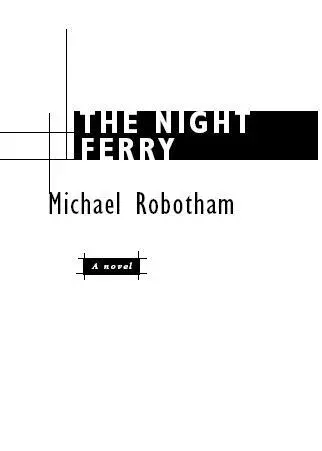
- Название:The Night Ferry
- Автор:
- Издательство:Vintage Books, a division of Random House, Inc.
- Жанр:
- Год:2007
- Город:New York
- ISBN:eISBN: 978-0-307-45583-3
- Рейтинг книги:5 / 5. Голосов: 1
-
Избранное:Добавить в избранное
- Отзывы:
-
Ваша оценка:
The Night Ferry: краткое содержание, описание и аннотация
Предлагаем к чтению аннотацию, описание, краткое содержание или предисловие (зависит от того, что написал сам автор книги «The Night Ferry»). Если вы не нашли необходимую информацию о книге — напишите в комментариях, мы постараемся отыскать её.
Detective Alisha Barba hadn't heard from her long lost friend Cate in years, but when she receives a frantic letter pleading for help, she knows she must see her. “They want to take my baby. You have to stop them,” Cate whispers to Alisha when they finally meet. Then, only hours later, Cate and her husband are fatally run down by a car.
At the crime scene, Alisha discovers the first in a series of complex and mysterious deceptions that will send her on a perilous search for the truth, from the dangerous streets of London's East End to the decadent glow of Amsterdam's red-light district.
The Night Ferry — читать онлайн бесплатно полную книгу (весь текст) целиком
Ниже представлен текст книги, разбитый по страницам. Система сохранения места последней прочитанной страницы, позволяет с удобством читать онлайн бесплатно книгу «The Night Ferry», без необходимости каждый раз заново искать на чём Вы остановились. Поставьте закладку, и сможете в любой момент перейти на страницу, на которой закончили чтение.
Интервал:
Закладка:
“Did he make any other calls?”
“One.”
Forbes waits. “Have I got to arrest you to get any cooperation?”
Any remaining vestiges of comradeship have gone. We’re no longer on the same team.
“I had an interesting conversation with a lawyer this morning,” he says. “He was representing Barnaby Elliot and he alleged that you had a conflict of interest concerning this case.”
“There’s no conflict, sir.”
“Mr. Elliot is contesting his late daughter’s will.”
“He has no legal claim over the twins.”
“And neither do you!”
“I know that, sir,” I whisper.
“If Samira Khan decides that she doesn’t want the babies, they will be taken into care and placed with foster parents.”
“I know. I’m not doing this for me.”
“Are you sure of that?”
It’s an accusation not a question. My motives are under fire again. Perhaps I’m deluding myself. I can’t afford to believe that. I won’t.
My mobile phone is vibrating in my pocket. I flip it open.
“I might have found her,” says Dave. “But there’s a problem.”
12
The Neonatal Intensive Care Unit (NICU) at Queen Charlotte’s Hospital is on the third floor above the delivery suites and maternity ward. Amid low lights, soft footsteps and the hum of machines there are fifteen high-domed incubators.
The unit manager is two paces ahead of me and Dave two paces behind. Our hands are washed with disinfectant and mobile phones have been turned off.
Passing the nearest crib, I look down. It appears to be empty except for a pink blanket and a teddy bear sitting in the corner. Then I notice an arm, no thicker than a fountain pen, emerge from beneath the blanket. Fingers curl and uncurl. Eyes remain shut. Tubes are squashed into a tiny nose, pushing rapid puffs of air into immature lungs.
The manager pauses and waits. Perhaps people do that a lot—stop, stare and pray. It’s only then that I notice the faces on the far side of the crib, distorted by the glass.
I look around. There are other parents sitting in the semidarkness, watching and waiting; talking in whispers. I wonder what they say to each other. Do they look at other cribs and wonder if that baby is stronger or sicker or more premature. Not all of the newborns can possibly survive. Do their parents secretly pray, “Save mine! Save mine!”
We have reached the far end of the NICU. Chairs beside the crib are empty. A nurse sits on a high stool at a control screen, monitoring the machines that monitor a child.
At the center of a plain white sheet is a baby girl, wearing just a nappy. She is smaller than I remember, yet compared to some of the premature babies in the NICU she is twice their size. Small pads are stuck to her chest, picking up her heartbeat and her breathing.
“Claudia was brought in last night,” explains the ward manager. “She has a serious lung infection. We’re giving her antibiotics and feeding her intravenously. The device on her leg is a blood gas monitor. It shines light through her skin to see how much oxygen is in her blood.”
“Is she going to be all right?”
She takes a moment to choose her words. The delay is enough to terrify me. “She’s stable. The next twenty-four hours are very important.”
“You called her Claudia.”
“That’s the name we were given.”
“Who gave it to you?”
“The woman who came in with her in the ambulance.”
“I need to see the admission form.”
“Of course. If you come to the office I’ll print you a copy.”
Dave is staring through the glass. I can almost see his lips moving, breathing as the baby breathes. Claudia has captured his attention, even though her eyes are fused shut by sleep.
“Do you mind if I stay for a while?” he asks, directing the question as much to me as to the ward manager. Every other patient in the unit has someone sitting alongside them. Claudia is alone. It doesn’t seem right to him.
Retracing our steps, I follow the manager to her office.
“I called Social Services this morning,” she says. “I didn’t expect the police.”
“What made you call?”
“I wasn’t happy with some of the answers we were getting. Claudia arrived just after midnight. At first the woman said she was the baby’s nanny. She gave the mother’s name as Cate Beaumont. Then she changed her story and said that Claudia had been adopted, but she couldn’t give me any details of the adoption agency.”
She hands me the admission form. Claudia’s date of birth is listed as Sunday, October 29. The mother’s name is written down as Cate Elizabeth Beaumont. The address is Cate’s fire-damaged house.
Why give Cate’s name? How did she even know about her?
“Where is this woman now?”
“One of our consultants wanted to talk to her. I guess she panicked.”
“She ran?”
“She made a phone call. Then she walked out.”
“What time was that?”
“About 6:00 a.m.”
“Do you know who she called?”
“No, but she used my phone.”
She points to her desk. The phone console is a command unit, with a memory of the most recently dialed numbers. A small LCD screen displays the call register. The ward manager identifies the number and I hit the redial button.
A woman answers.
“Hello?”
“This is Queen Charlotte’s Hospital,” I say. “Someone called your home from this number early this morning.”
She doesn’t answer but in the silence I recognize a sound. I’ve heard it before—the squeak of wheels on parquetry floor.
I don’t have Ruiz’s photographic memory or his mother’s gifts for telling fortunes. I don’t even know if I have a particular methodology. I put facts together randomly. Sometimes leaping ahead or trying things out for size. It’s not very efficient and it can’t be taught but it works for me.
The woman speaks again. Nervously. “You must have the wrong number.”
It’s an officious voice, precise, not quite public school. I have heard it often enough, albeit a decade ago, berating her husband for coming home late smelling of shampoo and shower gel.
The line has gone dead. Ruth Elliot has hung up. Simultaneously, there is a knock on the door. A nurse smiles apologetically and whispers something to the ward manager, who looks at me.
“You asked about the woman who brought in Claudia. She didn’t run away. She’s downstairs in the cafeteria.”
A pressure pad opens the doors automatically. The cafeteria is small and bright with white-flecked tables to hide the crumbs. Trays are stacked near the doors. Steam rises from the warming pans.
A handful of nurses are picking up sandwiches and cups of tea—healthy options in a menu where everything else comes with chips.
Yvonne is squeezed into a booth, with her head resting on her forearms. For a moment I think she might be asleep, but her head lifts and she blinks at me wetly. A low moan escapes and she lowers her head. The pale brown of her scalp is visible where her gray hair has started to thin.
“What happened?”
“I did a foolish, foolish thing, cookie,” she says, talking into the crook of her arm. “I thought I could make her better, but she kept getting sicker and sicker.”
A shuddering breath vibrates through her frame. “I should have taken her to a doctor but Mr. and Mrs. Elliot said that nobody could ever know about Cate’s baby. They said people wanted to take Claudia away and give her to someone she don’t belong to. I don’t know why people would do something like that. Mr. and Mrs. Elliot didn’t explain it so good, not sufficient for me to understand, you know.”
She draws back, hoping I might comprehend. Her eyes are wet and crumbs have stuck to her cheek.
Читать дальшеИнтервал:
Закладка:
Похожие книги на «The Night Ferry»
Представляем Вашему вниманию похожие книги на «The Night Ferry» списком для выбора. Мы отобрали схожую по названию и смыслу литературу в надежде предоставить читателям больше вариантов отыскать новые, интересные, ещё непрочитанные произведения.










Обсуждение, отзывы о книге «The Night Ferry» и просто собственные мнения читателей. Оставьте ваши комментарии, напишите, что Вы думаете о произведении, его смысле или главных героях. Укажите что конкретно понравилось, а что нет, и почему Вы так считаете.