Michael Robotham - The Night Ferry
Здесь есть возможность читать онлайн «Michael Robotham - The Night Ferry» весь текст электронной книги совершенно бесплатно (целиком полную версию без сокращений). В некоторых случаях можно слушать аудио, скачать через торрент в формате fb2 и присутствует краткое содержание. Город: New York, Год выпуска: 2007, ISBN: 2007, Издательство: Vintage Books, a division of Random House, Inc., Жанр: Триллер, на английском языке. Описание произведения, (предисловие) а так же отзывы посетителей доступны на портале библиотеки ЛибКат.
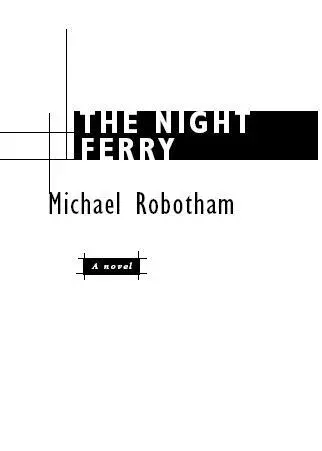
- Название:The Night Ferry
- Автор:
- Издательство:Vintage Books, a division of Random House, Inc.
- Жанр:
- Год:2007
- Город:New York
- ISBN:eISBN: 978-0-307-45583-3
- Рейтинг книги:5 / 5. Голосов: 1
-
Избранное:Добавить в избранное
- Отзывы:
-
Ваша оценка:
The Night Ferry: краткое содержание, описание и аннотация
Предлагаем к чтению аннотацию, описание, краткое содержание или предисловие (зависит от того, что написал сам автор книги «The Night Ferry»). Если вы не нашли необходимую информацию о книге — напишите в комментариях, мы постараемся отыскать её.
Detective Alisha Barba hadn't heard from her long lost friend Cate in years, but when she receives a frantic letter pleading for help, she knows she must see her. “They want to take my baby. You have to stop them,” Cate whispers to Alisha when they finally meet. Then, only hours later, Cate and her husband are fatally run down by a car.
At the crime scene, Alisha discovers the first in a series of complex and mysterious deceptions that will send her on a perilous search for the truth, from the dangerous streets of London's East End to the decadent glow of Amsterdam's red-light district.
The Night Ferry — читать онлайн бесплатно полную книгу (весь текст) целиком
Ниже представлен текст книги, разбитый по страницам. Система сохранения места последней прочитанной страницы, позволяет с удобством читать онлайн бесплатно книгу «The Night Ferry», без необходимости каждый раз заново искать на чём Вы остановились. Поставьте закладку, и сможете в любой момент перейти на страницу, на которой закончили чтение.
Интервал:
Закладка:
The only public statement has been about Pearl, who has a warrant out for his arrest. Another one. I have taken to carrying my gun again. As long as he’s out there, I’m going to keep it with me. I am not going to lose Samira again.
She has been staying with me since leaving hospital on Wednesday. Hari has moved out of the spare room and is sleeping downstairs on a sofa bed. He seems quite taken by our lodger. He has started wearing a shirt around the house because he senses that she disapproves.
I am to face a Police Disciplinary Tribunal. Neglect of duty, deliberate falsehood and abuse of authority are just three of the charges. Failing to show up at Hendon is the least of my worries. Barnaby Elliot has accused me of harassment and arson. The investigation is being supervised by the Police Complaints Authority. I am guilty until proven innocent.
A toilet flushes along the hallway. A light switch clicks off. A few minutes later comes the hum of a machine and the rhythmic suction of a breast pump. Samira’s milk has come in and she has to express every six hours. The sound of the pump is strangely soporific. I close my eyes again.
She hasn’t said anything about the twins. I keep wondering when she is going to crack, fragmented by the loss. Even when she identified Hassan’s body at Westminster Mortuary she held it all inside.
“It’s OK to cry,” I told her.
“That is why Allah gave us tears,” she answered.
“You think God played a part in this?”
“He would not give me this suffering if he did not think I could endure it.”
How can she be so wise, yet so accepting? Can she really believe this is part of some grand master plan or that Allah would test her so cruelly?
Such faith seems positively medieval, yet she has an appetite for learning. Things that I take for granted she finds fascinating, like central heating, dual flush toilets and my washer/dryer. In Kabul she had to carry water upstairs to their flat and the power failed almost daily. London has lights along every street, burning through the night. Samira asked me if perhaps we British are scared of the dark. She didn’t understand why I laughed.
I took her shopping for clothes at Canary Wharf yesterday. “There is not so much glass in all of Afghanistan,” she said, pointing to the office towers that shone in the morning sun. I could see her studying the office workers queuing for coffee and “skinny” muffins: the women dressed in narrow skirts, tight tops and jackets, flicking their short hair, chatting on mobile phones.
The clothing boutiques intimidated her. The shop assistants were dressed like mourners and the shops felt like funeral parlors. I told Samira there was a better place to find clothes. We left and went to Commercial Road where garments were crammed on racks and spilling from bins. She chose two skirts, a long-sleeved blouse and a cardigan. It came to less than sixty pounds.
She studied the twenty-pound notes.
“Is this your Queen?”
“Yes.”
“She looks like she has been dipped in plaster.”
I laughed. “I guess she does.”
The Christmas decorations were up. Even the bagel bakery and halal butcher had fairy lights and fake snow. Samira stopped and peered into a lobster tank in the window of a restaurant.
“I am never going to swim in the sea.”
“Why?”
“I don’t want to meet one of them.”
I think she had visions of lobsters crawling over one another in the same density as in the tank.
“This must be like science fiction to you.”
“Science? Fiction?”
“It means like a fantasy. Unreal.”
“Yes, unreal.”
Seeing London through Samira’s eyes has given me a different perspective on the city. Even the most mundane scene takes on a new life. When I took her underground to catch the Tube, she clutched my hand as an approaching train roared through the tunnel, sounding like a “monster in a cave” she said.
The casual wealth on display is embarrassing. There are more vets in the East End than there were doctors in Kabul. And the animals are better fed than the orphans.
The breast pump has stopped. She had turned on Hari’s TV and is flicking between channels. Slipping out of bed, I tiptoe along the hall and knock on her door. She’s wearing my old dressing gown, the one with an owl sewn onto the pocket.
“Can’t you sleep?”
“No.”
“I’ll make us a sleeping potion.”
Her eyes widen.
She follows me down the stairs, along the hall into the kitchen. I close the door and take a bottle of milk from the fridge, pouring it into mugs. Two minutes in the microwave and they’re steaming. Breaking up pieces of dark chocolate, I drop them in the liquid, watching them melt. Samira uses a spoon to catch the melting shards, licking it clean.
“Tell me about your family.”
“Most of them are dead.”
She licks the spoon. I break off more pieces of chocolate and add them to her mug.
“Did you have a big family?”
“Not so big. In Afghanistan people exaggerate what their family has done. Mine is no different. One of my ancestors traveled to China with Marco Polo they say, but I don’t believe it. I think he was a smuggler, who brought the black powder from India to Afghanistan. The king heard of the magic and asked to see a demonstration. According to my father, a thousand rockets streamed back and forth across the sky. Bamboo castles dripped with fire. Fireworks became our family business. The formulas were passed down from father to son—and to me.”
I remember the photograph among Hassan’s possessions showing a factory with workers lined up outside, most of them missing limbs or eyes, or incomplete in other ways. Hassan had burn scars on his arms.
“It must have been dangerous work.”
Samira holds up her hands, showing her fingers. “I am one of the lucky ones.” She sounds almost disappointed. “My father lost both his thumbs when a shell exploded. Uncle Yousuf lost his right arm and his wife lost her left arm. They helped each other to cook and sew and drive a car. My aunt changed gears and my uncle steered. My father’s other brother, Fahad, lost his fingers during a display. He was a very good gambler but he began to lose when he couldn’t shuffle the cards.
“I didn’t meet my grandfather. He was killed in a factory explosion before I was born. Twelve others died in the same fire, including two of his brothers. My father said it was a sacrifice that only our family could make. One hand is enough to sin, he said. One hand is enough to save.”
She glances at the dark square of the window. “It was our calling—to paint the sky. My father believed that one day our family would make a rocket that would light the way to Heaven. In the meantime, we would make rockets that drew the gaze of Allah in the hope that he would bless our family and bring us happiness and good health.” She pauses and considers the irony of such a statement. Perfectly still, she is canted forward over the table, firm yet fragile. Her stare seems to originate at the back of her eyes.
“What happened to the factory?”
“The Talibs closed it down. Fireworks were sinful, they said. People celebrated when they arrived. They were going to stop the warlords and end the corruption. Things changed but not in a good way. Girls could not go to school. Windows were painted over so women could not be seen. There was no music or TV or videos, no card games or kites. I was ten years old and they made me wear a burka. I could not buy things from male shopkeepers. I could not talk to men. I could not laugh in public. Women had to be ordinary. Invisible. Ignorant. My mother educated us in secret. Books were hidden each night and homework had to be destroyed.
“Men with beards and black turbans patrolled the streets, listening for music and videos. They beat people with whips soaked in water and with chains. Some were taken away and didn’t come back.
Читать дальшеИнтервал:
Закладка:
Похожие книги на «The Night Ferry»
Представляем Вашему вниманию похожие книги на «The Night Ferry» списком для выбора. Мы отобрали схожую по названию и смыслу литературу в надежде предоставить читателям больше вариантов отыскать новые, интересные, ещё непрочитанные произведения.





Обсуждение, отзывы о книге «The Night Ferry» и просто собственные мнения читателей. Оставьте ваши комментарии, напишите, что Вы думаете о произведении, его смысле или главных героях. Укажите что конкретно понравилось, а что нет, и почему Вы так считаете.