Martin Smith - Stalin’s Ghost
Здесь есть возможность читать онлайн «Martin Smith - Stalin’s Ghost» весь текст электронной книги совершенно бесплатно (целиком полную версию без сокращений). В некоторых случаях можно слушать аудио, скачать через торрент в формате fb2 и присутствует краткое содержание. Жанр: Триллер, на английском языке. Описание произведения, (предисловие) а так же отзывы посетителей доступны на портале библиотеки ЛибКат.
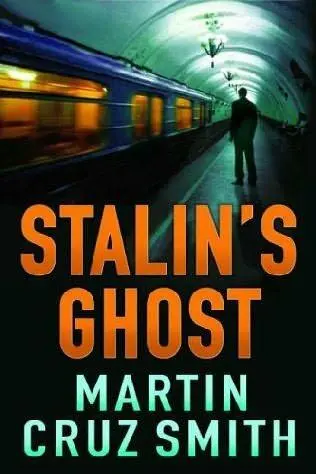
- Название:Stalin’s Ghost
- Автор:
- Жанр:
- Год:неизвестен
- ISBN:нет данных
- Рейтинг книги:4 / 5. Голосов: 1
-
Избранное:Добавить в избранное
- Отзывы:
-
Ваша оценка:
Stalin’s Ghost: краткое содержание, описание и аннотация
Предлагаем к чтению аннотацию, описание, краткое содержание или предисловие (зависит от того, что написал сам автор книги «Stalin’s Ghost»). Если вы не нашли необходимую информацию о книге — напишите в комментариях, мы постараемся отыскать её.
Stalin’s Ghost — читать онлайн бесплатно полную книгу (весь текст) целиком
Ниже представлен текст книги, разбитый по страницам. Система сохранения места последней прочитанной страницы, позволяет с удобством читать онлайн бесплатно книгу «Stalin’s Ghost», без необходимости каждый раз заново искать на чём Вы остановились. Поставьте закладку, и сможете в любой момент перейти на страницу, на которой закончили чтение.
Интервал:
Закладка:
“Wait until tomorrow, that will be a show,” the candidate told Arkady and jumped aside as Rudi came through to dump a wheelbarrow load of bones at a poster that said, “Germans Here.”
Arkady’s cell phone rang. He got an earful of static when he answered but he didn’t move for fear of losing reception entirely.
“I apologize. I can barely make you out. Could you speak loudly, please?”
“This is Sarkisian. Where the devil are you?”
Arkady said, “I’m sorry, this connection is terrible.”
“What have you been up to?”
“Would you repeat that?”
“Where are you staying?”
“We’re breaking up.”
“Damn it, Zurin told me you’d play tricks like this.”
“Sorry.” Arkady pressed END.
He hardly took a step before the cell phone rang again. Now the reception was loud and clear.
A deliberate voice said, “This is Agronsky. Whatever you’re selling, I don’t want it, whoever you are, I don’t care,” and hung up.
Arkady put down the shovel.
Bones would wait.
The retired Major Gennady Agronsky, a round man in a raveled sweater, surveyed the daffodils that bordered his vegetable garden.
“Fool’s gold. Beautiful but brief. This kind of deceitful weather draws them out and a frost lays them low. But good for the Diggers, I suppose.”
“Yes, it is. Major, you’re a hard man to reach.”
“I don’t answer the phone or the door. Most people get the message. Then I saw that you came on an old Cossack. What a beast! It went right to my heart.”
A white picket fence was the boundary of his domain, a trim cottage in front and in back a patio of terra-cotta pavers with rows of vegetables to come, several raw stumps, sawdust and a small cherry tree with a satiny bark. His neighbor’s yard was a junkyard.
“They plant nothing, not even cucumbers. In the summer I have pickles, tomatoes, coriander, dill, you name it. These young people, these good-for-nothings, complain there’s no work. Just pick up a hoe and put your back into it. At least you’ll eat, I say.”
Arkady noticed a pit bull pretending to be asleep on the other side of the fence. “What do they say?”
“They say, ‘Stuff it, you old fart!’ or ‘Pull your head out of your ass!’ The same with the dealer on the other side. You’re sure you wouldn’t like vodka, just a touch?”
“No, thanks.”
“That’s just as well. The doctor says if I drink I might as well shoot myself. My attitude? Everything in moderation, including vice.” Agronsky led Arkady to the patio table. “Sit.”
“Did you go to the rally for the Russian Patriots?”
“Too far to go. This is almost outside town. We have bears in the garbage.”
“I noticed a hunting rifle at your front door. Do bears call at your front door?”
“Not yet.”
The rifle was a Baikal Express with over and under barrels. Arkady thought that would discourage even a bear.
“They offered free rides to the rally.”
“I saw enough on television.”
“The candidate is someone you must know, Captain Nikolai Isakov. He is a militia detective in Moscow now, but he was a Black Beret from Tver. A man rising in the world is Nikolai Isakov.”
“You’re investigating him?”
“Just asking a few questions. For example, was Captain Isakov a competent officer?”
“What a question. More than competent; a model officer. We held him up as an example.”
“He was the hero of Sunzha Bridge, after all. As, I suppose, were all the men under his command that day at the river. All heroes and all from Tver.”
“The people of Tver are patriotic,” Agronsky said.
“Six Black Berets against fifty heavily armed rebels with an armored personnel carrier and two trucks. The outcome was what, thirteen, fourteen terrorists dead-”
“Fourteen.”
“Fourteen terrorists dead, the APC and trucks in retreat and, in return, one Black Beret wounded. Amazing. It was the sort of battle that can make an officer’s reputation and win a promotion in rank, especially at a time when there was so little good news coming out of Chechnya. Yet there wasn’t a single decoration.”
“These things happen in war. Sometimes it’s just a matter of missing paperwork or witnesses.”
“Which is why there is a citation committee to review commendations. You were the head of the committee that denied the Black Berets of Sunzha Bridge any medals or promotion. Why?”
“You expect me to remember? The committee processes hundreds of recommendations, and on a generous basis. The regular army consists of boys, conscripts, the poorest and dumbest, the ten percent who didn’t dodge the draft and the one percent true patriots. They deserve commendations. If they get shot in the ass they get a commendation. If they steal a chicken for their commanding officer they get a commendation. If they get killed their body parts go home in a sealed coffin with a commendation.”
“So why wouldn’t a real battle merit a medal or two?”
“Who knows? That was months ago.” Agronsky looked away. “It isn’t as if I were allowed to bring my files with me.”
“It was your last case. You retired a week after you submitted your verdict. After thirty years you suddenly retired.”
“Thirty years ago, things were different. We were an army then.”
“Tell me about Isakov.”
Agronsky’s eyes stopped dodging.
“The report smelled.”
“In what way?”
“Captain Isakov reported a firefight between rebels on one side of the bridge and his men on the other. The medical examination revealed that all the rebels were shot at close range, some in the back, one or two while eating. Where the rebels were supposed to have been shot there was no blood on the vegetation. The leaves weren’t shredded, they weren’t even disturbed. No doubt Isakov wanted to arrange the bodies in a more convincing manner but a helicopter was coming to the landing zone. A journalist who was on the helicopter described the scene to me.”
“That was Ginsberg?”
“Yes.”
“Were there any actual witnesses?”
“Only one, a civilian, and she was no help at all.”
“What did she say?”
“We’ll never know. She was Ukrainian. She went back to Kiev.”
“What was her name?”
“Kafka, like the crazy writer.”
Close enough, Arkady thought. He held his breath before the next question.
“Are there any photographs of the firefight scene?”
“Only Ginsberg’s.”
“From the helicopter?”
“His colleagues said he always carried a camera, in case. The pictures completely contradict the statements of Isakov and Urman.”
“Do people in Tver know about this?”
“They won’t hear it from me. Did I mention that two weeks before the incident at the bridge, rebels captured eight Black Berets and took videos of them, first alive and then dead? Their mothers couldn’t recognize those boys. They were all from Tver. Don’t ask for any sympathy for rebels in this city.”
“Then why not promote Isakov?”
“Because he was no longer a soldier; he was a killer. To me there is a difference.”
Arkady was impressed. Agronsky looked more like a retired bureaucrat than someone who would stand up to Isakov. The major’s sweater had holes and loose strands, exactly what a man of leisure would wear for gardening, although glints of chrome at the belt line betrayed the gun underneath.
“Was there a follow-up investigation?”
“I suggested one and for that I’ve been cashiered and all the evidence has been destroyed.”
“What about Ginsberg’s photographs?”
“Burned.”
“Gone?”
“Smoke.”
“No copies?” Investigations were usually awash in copies.
Читать дальшеИнтервал:
Закладка:
Похожие книги на «Stalin’s Ghost»
Представляем Вашему вниманию похожие книги на «Stalin’s Ghost» списком для выбора. Мы отобрали схожую по названию и смыслу литературу в надежде предоставить читателям больше вариантов отыскать новые, интересные, ещё непрочитанные произведения.



Обсуждение, отзывы о книге «Stalin’s Ghost» и просто собственные мнения читателей. Оставьте ваши комментарии, напишите, что Вы думаете о произведении, его смысле или главных героях. Укажите что конкретно понравилось, а что нет, и почему Вы так считаете.