Sam Bourne - Pantheon
Здесь есть возможность читать онлайн «Sam Bourne - Pantheon» — ознакомительный отрывок электронной книги совершенно бесплатно, а после прочтения отрывка купить полную версию. В некоторых случаях можно слушать аудио, скачать через торрент в формате fb2 и присутствует краткое содержание. Жанр: Триллер, на английском языке. Описание произведения, (предисловие) а так же отзывы посетителей доступны на портале библиотеки ЛибКат.
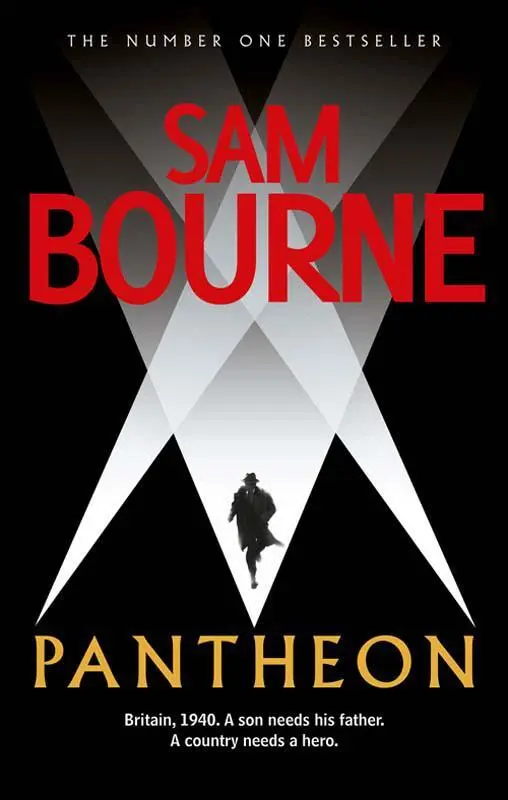
- Название:Pantheon
- Автор:
- Жанр:
- Год:неизвестен
- ISBN:нет данных
- Рейтинг книги:3 / 5. Голосов: 1
-
Избранное:Добавить в избранное
- Отзывы:
-
Ваша оценка:
Pantheon: краткое содержание, описание и аннотация
Предлагаем к чтению аннотацию, описание, краткое содержание или предисловие (зависит от того, что написал сам автор книги «Pantheon»). Если вы не нашли необходимую информацию о книге — напишите в комментариях, мы постараемся отыскать её.
Pantheon — читать онлайн ознакомительный отрывок
Ниже представлен текст книги, разбитый по страницам. Система сохранения места последней прочитанной страницы, позволяет с удобством читать онлайн бесплатно книгу «Pantheon», без необходимости каждый раз заново искать на чём Вы остановились. Поставьте закладку, и сможете в любой момент перейти на страницу, на которой закончили чтение.
Интервал:
Закладка:
He jumped ahead.
Owners of cattle have always known that care in the selection of stock for breeding purposes will pay them well in the long run… And if men, however savage or however cultivated, have always given so much time to the study of the breed of the animals they own, why have they not paid equal or more attention to their own breed? Before a marriage is contracted many questions may be asked as to the amount of money likely to be inherited by the bride, while no consideration is usually given to the qualities of mind or body which she is likely to pass on to her children — to her breed, in fact. The aim of eugenics is to prove that the breed of our own citizens is a matter of vital importance…
James wondered again if he was wasting his time. Could there be any connection between Harry, Florence and all of this? All he could think of was that his wife’s field was academic biology and eugenics was, he supposed, not too far away from that. Was it possible that she had been drafted here to Yale as a scholar on a research project, one that had to be kept secret, even from him? The thought made him shudder: it would have meant everything he had been told about her fear of invasion, her desperate desire to protect Harry, would have been a lie. He could not believe it; he would not believe it. If she had had work to do that entailed travelling to the United States, even highly confidential work, she would have told him about it, of course she would. And what kind of work on eugenics would demand secrecy? It was not exactly a matter of war or peace.
He felt an unspoken shift around him. People were no longer chatting or greeting friends, but slowly shuffling their way into the meeting room. The seminar was about to begin. He took a seat at the back, next to a man who had already produced a notebook, running his pen in a clean vertical line down the page to create a margin.
The speaker appeared. He was no older than James: sandy-haired, with an easy, smiling manner, dressed in a summer suit that hung lightly on him. To James’s untutored eye, he looked as if he came from old money.
The man cleared his throat. ‘I’d like to begin by thanking you all for coming on this warm summer evening. Some of you, I know, have come from far and wide.’ There it was, the same accent as Dorothy Lake. Reflexively, James looked around the room, just in case she was here.
‘As you know, this is an invitation-only gathering. Our usual discretion applies, but it is especially pertinent tonight. Some of the items on our agenda would be open to… ’ He paused, ‘… misinterpretation, were they to be disclosed more widely than I intend. I hope I have your co-operation.’
There was a murmur of assent.
‘Good. Some of you will have seen the copies of the Darwin book in the foyer. Of course, I don’t mean to insult anyone here in making such a well-known text my starting point this evening. But I thought it might be useful to return to first principles.
‘Let me begin with this important statement from What is Eugenics? ’. Curtis lifted the book to his eye-level as if he were an actor declaiming from a script, and read aloud: ‘“ In order to improve the breed of our race, we should now take such steps as would result in all who show any natural superiority producing a greater number of descendants than at present, whilst making all who are definitely inferior pass on their natural inferiority to as few as possible.”’ He lowered the book. ‘From that single paragraph we derive what we know of as the two different strains of eugenic thought. So-called “positive eugenics”, encouraging procreation by the fittest and most intelligent-’ here he made a sweeping gesture as if to encompass his audience, which elicited a warm chuckle of approval, ‘and also so-called “negative eugenics”, which seeks to stop the unfit from reproducing. Forgive me for teaching grandmother to suck eggs in this way, but I hope my purpose will become clear in due course.
‘Put simply,’ Curtis went on, ‘the eugenic idea holds that if we have more of the strong and fewer of the weak, then the nation itself will end up stronger. It’s true of a herd of prize cattle and it’s true of us. Note Darwin’s own language in his summary of eugenics’ primary aim.’
Curtis raised the little red book once more, in theatrical style: ‘“ A lowering of the birth-rate of all the naturally inferior types and an increase in the birth-rate amongst the naturally superior.”’
With each word he heard, the more James remembered his aversion to the whole eugenics business. It came back to him not as a thought, but as a feeling, a creeping sensation across his flesh.
Curtis was reading again, from the Darwin chapter entitled ‘The Men we Want’.
‘“ It has been suggested that, whilst getting rid of these extremely undesirable types, we should endeavour to create a group of supermen at the other end of the scale. If a few perfect individuals were to appear on earth, and if their perfection were to be acknowledged by all, this would be very good. These supermen would rule over us to our great contentment.”’
Curtis lowered the book. ‘It’s quite a thought, is it not, ladies and gentlemen? Imagine it, a latter-day pantheon of the gods, human and yet blessed with the strength of deities.’
The man at James’s side was scribbling furiously. No one had so much as raised a hand in objection, apparently unfazed by the notion of this ‘group of supermen’ ruling the world.
Curtis too was moving on. ‘The question arises, how exactly is society to get rid of these “extremely undesirable types”? Here Darwin’s chapter on eugenic methods is extremely helpful, though he eliminates what would of course be the easiest solution from the start.’
Another knowing laugh rippled across the room.
Curtis raised the book once more. ‘“ As to the inferior types, we cannot, as we have seen, reduce the number of their descendants by the simple expedient of murder. All that can be done is to lessen the size of their families.” He makes it sound so easy, doesn’t he? Easy enough for Major Darwin, sitting there in his study in Kent or Staffordshire’ — he pronounced it Stafford-shy-er — ‘or wherever it was. But not so easy for those of us who wish to translate these ideas into practical policy. So what should we be doing? What action should we be taking to, in Darwin’s words, “lessen the size” of those inferior families?
‘We’re all familiar with the obvious methods: birth control, sterilization and so on. These are all useful, and indeed I’m proud to say the United States has been a leader in sterilization. But we are rapidly being overtaken, thanks to laws permitting involuntary sterilization or its variants right across Europe: Denmark, Sweden, Norway, Finland, even little Estonia. And of course the true lead is now set by Germany, where forced sterilization has become a matter of state policy, the preferred methods being vasectomy for men, ligation — or tying — of the ovarian tubes for women and, in a few cases, the use of x-rays. Hundreds of thousands of Germany’s feebleminded or otherwise abnormal population have been prevented from reproducing under this programme. I hope it is clear that the old debate — on whether this range of available, medically-established methods should be used simply to persuade rather than to compel the naturally inferior to refrain from parenthood — is becoming rather out of date.’
James was watching the faces in the room, not one of which had so much as demurred. They were listening to this without a word of dissent, many nodding as Curtis moved onto definitions, quoting Leonard Darwin on what groups constituted the inferior: ‘“ These include the criminal, the insane, the imbecile, the feeble in mind, the diseased at birth, the deformed, the deaf, the blind, etc, etc.”’
Читать дальшеИнтервал:
Закладка:
Похожие книги на «Pantheon»
Представляем Вашему вниманию похожие книги на «Pantheon» списком для выбора. Мы отобрали схожую по названию и смыслу литературу в надежде предоставить читателям больше вариантов отыскать новые, интересные, ещё непрочитанные произведения.








Обсуждение, отзывы о книге «Pantheon» и просто собственные мнения читателей. Оставьте ваши комментарии, напишите, что Вы думаете о произведении, его смысле или главных героях. Укажите что конкретно понравилось, а что нет, и почему Вы так считаете.