Sam Bourne - Pantheon
Здесь есть возможность читать онлайн «Sam Bourne - Pantheon» — ознакомительный отрывок электронной книги совершенно бесплатно, а после прочтения отрывка купить полную версию. В некоторых случаях можно слушать аудио, скачать через торрент в формате fb2 и присутствует краткое содержание. Жанр: Триллер, на английском языке. Описание произведения, (предисловие) а так же отзывы посетителей доступны на портале библиотеки ЛибКат.
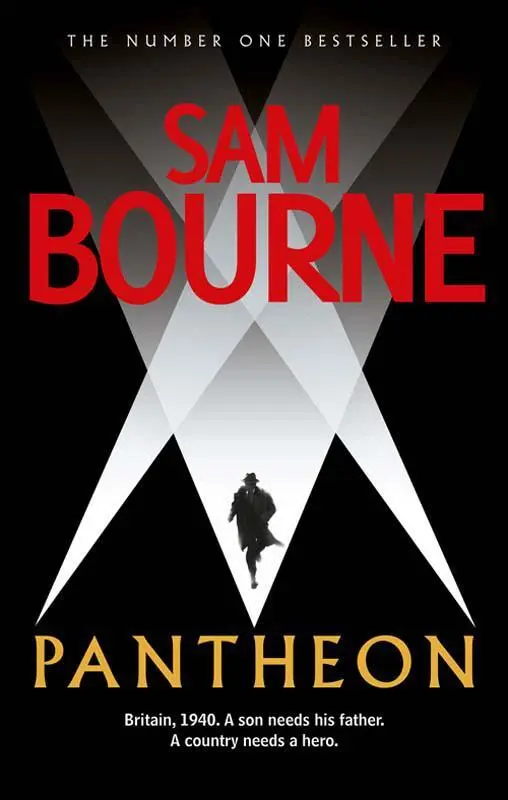
- Название:Pantheon
- Автор:
- Жанр:
- Год:неизвестен
- ISBN:нет данных
- Рейтинг книги:3 / 5. Голосов: 1
-
Избранное:Добавить в избранное
- Отзывы:
-
Ваша оценка:
Pantheon: краткое содержание, описание и аннотация
Предлагаем к чтению аннотацию, описание, краткое содержание или предисловие (зависит от того, что написал сам автор книги «Pantheon»). Если вы не нашли необходимую информацию о книге — напишите в комментариях, мы постараемся отыскать её.
Pantheon — читать онлайн ознакомительный отрывок
Ниже представлен текст книги, разбитый по страницам. Система сохранения места последней прочитанной страницы, позволяет с удобством читать онлайн бесплатно книгу «Pantheon», без необходимости каждый раз заново искать на чём Вы остановились. Поставьте закладку, и сможете в любой момент перейти на страницу, на которой закончили чтение.
Интервал:
Закладка:
He went past the M’s — Memorial, Monroe, Montana — and overshot, landing in the P’s — Political Science, Posture Study, Professional Training — before tracking back to the O’s. His heart leapt when he saw a divider labelled ‘Oxford’, which preceded perhaps a dozen more files: ‘Oxford, Chancellor’, ‘Oxford, History faculty’ and ‘Oxford, Rhodes scholarships’. Not what he was looking for.
He went back, slower this time, and his heart jumped. Just after the ‘Chancellor’ file was a tab he had missed: ‘Oxford, children’. He pulled it out, only to discover that the tab was attached not to a file but a single sheet of card. On it was stuck a typed label: ‘See Yale Faculty Committee for Receiving Oxford and Cambridge University Children’.
James looked up. There was a sound outside: two voices. Instinctively, he straightened his back and took a pace back. He held still as, out of the corner of his eye, he saw two men deep in conversation pass the door. Neither of them looked his way. He wondered what bathroom theatrics Dorothy was engaging in to keep the Dean’s secretary busy: whatever she was doing, she would have to keep doing it a bit longer.
He now looked towards the floor, finding the drawer that would contain files labelled with a ‘Y’. There it was.
There must have been a thousand files crammed together: ‘Yale, Alumni Association’; ‘Yale, Divinity School’; ‘Yale, Faculty Committee’. He burrowed deep into the last category and found that too was subdivided into a score of files, one for the Faculty Committee on pay, another for the Faculty Committee on ethics, until finally he found what he was looking for: ‘Yale Faculty Committee for Receiving Oxford and Cambridge University Children’.
He pulled it out and rushed to the first sheet. A letter from the Dean, Preston McAndrew, to his opposite number at Oxford, inviting him to send Oxford’s children to Yale for the duration of the war. Behind it, the same letter, though this time addressed to Cambridge; letters of grateful reply from Oxford, then a response from Cambridge. James skimmed over it just long enough to see that Dorothy had been right: here was Sir Montague Butler, Master of Pembroke College, Cambridge declining Yale’s offer, explaining that no particular arrangements should be made for university children, ‘since this might be interpreted as privilege for a special class’. Then more letters, back and forth, to Oxford about dates, visas, shipping routes…
Then, at last, he had it: a list of participants, his eye motoring through them, rushing as it always did to the end of the page. There: Walsingham, Harry, two y.o. (accompanied by mother, Florence).
He turned to the next entry, a sheaf of papers held together by a bulldog clip. The first sheet was dedicated to three children by the name of Anderson, including their dates of birth and home address in Oxford, as well as details of their parents, alongside what James assumed was the address of the family who had taken them in — in this case the Mansfields of Prospect Street, New Haven. He turned to the next sheet: the Arnolds, brother and sister, children of a Fellow of Jesus College, a medieval historian, now relocated to Swarthmore, Pennsylvania. Why so far away, James wondered for the briefest of moments, but there was no time to think. These papers were arranged in alphabetical order which meant Harry and Florence — and their new address — would be at the back.
He went to the last sheet: Zander, a boy, evacuated to St Ronan Street, New Haven. He turned to the penultimate sheet: Wilson. The one before: Walton. His hands trembling now, he struggled to separate the next two pages that clung together, refusing to come apart. At last, they separated. This sheet, surely, would bring him back together with his family.
Hands shaking, he read the name: Victor, Ann.
There must be some mistake. His thumb and forefinger rubbed frantically at this sheet, praying for it to yield another page, the one that would tell him where he might find his wife and child. But it refused to separate.
He ran through them again: Victor, Walton, Wilson, Zander. No Walsingham. No Zennor.
It must have been filed wrongly. He started back through the whole sheaf, turning the pages as fast as his fingers could do it: Anderson, Arnold, Boston, Champion and on through the Falks, Macbeths and Somersets. No misplaced Walsingham, no randomly filed Zennor.
There was a clicking sound on the corridor, footsteps coming nearer. It must be someone else: Dorothy had promised she would keep the secretary busy in the ladies’ lavatory long enough to give James a clear five minutes among the filing cabinets, staging another fall or weeping about her good-for-nothing boyfriend if that’s what it took.
James went back to the first sheet he had found, the list of Oxford arrivals. He ran his finger down the names: Anderson, Arnold, Boston and on and on, ending with Walsingham and then Zander. This document mapped onto the bulldog-clipped set of papers perfectly, the same families listed in the same, alphabetical order. Except for Harry and Florence, who appeared on the first register but were missing from the next, the one that revealed where the Oxford children were now living.
He was about to go through the rest of the file when he sensed the change of light in the doorway. He hurriedly shoved the document back in the drawer, but it was too late. When he looked up he saw not one person watching him but two. He recognized the first figure as the secretary, Barbara, but he instantly worked out the identity of the other. He knew without being told that he had come face to face with Preston McAndrew, Dean of Yale University.
Chapter Twenty-five
London
Taylor had shuddered with boredom when he first heard of the job his father had arranged for him. It sounded so technical, as if he were going to be a grease-monkey, wearing overalls and thumping away at machines all day. He had been educated expensively enough to expect — no, to deserve — better than that.
And his colleagues were, as he feared, dull as a weekend in Ohio. They barely talked about anything, let alone anything interesting. One spent the lunch hour reading the baseball scores from the Paris Herald Tribune, which might have been tolerable had he not insisted on reading them aloud. Thankfully, since the fall of Paris, the paper only reached London sporadically, if it was published at all.
The consolation came, surprisingly enough, from the work itself. He would tell Anna that he worked in the embassy’s ‘nerve centre’ and, though at first that had been mere self-aggrandizement on his part, he had come to believe it. He had become convinced that there was not a significant document that did not pass through this office, whether coming in or going out.
He used to prefer the incoming traffic, enjoying the thrill of knowing what the rest of London did not, feeling as if he were eavesdropping on the conversations of the most powerful men in the world. Outgoing was often a chore: either it was humdrum stuff about consignments of this and container loads of that or it was rehashing what he had already read in that morning’s London Times. Even the cables which purported to offer the skinny on what was really happening in Whitehall or Westminster rarely offered anything juicy — and nothing to rival what he was picking up around Murray’s dinner tables (or from Anna’s pillow talk, for that matter).
But he was good at his job, faster than the others. He had the advantage of youth, that was what the secretaries said: ‘It’s always the young men who master the new gadgets.’ The machinery did not faze him: he could operate it without thinking about it. And so, before long, he was given the most urgent material, which often meant the most important.
Читать дальшеИнтервал:
Закладка:
Похожие книги на «Pantheon»
Представляем Вашему вниманию похожие книги на «Pantheon» списком для выбора. Мы отобрали схожую по названию и смыслу литературу в надежде предоставить читателям больше вариантов отыскать новые, интересные, ещё непрочитанные произведения.






Обсуждение, отзывы о книге «Pantheon» и просто собственные мнения читателей. Оставьте ваши комментарии, напишите, что Вы думаете о произведении, его смысле или главных героях. Укажите что конкретно понравилось, а что нет, и почему Вы так считаете.