Sam Bourne - Pantheon
Здесь есть возможность читать онлайн «Sam Bourne - Pantheon» — ознакомительный отрывок электронной книги совершенно бесплатно, а после прочтения отрывка купить полную версию. В некоторых случаях можно слушать аудио, скачать через торрент в формате fb2 и присутствует краткое содержание. Жанр: Триллер, на английском языке. Описание произведения, (предисловие) а так же отзывы посетителей доступны на портале библиотеки ЛибКат.
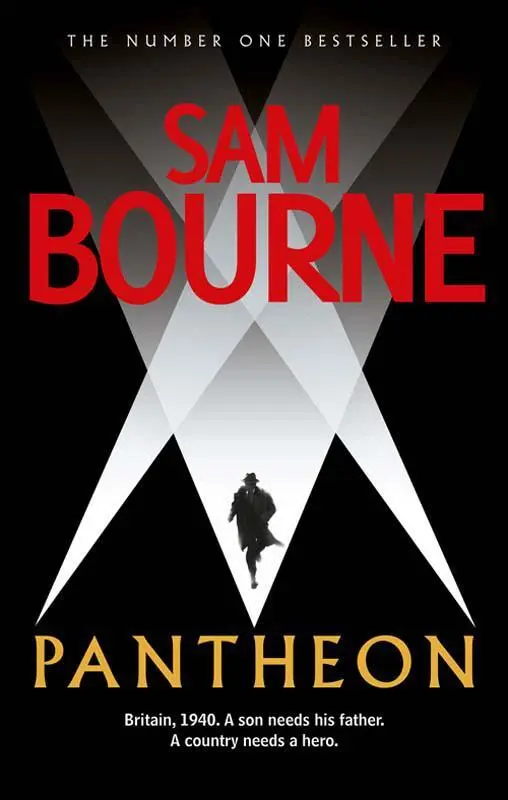
- Название:Pantheon
- Автор:
- Жанр:
- Год:неизвестен
- ISBN:нет данных
- Рейтинг книги:3 / 5. Голосов: 1
-
Избранное:Добавить в избранное
- Отзывы:
-
Ваша оценка:
Pantheon: краткое содержание, описание и аннотация
Предлагаем к чтению аннотацию, описание, краткое содержание или предисловие (зависит от того, что написал сам автор книги «Pantheon»). Если вы не нашли необходимую информацию о книге — напишите в комментариях, мы постараемся отыскать её.
Pantheon — читать онлайн ознакомительный отрывок
Ниже представлен текст книги, разбитый по страницам. Система сохранения места последней прочитанной страницы, позволяет с удобством читать онлайн бесплатно книгу «Pantheon», без необходимости каждый раз заново искать на чём Вы остановились. Поставьте закладку, и сможете в любой момент перейти на страницу, на которой закончили чтение.
Интервал:
Закладка:
‘How long have we been here?’
The driver made a show of consulting his watch. ‘’bout five minutes. I tried to tell you, but you weren’t listening. Immersed in your book, weren’t you? Good one, is it? One of them murder mysteries?’
‘Not quite,’ Taylor said, handing him a few coins, kicking himself for his mistake. How long had the driver been watching him like that? What if he could read upside down?
Asked to guard the membership list of the Right Club, he had failed his first test. To be worthy of these people’s trust, he would have to do better. He would have to curb his curiosity, no matter how intense. He would have to be vigilant, watching out for anyone nosing around. Above all, and this would be hardest, he would have to be discreet. That meant no bragging to Anna when he saw her later tonight.
He walked up to his apartment, strode into his bedroom and pulled the empty suitcase from under his bed. He placed the red book at the bottom, then placed two blankets on top. He closed the lid and locked it, returning the key to his night table, then put the suitcase inside his wardrobe, behind two pairs of boots. Tomorrow he would buy a lock for the cupboard.
Three separate locks, three separate keys, standing between any would-be spy and the information he had sworn to protect. He looked around his apartment — his ‘flat’ as Anna called it — and headed for the bathroom. He found his box of shaving cream, lifted the lid, and popped the red book’s small key inside.
That done, he felt a sudden rush of pride. He had been in this country less than a year and already he was at the centre of things. He held the fates of some of the most important men in England in his hands. He would prove himself deserving of their faith; he wouldn’t let them down. And yet, thrilling as this was, he longed to do more than merely safeguard their secrets. He wanted to help their cause.
The clock in the hallway chimed nine. Anna would be waiting for him. He wondered if he should stop off somewhere to get something to eat first. There would be no food on offer from Anna. Just martinis and…
The thought aroused him, sending a surge of blood to his groin. He made one last check of the apartment and headed out into the London night.
Chapter Eighteen
James Zennor spent the afternoon in the Sterling Library. He knew what he was looking for, but this time decided he would speak to no one and ask no questions. He would search on his own.
It did not take him long to get used to the place. Fifteen storeys high and as imposing as a Gothic cathedral, the library nevertheless felt familiar, solid and rooted, the stone as dull and pitted by age as if it had stood there for centuries, like one of its Oxford counterparts. But it turned out that the Sterling Library was a kind of confidence trick and he had fallen for it. An information booklet set him straight: work on the library had only finished in 1931, just nine years earlier. The aged appearance was an act of artifice. The booklet explained that, before construction began, the stones from which the library had been built had been deliberately buried in soil for two years, pulled out only once they looked suitably eroded and weather-beaten. As for the stained-glass windows, with their jagged strips of black leading, some of those panes had been deliberately cracked and then leaded to get that ancient monastery look. James could only marvel at the mentality that would go to such lengths: the university of a young country spending a fortune pretending to be old. Who would have thought youth, energy and vigour could be so unsure of itself? He had never before diagnosed a building, but he concluded that the Sterling Library had a distinct case of what his fellow psychologists referred to as an ‘inferiority complex’.
He found what he was looking for: the newspaper reading room. It was full of deep leather armchairs and tables piled with papers clasped in long, wooden binders. He ignored the stacked copies of the New York Times and Wall Street Journal and pounced instead on the New Haven Evening Register. He had already worked out the edition he wanted: the Antonia had left Liverpool on the tenth of July, arriving into Quebec on the nineteenth. there would have been a few days in Canada with arrival at Yale on or around the twenty-second. There, he had it: the paper for July 22nd 1940.
He scanned the front, turned to the inside pages, then back again. Nothing. Maybe they had stayed in Canada longer than he had estimated. He went to the twenty-fourth, riffling through the paper. Still nothing.
Then on an inside page of the Register of July the twenty-fifth, he saw it: a photograph showing the window of a railway train, the frame filled with the faces of six children, one a baby on the lap of her mother. The caption read ‘Refugees Find New Haven in Land Holding Promise of Peace’ — but the woman was not Florence.
His eye combed the story, searching for names. There was a Spokes, a Handfield-Jones and a Phelps-Brown, but no Zennor and no Walsingham. Still, this at least was written confirmation that he had not gone on a wild goose chase, that he had been right to cross the ocean and come to Yale. The Oxford children were here. Then he spotted another, smaller photo lower down. Was that Harry, a blurred little face in the corner? He desperately wanted it to be, but now that he looked closer, he doubted it.
Of course there were two dozen mothers and five times as many children; it meant nothing that his wife and child had not been mentioned in the article. And yet he had never met any man with a camera who had been able to resist taking photographs of Florence. Half of the press stories about the People’s Olympiad seemed to be accompanied by a shot of the beautiful British swimmer Florence Walsingham. As a result, he had all but assumed that if the New Haven papers had made any mention at all of the Oxford arrivals, his wife would feature prominently.
But there could be other stories. He advanced to the editions for the subsequent days, eventually finding this: ‘Dress of British Refugees Here Sets Them Apart From US Youth’. There was another picture, of older girls, and a story about the long outer coats and long ‘short pants’ of the younger boys — but no photograph and no mention of Harry. There were references to the sandals and school blazers, with insignia ‘emblazoned on the pockets’, and much excitement over the ‘natural color straw hats to protect them from the rays of the sun’, especially the hat worn by one little girl on top of her pigtails. Back numbers of the Yale Daily News served up similar offerings, but of Florence and Harry there was not a trace.
He could see immediately why the Assistant Dean had wanted to meet here. A good twenty-minute walk from the university district, all the way down Chapel Street as if descending to some lower realm, this place was on the literal other side of the tracks — across the railway bridge and in the poor part of town. James was no longer among students in varsity football jerseys and professors in seersucker suits, but Italian immigrants, dark young men with slicked-back hair standing on street corners, their mothers swaddled in black, escaping the late summer heat in the house by sitting out on the stoop. If it was a secret meeting the Assistant Dean was after, this was just the place: surely no one would recognize him here, in New Haven’s Little Italy.
There was no missing Frank Pepe’s: a sign covered an entire wall of the building announcing it as a Pizzeria Napoletana, a phrase that meant next to nothing to James. Had he heard one of the Italians in Spain mentioning pizza? He might have done, but he still had little idea what it was.
Once inside he saw something that looked as if it belonged in a locomotive: on the far wall, surrounded by white tiles as wide as bricks, was a gaping hole filled by a roaring fire. Several chefs were standing before it, like the crew of a steam engine, apparently stoking the flames. Once he had watched, mesmerized, for a while, he realized they were in fact clutching long paddles which they used to deposit and retrieve discs of dough larger than gramophone records in what was a giant oven.
Читать дальшеИнтервал:
Закладка:
Похожие книги на «Pantheon»
Представляем Вашему вниманию похожие книги на «Pantheon» списком для выбора. Мы отобрали схожую по названию и смыслу литературу в надежде предоставить читателям больше вариантов отыскать новые, интересные, ещё непрочитанные произведения.






Обсуждение, отзывы о книге «Pantheon» и просто собственные мнения читателей. Оставьте ваши комментарии, напишите, что Вы думаете о произведении, его смысле или главных героях. Укажите что конкретно понравилось, а что нет, и почему Вы так считаете.