Sam Bourne - Pantheon
Здесь есть возможность читать онлайн «Sam Bourne - Pantheon» — ознакомительный отрывок электронной книги совершенно бесплатно, а после прочтения отрывка купить полную версию. В некоторых случаях можно слушать аудио, скачать через торрент в формате fb2 и присутствует краткое содержание. Жанр: Триллер, на английском языке. Описание произведения, (предисловие) а так же отзывы посетителей доступны на портале библиотеки ЛибКат.
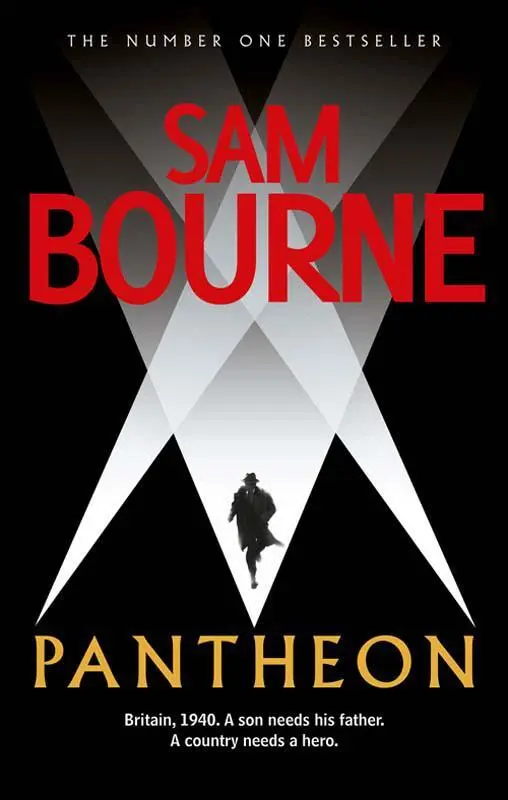
- Название:Pantheon
- Автор:
- Жанр:
- Год:неизвестен
- ISBN:нет данных
- Рейтинг книги:3 / 5. Голосов: 1
-
Избранное:Добавить в избранное
- Отзывы:
-
Ваша оценка:
Pantheon: краткое содержание, описание и аннотация
Предлагаем к чтению аннотацию, описание, краткое содержание или предисловие (зависит от того, что написал сам автор книги «Pantheon»). Если вы не нашли необходимую информацию о книге — напишите в комментариях, мы постараемся отыскать её.
Pantheon — читать онлайн ознакомительный отрывок
Ниже представлен текст книги, разбитый по страницам. Система сохранения места последней прочитанной страницы, позволяет с удобством читать онлайн бесплатно книгу «Pantheon», без необходимости каждый раз заново искать на чём Вы остановились. Поставьте закладку, и сможете в любой момент перейти на страницу, на которой закончили чтение.
Интервал:
Закладка:
A circular urging donations of books for prisoners of war via the Red Cross; a notice about new rules aimed at reducing coal consumption in college; a letter asking for revisions on an article he had written on group behaviour for the Journal of Experimental Psychology and, finally, at the bottom of the pile, a postcard from Florence.
There was no doubt it was from her. The handwriting was unmistakable; just glimpsing it was enough to make his heart squeeze. The same three words again: I love you.
He flipped it over to see the image, a photograph showing the construction of the Sagrada Familia, Gaudi’s magnificent, unfinished church: they had visited it together during one of their long, meandering walks through Barcelona, the week they had met.
He turned it over to check the postmark. It had been posted last night. Thank God for the Royal Mail, carrying on as if there were no war on: with a first class stamp, it seemed they could get a letter to anywhere by the next morning. And this had not come from some village in the Oxfordshire countryside. This has been posted from Liverpool.
Liverpool? It made no sense. If she was worried about bombs, the last place to go was Liverpool — an industrial port so strategically indispensable it was surely close to the top of Berlin’s target list. She might as well have fled Oxford for London. It made no sense at all.
Then he spotted a detail that he had initially assumed was a mistake. Registering it now revived the shiver he had felt first thing this morning. The address Florence had written on the card was their home in Norham Gardens, not the college. Yet here it was in his pigeon-hole. It had been sent from Liverpool only last night; there would have been no time for the Post Office to have redirected it.
There could only be one explanation. Someone had moved it.
But who? And why?
Chapter Eight
He was halfway to the station before he realized he would have to make a detour back home to pick up some essentials, starting with money. Adrenalin pumped through his system. He passed the old stone buildings, with their gothic arches and medieval chapels, in a blur, his brain moving faster even than his body. There could be only one possible reason why Florence had gone to Liverpool: in order to leave it. It was no place to hide from the bombs; on the contrary, she had placed herself more directly in harm’s way by going there. Which meant she would be there for the shortest time possible before heading somewhere else. The obvious, closest destination was Dublin. Was Florence thinking it would be safer in neutral Ireland than in occupied Britain? Was this, then, her great fear — not bombs, but life under Nazi occupation?
The postcard had been sent last night. It was conceivable that she and Harry were still there, that with a bit of luck on the trains, he might just make it in time, catching them before they left. He would have a chance to persuade her to stay. The fact that he had chased her all the way to Liverpool would surely demonstrate how much he cared: what, after all, was the purpose of that postcard, except as a summons, urging him to follow her if he truly loved her? Of course she could have simply telephoned and told him where they could meet. But James preferred to see the card like a challenge set for a medieval knight, imagining that Florence had chosen to test him, to make him prove his devotion. He pictured their reunion: they would meet at the docks, Harry would hug him tight and she would instantly realize the folly of separating a boy from his father. Everything would be all right. Just so long as he could catch a train.
At the station, all was chaos and noise. Ever since they had removed the signs from the railways, the staff had to march up and down the platform barking, ‘Oxford, this is Oxford! Oxford, this is Oxford!’ (Was it really likely that German pilots would be able to read station signs from the air, especially in the dark?) The platform was crowded, with piles of baggage everywhere, doubtless belonging to soldiers on the move. Everyone seemed confused, especially by the special troop trains, which looked like the others and ran on the same lines but which were barred to the civilian population.
Eventually James found a clerk who told him that he needed to cross the bridge and wait for the next LMS train to Bletchley, due in twenty-five minutes. From there, the man — elderly, probably brought out of retirement so that the permanent holder of the position could do his bit for the war, a thought which triggered in James the usual spasm of shame — explained that he could catch the main line to Crewe, which should take two-and-a-half hours, and then change for Liverpool Lime Street. It would be a long, circuitous journey but James could see no alternative. He had considered asking to borrow the Greys’ car, but petrol was so scarce and the trek northward might not be any faster. To say nothing of all the explanations and gushing thanks he would have to produce.
Once on board, standing wedged between two young conscripts and their kitbags, the man apparently heading back to war after a spell of leave, he turned over the riddle of the postcard — addressed to one place, his home, and delivered to another, his college. Did that explain the sudden movement he had glimpsed this morning? Had someone intercepted his post, collaring the postman just as he was about to put the card through the door? But he was sure he had not seen two people, and there had been no sign of a postman when he had looked outside, let alone any lurking stranger.
But now he wondered. Perhaps there had been a stack of mail lodged in the letterbox and someone had taken it. Maybe that was the faint rattling noise he had heard, not the sound of letters being posted through the slot, but being pulled out. But who would do such a thing? It had achieved nothing except a delay, given that he had seen the postcard from his wife little more than an hour or two later. If someone had wanted to steal his post, then why not simply steal it: why go to the trouble of delivering it to an alternative address that very morning? Whoever had done it had clearly known plenty about him, including his college affiliation.
Or was this exactly what Rosemary Hyde — that was it, Hyde — had in mind when she accused him of going off the rails yesterday? Was he imagining things, constructing a menace that wasn’t there out of a simple mix-up with the morning post? He remembered the book: Others reported a heightened state of awareness, as if in constant expectation of danger. Was this an example of the very hyper-vigilance he had read about, little more than mindless paranoia?
The train had stopped, halted in a screech of metal and a cloud of steam for no reason he could discern. An argument was getting louder in the next carriage, an inspector telling a gang of servicemen to get out of the first class compartment. James felt himself tense. He couldn’t afford even the slightest delay. A minute lost here could be the difference between winning Florence back and seeing her go. He craned to look out of the window, where he could see the train’s fireman had jumped off the plate and was inspecting one of the engine’s wheels. James’s hands were beginning to tremble: come on, come on. And then, mercifully, there was a blast of the whistle and they were back on their way.
Partly to keep his mind occupied, he constructed a list, refined and refined again, of people who might benefit from the switch of the postcard. As the train chugged through the Oxfordshire countryside, he went through them all, starting with the obvious category: those who were infatuated with, or covetous of, his wife, a category that would include most of the red-blooded men in Oxford and probably a fair smattering of Rosemary’s glorified Brownie pack, including the Brown Owl herself. He worked through each of them, paying particular attention to the myopic Magnus Hook, promoted up the suspects’ rankings for having seen James dishevelled and out of sorts the previous day: that would only have had to prompt a few questions in the right places for Hook to have discovered Florence’s absence. And then there was Virginia Grey, in the picture from the very start. Round and round he went, working through the carousel of friends, acquaintances and colleagues. Albert Wills, Professor of Natural Sciences and Florence’s head of department, had taken an instant shine to her: who knew what he, what they, might have been plotting in the labs? There was the slick-haired Leonard Musgrove, Chairman of the local Fabian Society and undeniably handsome. Damn. James had meant to check when the Fabians met, wondering if, by any chance, it was early on Thursday evenings. And what about Edgar Connolly, eminent biologist and vegetarian fanatic who had come to see Florence as something of a protegee? He was her father’s age, but that meant nothing; Oxford morality was not the same as the provincial variety he had grown up with. It could be any one of them.
Читать дальшеИнтервал:
Закладка:
Похожие книги на «Pantheon»
Представляем Вашему вниманию похожие книги на «Pantheon» списком для выбора. Мы отобрали схожую по названию и смыслу литературу в надежде предоставить читателям больше вариантов отыскать новые, интересные, ещё непрочитанные произведения.






Обсуждение, отзывы о книге «Pantheon» и просто собственные мнения читателей. Оставьте ваши комментарии, напишите, что Вы думаете о произведении, его смысле или главных героях. Укажите что конкретно понравилось, а что нет, и почему Вы так считаете.