Ken McClure - Lost causes
Здесь есть возможность читать онлайн «Ken McClure - Lost causes» весь текст электронной книги совершенно бесплатно (целиком полную версию без сокращений). В некоторых случаях можно слушать аудио, скачать через торрент в формате fb2 и присутствует краткое содержание. Жанр: Триллер, на английском языке. Описание произведения, (предисловие) а так же отзывы посетителей доступны на портале библиотеки ЛибКат.
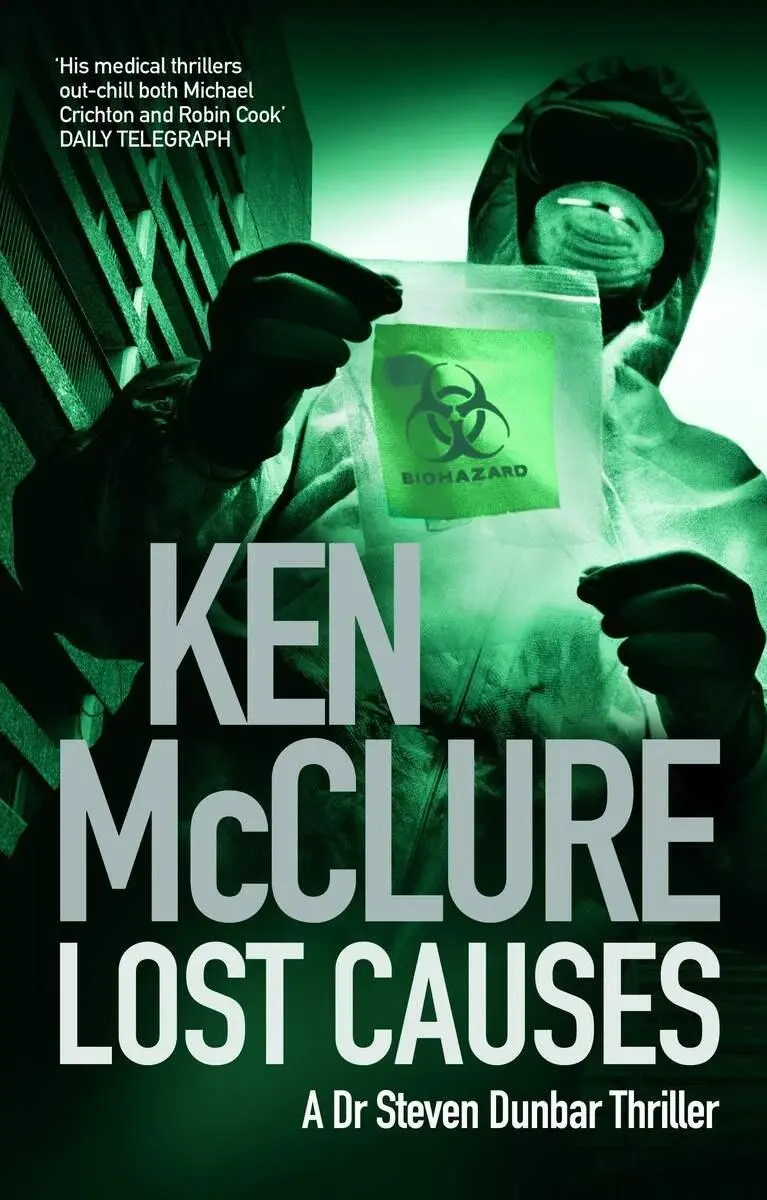
- Название:Lost causes
- Автор:
- Жанр:
- Год:неизвестен
- ISBN:нет данных
- Рейтинг книги:4 / 5. Голосов: 1
-
Избранное:Добавить в избранное
- Отзывы:
-
Ваша оценка:
Lost causes: краткое содержание, описание и аннотация
Предлагаем к чтению аннотацию, описание, краткое содержание или предисловие (зависит от того, что написал сам автор книги «Lost causes»). Если вы не нашли необходимую информацию о книге — напишите в комментариях, мы постараемся отыскать её.
Lost causes — читать онлайн бесплатно полную книгу (весь текст) целиком
Ниже представлен текст книги, разбитый по страницам. Система сохранения места последней прочитанной страницы, позволяет с удобством читать онлайн бесплатно книгу «Lost causes», без необходимости каждый раз заново искать на чём Вы остановились. Поставьте закладку, и сможете в любой момент перейти на страницу, на которой закончили чтение.
Интервал:
Закладка:
The civil service would, of course, keep everything running, and might even relish the chance of being even more in charge than usual with dependent strangers in their midst, but when it came to making big policy decisions under extreme or emergency pressure the test was yet to come.
‘Hello, Steven. I heard you were back. Good to see you,’ said a voice behind him as Steven climbed the stairs. He turned to see the head of MI5 with one of his colleagues.
‘You too,’ he replied automatically. Relations between 5 and Sci-Med weren’t always cordial when 5 did the government’s dirty work and Sci-Med shone a spotlight on it, with John Macmillan asserting that no one should be above the law — an attitude that had delayed his knighthood for many years.
Steven nodded to one or two familiar faces from the Metropolitan Police and the civil service. There was also a military presence, but the ministerial contingent from the Department of Health — the government department he usually had most dealings with — seemed to be entirely made up of unknown faces.
The deputy Prime Minister made apologies for the Prime Minister’s absence without giving a reason, and got down to business straight away.
‘Intelligence suggests that the UK will be subjected to a chemical or biological attack in the very near future.’
He had to pause to let the hubbub die down.
‘How reliable is this intelligence?’ asked the health secretary.
The head of MI5 said, ‘We’ve had a tip-off from an anonymous source.’
‘So it could be a hoax?’
‘It could be. On the other hand, it might not be. We’ve been told that Islamic fundamentalists are behind it. We don’t know much more than that.’
‘Do we have any indication at all about the nature of the attack?’ asked the Met commissioner. ‘Gas? Chemicals? Anthrax?’
‘I’m sorry. We don’t know.’
‘Which means we can’t prepare,’ said Steven.
‘We can certainly tighten security at all airports and rail and ferry terminals,’ suggested the commissioner.
‘Our intelligence suggests they are already here,’ said the head of MI5, a comment that provoked another hubbub. ‘We think the terrorists are home-grown,’ he clarified. ‘Our colleagues in MI6 have heard nothing of an attack coming from outside the UK.’
‘But you have no inkling at all of the nature of the attack?’
‘I’m afraid not.’
‘Which means we’ll have to initiate standard emergency procedure in all our cities without telling the services what they’re up against,’ said the Home Secretary.
‘Containment must be the immediate aim,’ said the deputy PM.
‘Let’s hope it’s a gas attack,’ said Steven. ‘At least that will be localised. If it’s microbiological, the chances are we haven’t got any hope at all of containing it.’ He was immediately aware of the discomfort his comment had provoked.
‘I don’t think we need such negative thinking,’ said the cabinet secretary.
Steven bit his tongue. He knew he was prone to saying more than was wise at such meetings, and had no trouble at all in imagining the kick on the ankle John Macmillan might have given him at that moment. Truth had to be approached in a more circumspect fashion in the corridors of power, which usually meant tiptoeing through a minefield of other people’s egos and sensibilities.
‘Our emergency services are the finest in the world and have been trained over many years for just such eventualities,’ said the Home Secretary.
One of the Department of Health people, a confident-looking man named Norman Travis, Steven learned from his desk name plate, said, ‘With all due respect, sir, I think the problem arises in not knowing exactly what “eventuality” we might be dealing with. As Dr Dunbar says, a gas attack will, by its very nature, be limited in area, and our services have been trained to deal with that sort of incident, but if it should turn out to be anthrax or even, God forbid, smallpox… we will have a much more challenging situation to deal with.’
That’s how to go about it, Steven thought to himself. Travis even finished his comment with a disarming smile. Steven remembered that this was the man who had led the negotiations with the pharmaceutical companies over vaccine production to a successful conclusion.
‘I think our experience with the swine flu pandemic will stand us in good stead,’ said the deputy PM.
Steven shook his head slightly and looked down at the table as he kept hold of his tongue.
‘But you don’t agree, doctor?’ challenged the cabinet secretary, who had noticed his reaction.
Steven lost the struggle. In for a penny, in for a pound. ‘The handling of swine flu was a complete and utter disaster and one that we should learn from, not crow about.’
EIGHTEEN
‘Perhaps you’d care to expand on that assertion?’
‘Swine flu wasn’t a real pandemic. It was a bad cold,’ said Steven dismissively.
‘People died from it.’
‘People who would normally have died from ordinary flu because they had underlying medical conditions.’
‘Not all.’
‘All right, there were a few who died without having underlying conditions, but they were very few and far between, and their deaths were built up to justify the hype and create a totally wrong impression. It was a mess from the start. Advice was conflicting. Doctors squabbled over payment. Tamiflu was handed out to anyone who phoned a surgery — including the worried well — and anyone who was ill was told to stay away from hospitals and surgeries, the end result being that we have no real idea how many people actually caught swine flu. When I asked how many people went down with ordinary seasonal flu, they couldn’t tell me because all cases of flu were being recorded as swine flu. We ended up with a mountain of Tamiflu, to the delight of shareholders in the company who make it. Frankly, a box of tissues and a hot toddy would have been a damn sight more use. What we learned from swine flu is how not to go about handling a pandemic. If swine flu had been smallpox we’d all be dead.’
The silence in the room seemed to go on for ever.
The cabinet secretary looked first to the health officials and then to the Home Secretary but failed to find anyone keen to put up a defence. ‘Go on,’ he said.
‘The only defence against a virus attack is to vaccinate people beforehand. Once they’re infected it’ll be too late. We were actually better prepared to deal with outbreaks of infectious disease in the the first half of the twentieth century when we had hospitals specifically for that purpose and nurses trained to look after such cases. Now we have half a dozen fancy isolation beds in our big hospitals in case someone comes off a flight with a problem. Unless we’re protected beforehand, we’ll simply be overwhelmed. Sending in emergency service personnel wearing biohazard suits in vehicles with lights blazing and sirens blaring isn’t going to help. It’s a PR exercise. We’d be as well sending in morris dancers.’
Another awkward silence was broken by Travis. ‘I think I must agree with much of what Dr Dunbar has said. The only real defence against biological attack is vaccination, but, as was pointed out earlier, if we don’t know what is going to be used against us we will be forced into second-guessing the opposition. Not ideal. Apart from that, we are still painfully short of vaccines, although we hope this will change in the near future when Merryman Pharmaceuticals are fully up to speed.’
‘So what do we do in the face of an imminent attack?’ asked the deputy PM. ‘Wait and see?’
‘I think a gas attack is more likely than anything biological,’ said a spokesman from the Ministry of Defence. ‘Sarin, or some such agent. That sort of attack is a damned sight easier to mount than trying to infect a whole population and, of course, you get the all-important immediate terror factor.’
Читать дальшеИнтервал:
Закладка:
Похожие книги на «Lost causes»
Представляем Вашему вниманию похожие книги на «Lost causes» списком для выбора. Мы отобрали схожую по названию и смыслу литературу в надежде предоставить читателям больше вариантов отыскать новые, интересные, ещё непрочитанные произведения.


Обсуждение, отзывы о книге «Lost causes» и просто собственные мнения читателей. Оставьте ваши комментарии, напишите, что Вы думаете о произведении, его смысле или главных героях. Укажите что конкретно понравилось, а что нет, и почему Вы так считаете.