Tom Smith - Child 44
Здесь есть возможность читать онлайн «Tom Smith - Child 44» весь текст электронной книги совершенно бесплатно (целиком полную версию без сокращений). В некоторых случаях можно слушать аудио, скачать через торрент в формате fb2 и присутствует краткое содержание. Год выпуска: 2008, ISBN: 2008, Издательство: Grand Central Pub, Жанр: Триллер, на английском языке. Описание произведения, (предисловие) а так же отзывы посетителей доступны на портале библиотеки ЛибКат.
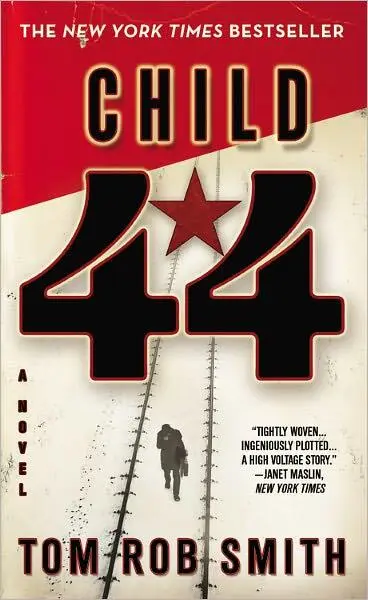
- Название:Child 44
- Автор:
- Издательство:Grand Central Pub
- Жанр:
- Год:2008
- ISBN:9780446402385
- Рейтинг книги:3 / 5. Голосов: 1
-
Избранное:Добавить в избранное
- Отзывы:
-
Ваша оценка:
Child 44: краткое содержание, описание и аннотация
Предлагаем к чтению аннотацию, описание, краткое содержание или предисловие (зависит от того, что написал сам автор книги «Child 44»). Если вы не нашли необходимую информацию о книге — напишите в комментариях, мы постараемся отыскать её.
The novel is based on real Russian serial killer Andrei Chikatilo, also known as the Rostov Ripper, who was responsible for 52 murders in communist Russia. In addition to highlighting the problem of Soviet-era criminality in a state where "there is no crime," the novel also explores the paranoia of the age, the education system, the secret police apparatus, orphanages, Homosexuality in the USSR and mental hospitals.
The book is the first part of a trilogy. The second part is called The Secret Speech and also features the character of Leo Demidov and his wife, Raisa.
Child 44 was longlisted for the Man Booker Prize in 2008 and won the Waverton Good Read Award in 2009.
Child 44 — читать онлайн бесплатно полную книгу (весь текст) целиком
Ниже представлен текст книги, разбитый по страницам. Система сохранения места последней прочитанной страницы, позволяет с удобством читать онлайн бесплатно книгу «Child 44», без необходимости каждый раз заново искать на чём Вы остановились. Поставьте закладку, и сможете в любой момент перейти на страницу, на которой закончили чтение.
Интервал:
Закладка:
Dr Tyapkin’s case had taken less time, barely a day. His wife had testified that he was violent, describing his sick fantasies and claiming that the only reason she hadn’t come forward before was because she’d feared for her own life and for the life of her baby. She’d also told the judge that she renounced her religion — Judaism. She would bring her children up to be loyal Communists. In exchange for this testimony she’d been transferred to Shakhty, a town in the Ukraine, where she could continue her life without the stigma of her husband’s crime. Since no one outside Voualsk had heard of the crime, there wasn’t even any need to change her name.
With these two cases concluded, the court had processed close to two hundred cases against men accused of anti-Soviet behaviour. These homosexuals had received hard-labour sentences of between five and twenty-five years. In order to deal with the sheer number of cases swiftly the judge had devised a formula for sentencing which depended upon their employment record, the number of children they had and finally the quantity of perverse sexual encounters they’d been alleged to have experienced. Being a member of the Party was counted as a strike against the accused since they’d brought the Party into disrepute. They should have known better and their membership was stripped from them. Despite the repetitious nature of these sessions Nesterov had sat through all of them, all one hundred and fifty or so. After the last man had been sentenced he’d left the court only to find himself being congratulated by local Party officials. He’d done well. It was almost certain he’d have a new apartment with the next couple of months, or if not then by the end of the year.
Several nights after the conclusion of the trials, as he’d lain awake, his wife had told him it was only a matter of time before he agreed to help Leo. She wished he’d just get on and do it. Had he been waiting for her permission? Perhaps he had. He was gambling with not only his own life but with those of his family. It wasn’t that he was doing anything technically wrong by asking questions and making enquiries, but he was acting on his own. Independent action was always a risk since it implied that the structures put in place by the State had failed: that the individual could somehow achieve something the State could not. All the same he was confident that he could begin a quiet kind of investigation, a casual investigation which would appear to be no more than conversations between colleagues. If he discovered that there were no similar cases, no other murdered children, then he could be sure that the brutal punishments he’d been instrumental in bringing about had been fair, just and appropriate. Though he mistrusted Leo and resented the doubt he’d stirred up, there was no escaping that the man had posited a very simple question. Did his work have meaning or was it merely a means to survive? There was nothing shameful about trying to survive — it was the occupation of the majority. However, was it enough to live in squalor and not even be rewarded with a sense of pride, not even to be sustained by a sense that what he did served some purpose?
For the past ten weeks Nesterov had operated on his own without any discussion or collaboration with Leo. Since Leo was almost certainly under surveillance the less contact between them the better. All he’d done was to scribble Leo a short note— I’ll help —including instructions to destroy the note immediately.
There was no easy way of accessing regional criminal files. He’d made phone calls and written letters. In both forms of communication he’d mentioned the subject only in passing, praising the efficiency of his department for the swift resolution of their two cases in an attempt to provoke similar boasts. As the replies began to arrive he’d been forced to make several off-duty train journeys, arriving in towns and meeting with his colleagues, drinking with them, discussing relevant cases for no more than a fraction of a minute before boasting about other things. It was an extraordinarily inefficient means of collecting information. Three hours of drinking might provide two minutes of useful conversation. After eight weeks Nesterov hadn’t unearthed a single unsolved crime. At this point he’d called Leo into his office.
Leo had entered the office, shut the door and sat down. Nesterov had double-checked the corridors before returning, locking the office door and reaching under his desk. He’d taken out a map of the Soviet Union, which he’d spread across the desk, weighing down the corners with books. He’d then picked up a handful of pins. He’d stuck two into the map at Voualsk, two in Molotov, two in Vyatka, two in Gorky and two in Kazan. These pins formed a row of towns which followed the train line west towards Moscow. Nesterov hadn’t been to Moscow, deliberately avoiding its militia officers who he’d feared were likely to be suspicious of any enquiries. West of Moscow, Nesterov had been less successful in gathering information, but he’d found one possible incident in Tver. Moving south, he stuck three pins in the city of Tula, two in the town of Orel and two in Belgorod. Now into the Ukraine, he picked up the box of pins, shaking at least twenty into his hand. He continued: three pins in the towns of Kharkov and Gorlovka, four in the city of Zaporoshy, three in the town of Kramatorsk and one in Kiev. Moving out of the Ukraine, there were five pins in Taganrog and finally six pins in and around the city of Rostov.
Nesterov had understood Leo’s reaction — stunned silence. In many ways he had collected this information in a comparable frame of mind. At first he’d tried to dismiss the similarities: the ground-up material stuffed into the children’s mouths, whether officers called it soil or dirt, the mutilated torsos. But the points of similarity were too striking. There was the string around the ankles. The bodies were always naked, the clothes left in a pile some distance away. The crime scenes were in forests or parks and often near train stations, never household crimes, never interior. Not one town had spoken to another even though some crimes had occurred less than fifty kilometres apart. No connecting line had been traced, joining up these pins. They’d been solved by blaming drunks or thieves or convicted rapists — undesirables, to whom any allegation would stick.
By his count there were forty-three in total. Nesterov had reached over, taken another pin from the box and stuck it into the centre of Moscow, making Arkady child 44.
Nesterov awoke to find the side of his face pressed against the sand, his mouth open. He sat up, brushing the sand off. The sun had disappeared behind a sheet of cloud. He looked for his children, searching the stretch of beach, the people playing. His eldest son, Efim, seven years old, sat near the water’s edge. But his youngest son — only five years old — was nowhere to be seen. Nesterov turned to his wife. She was cutting slices of dried meat, ready for their lunch.
— Where’s Vadim?
Inessa looked up, her eyes immediately finding their eldest son but not their youngest. Still holding the knife, she got up, turning around, checking behind her. Unable to see him, she dropped the knife. They both moved forward, arriving by Efim, kneeling down beside him, one on either side.
— Where’s your brother?
— He said he was going back to you.
— When?
— I don’t know.
— Think.
— Not long ago. I’m not sure.
— We told you to stay together.
— He said he was going back to you!
— He didn’t go out into the water?
— He went that way, towards you.
Nesterov stood again, staring into the water. Vadim hadn’t gone out into the sea, he hadn’t wanted to swim. He was on the beach, somewhere amongst these hundreds of people. Images from the case files rose into his mind. One young girl had been murdered off a popular riverside trail. Another young girl had been murdered in a park, behind a monument, one hundred yards from her house. He crouched beside his son:
Читать дальшеИнтервал:
Закладка:
Похожие книги на «Child 44»
Представляем Вашему вниманию похожие книги на «Child 44» списком для выбора. Мы отобрали схожую по названию и смыслу литературу в надежде предоставить читателям больше вариантов отыскать новые, интересные, ещё непрочитанные произведения.










Обсуждение, отзывы о книге «Child 44» и просто собственные мнения читателей. Оставьте ваши комментарии, напишите, что Вы думаете о произведении, его смысле или главных героях. Укажите что конкретно понравилось, а что нет, и почему Вы так считаете.