Tom Smith - Child 44
Здесь есть возможность читать онлайн «Tom Smith - Child 44» весь текст электронной книги совершенно бесплатно (целиком полную версию без сокращений). В некоторых случаях можно слушать аудио, скачать через торрент в формате fb2 и присутствует краткое содержание. Год выпуска: 2008, ISBN: 2008, Издательство: Grand Central Pub, Жанр: Триллер, на английском языке. Описание произведения, (предисловие) а так же отзывы посетителей доступны на портале библиотеки ЛибКат.
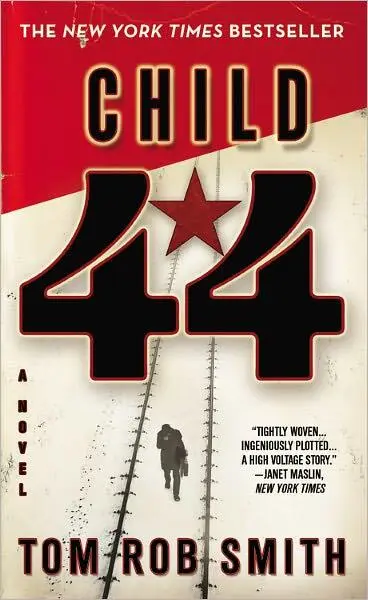
- Название:Child 44
- Автор:
- Издательство:Grand Central Pub
- Жанр:
- Год:2008
- ISBN:9780446402385
- Рейтинг книги:3 / 5. Голосов: 1
-
Избранное:Добавить в избранное
- Отзывы:
-
Ваша оценка:
Child 44: краткое содержание, описание и аннотация
Предлагаем к чтению аннотацию, описание, краткое содержание или предисловие (зависит от того, что написал сам автор книги «Child 44»). Если вы не нашли необходимую информацию о книге — напишите в комментариях, мы постараемся отыскать её.
The novel is based on real Russian serial killer Andrei Chikatilo, also known as the Rostov Ripper, who was responsible for 52 murders in communist Russia. In addition to highlighting the problem of Soviet-era criminality in a state where "there is no crime," the novel also explores the paranoia of the age, the education system, the secret police apparatus, orphanages, Homosexuality in the USSR and mental hospitals.
The book is the first part of a trilogy. The second part is called The Secret Speech and also features the character of Leo Demidov and his wife, Raisa.
Child 44 was longlisted for the Man Booker Prize in 2008 and won the Waverton Good Read Award in 2009.
Child 44 — читать онлайн бесплатно полную книгу (весь текст) целиком
Ниже представлен текст книги, разбитый по страницам. Система сохранения места последней прочитанной страницы, позволяет с удобством читать онлайн бесплатно книгу «Child 44», без необходимости каждый раз заново искать на чём Вы остановились. Поставьте закладку, и сможете в любой момент перейти на страницу, на которой закончили чтение.
Интервал:
Закладка:
I love you.
She hadn’t expected him to. He’d asked her to marry him, true. She’d said yes. He’d wanted a marriage, he’d wanted a wife, he’d wanted her and he’d got what he wanted. Now that wasn’t enough. Having lost his authority, having lost the power to arrest whoever he wanted, he was choked with sentimentalism. And why was it her pragmatic deceit, rather than his profound mistrust, that had brought this illusion of marital contentment crashing down around them? Why couldn’t she demand that he had to convince her of his love? After all, he’d presumed incorrectly that she’d been unfaithful, he’d set up an entire surveillance team, a process which could easily have resulted in her arrest. He’d broken trust between them long before she’d been forced to. Her motivation for doing so had been survival. His had been a pathetic male anxiety.
Ever since they’d entered their names as man and wife into the ledger, even before that, ever since they started seeing each other, she’d been conscious that if she displeased him he could have her killed. It had become a blunt reality of her life. She had to keep him happy. When Zoya had been arrested, the very sight of him — his uniform, his talk about the State — made her so angry she found it impossible to utter more than a couple of words to him. In the end the question was very simple. Did she want to live? She was a survivor and the fact of her survival, the fact that she was the only remaining member of her family, defined her. Indignation at Zoya’s arrest was a luxury. It achieved nothing. And so she’d got into his bed and slept beside him, slept with him. She’d cooked him dinner — hating the sound of him eating. She’d washed his clothes — hating his smell.
For the past few weeks she’d sat idle in their apartment, knowing full well he’d been weighing up whether he’d made the right decision. Should he have spared her life? Was she worth the risk? Was she pretty enough, nice enough, good enough? Unless every gesture and glance pleased him she’d be in mortal danger. Well, that time was over. She was sick of the powerlessness, the dependency upon his good will. Yet now he seemed to be under the impression that she was in his debt. He’d stated the obvious: she wasn’t an international spy, she was a secondary-school teacher. In repayment he wanted a declaration of her love. It was insulting. He was no longer in a position to demand anything. He had no leverage over her just as she had none over him. They were both in the same dire straits: their life’s possessions reduced to one suitcase each, exiled to some far-flung town. They were equals as they had never been equal before. If he wanted to hear about love, the first verse was his to sing.
Leo brooded over Raisa’s remarks. It seemed that she’d granted herself the right to judge him, to hold him in contempt while pretending that her hands were clean. But she’d married him knowing what he did for a living, she’d enjoyed the perks of his position, she’d eaten the rare foods he’d been able to bring home, she’d bought clothes from the well-stocked spetztorgi , stores restricted to state officials. If she was so appalled by his work, why hadn’t she rejected his advances? Everyone understood that it was necessary, in order to survive, to compromise. He’d done things that were distasteful — morally objectionable. A clear conscience was, for most people, an impossible luxury and one Raisa could hardly lay claim to. Had she taught her classes according to her genuine beliefs? Evidently not, considering her indignation at the State Security apparatus — but at school she must have expressed her support for it, explained to her students how their State operated, applauded it, indoctrinated them to agree with it and even encouraged them to denounce one another. If she hadn’t she would’ve almost certainly been denounced by one of her own students. Her job was not only to toe the line but to shut down her pupils’ questioning faculties. And it would be her job to do it again in their new town. As far Leo was concerned, he and his wife were spokes in the same wheel.
The train stopped at Mutava for an hour. Raisa broke the day-long silence between them.
— We should eat something.
By which she meant that they should stick to practical arrangements: it had been the foundation for their relationship this far. Surviving whatever challenges they had coming, that was the glue between them, not love. They got out of the carriage. A woman was pacing the platform with a wicker basket. They bought hardboiled eggs, a paper pouch of salt, chunks of tough rye bread. Sitting side by side on a bench they peeled their eggs, collecting the shell in their laps, sharing the salt and saying nothing at all to each other.
The train’s speed dropped as it climbed towards the mountains, passing through black pine forests. In the distance, over the tree tops, the mountains could be seen jutting upwards like the uneven teeth in a bottom jaw.
The tracks opened out into a clearing — sprawled before them was a vast assembly plant, tall chimneys, interconnected warehouse-like buildings suddenly appearing in the middle of a wilderness. It was as though God had sat on the Ural Mountains, smashed his fist down on the landscape before him, sending trees flying, and demanded that this newly created space be filled with chimneys and steel presses. This was the first glimpse of their new home.
Leo’s knowledge of this town came from propaganda and paperwork. Previously little more than timber mills and a collection of timber huts for the people who worked in them, the once modest settlement of twenty thousand inhabitants had caught Stalin’s eye. Upon closer examination of its natural and man-made resources he’d declared it insufficiently productive. The river Ufa ran nearby, there were the steel- and iron-processing plants in Sverdlovsk only a hundred and sixty kilometres east and ore mines in the mountains, and it had the benefit of the Trans-Siberian railway — vast locomotives passed through this town each day and nothing more was added to them than planks of wood. He’d decided that this would be the ideal location to assemble an automobile, the GAZ-20, a car intended to rival the vehicles produced in the West, built according to the highest specifications. It’s successor, currently under design — the Volga GAZ-21–was being upheld as the pinnacle of Soviet engineering, designed to survive the harsh climate with high ground clearance, enviable suspension, a bullet-proof engine and rust-proofing on a scale unheard of in the United States of America. Whether that was true or not, Leo had no way of knowing. He knew it was a car only a tiny per cent of Soviet citizens could afford, far beyond the financial reach of the men and women employed in its assembly.
Construction on the factory began some time after the war and eighteen months later the Volga assembly plant stood in the middle of the pine forests. He couldn’t remember the number of prisoners reported to have died in its construction. Not that the numbers were reliable anyway. Leo had only become actively involved after the factory had been completed. Thousands of free workers had been vetted and transferred by compulsory writ from cities across the country to fill the newly created labour gap: the population rising fivefold over the space of five years. Leo had done background checks on some of the Moscow workers transferred here. If they’d passed the checks, they were packed up and moved out within the week. If they failed, they were arrested. He’d been one of the gatekeepers to this town. He was sure that this was one of the reasons that Vasili had picked this place. The irony must have amused him.
Raisa missed this first glimpse of their new home. She was asleep, wrapped up in her coat, her head resting against the window, rocking slightly with the motion of the train. Moving to the seat beside his wife and facing in the direction they were travelling, he could see how the main town was latched onto the side of the vast assembly plant as though it was a tic sucking on the neck of a dog. First and foremost this was a place of industrial production, a distant second, a place to live. The lights of apartment blocks glowed dim orange against a grey sky. Leo nudged Raisa. She woke, looking at Leo, then out of the window.
Читать дальшеИнтервал:
Закладка:
Похожие книги на «Child 44»
Представляем Вашему вниманию похожие книги на «Child 44» списком для выбора. Мы отобрали схожую по названию и смыслу литературу в надежде предоставить читателям больше вариантов отыскать новые, интересные, ещё непрочитанные произведения.










Обсуждение, отзывы о книге «Child 44» и просто собственные мнения читателей. Оставьте ваши комментарии, напишите, что Вы думаете о произведении, его смысле или главных героях. Укажите что конкретно понравилось, а что нет, и почему Вы так считаете.