Steve Gannon - Kane
Здесь есть возможность читать онлайн «Steve Gannon - Kane» весь текст электронной книги совершенно бесплатно (целиком полную версию без сокращений). В некоторых случаях можно слушать аудио, скачать через торрент в формате fb2 и присутствует краткое содержание. Жанр: Триллер, на английском языке. Описание произведения, (предисловие) а так же отзывы посетителей доступны на портале библиотеки ЛибКат.
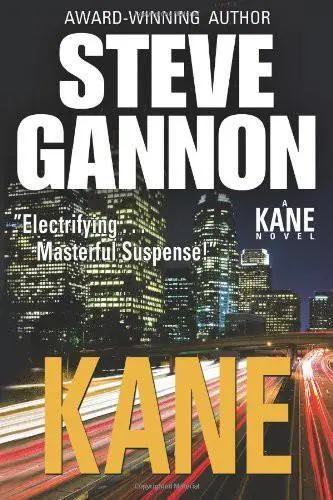
- Название:Kane
- Автор:
- Жанр:
- Год:неизвестен
- ISBN:нет данных
- Рейтинг книги:3 / 5. Голосов: 1
-
Избранное:Добавить в избранное
- Отзывы:
-
Ваша оценка:
Kane: краткое содержание, описание и аннотация
Предлагаем к чтению аннотацию, описание, краткое содержание или предисловие (зависит от того, что написал сам автор книги «Kane»). Если вы не нашли необходимую информацию о книге — напишите в комментариях, мы постараемся отыскать её.
Kane — читать онлайн бесплатно полную книгу (весь текст) целиком
Ниже представлен текст книги, разбитый по страницам. Система сохранения места последней прочитанной страницы, позволяет с удобством читать онлайн бесплатно книгу «Kane», без необходимости каждый раз заново искать на чём Вы остановились. Поставьте закладку, и сможете в любой момент перейти на страницу, на которой закончили чтение.
Интервал:
Закладка:
“Your wife’s a lucky woman.”
“There’re plenty who’d disagree. And they would probably be right.”
“I don’t think so.”
“Maybe you’re the one who needs glasses.”
Lauren started to respond, then paused thoughtfully. “Catheryn came to visit me today. She knows.”
I froze, feeling as if I’d been kicked in the chest. “How’d she find out?”
“I don’t know. She mentioned picking up a few things being married to a cop.”
I ran my fingers through my hair, momentarily at a loss for words. “I have to go,” I said, realizing that Lauren’s revelation could explain a lot.
“You’re sure?”
I nodded.
“Well, thanks for stopping by. Merry Christmas. And Kane? Whatever it is you want, I hope you get it.”
“Thanks, Lauren. I hope you do, too.”
Steve Gannon
Kane
42
H eart racing, Catheryn stood in the stage-right wing of the Walt Disney Concert Hall, her stomach tied in knots. She had performed for large audiences in the past, especially since joining the Philharmonic, but never as a featured soloist, and never with so little preparation. A capacity crowd was rapidly filling the 2,265-seat auditorium, with late arrivals filtering in as concert hour approached. With mounting misgivings, Catheryn realized that most of those present had come to hear Arthur West’s celebrated performance of the Dvorak Cello Concerto, and they would undoubtedly be disappointed to find a substitution slip in their programs. Another soloist? What happened to Arthur West? And who is this Catheryn Kane, anyway?
Who, indeed? Catheryn wondered.
Mother, musician, wife, came the answer, followed by a bitter addendum: And possibly not the latter for much longer. She remembered her husband’s hateful accusation of the night before, again feeling his words settling like spit on her face. She had wanted to lash out, protest her innocence, scream her knowledge of his betrayal. Most of all, she had wanted to hurt him, hurt him as he had hurt her. Resolutely, Catheryn shook her head, resolving to take a page from her husband’s playbook and put off thinking about things until later. With a near-paralyzing case of preconcert jitters, she already had enough on her plate. Tomorrow would be soon enough. Not now.
Almost time.
Taking a deep breath, Catheryn focused on the concerto she was about to perform, reviewing it in her mind. At the turn of the nineteenth century, during a protracted visit to the United States, Antonin Dvorak had written his lyric, emotional concerto for cello, and the unchallenged masterpiece spoke of years of homesickness for his family and his native Prague. Grimly, Catheryn realized that the heartbreaking composition constituted a perfect embodiment of her own turbulent mood as well.
A moment later the concertmaster rose at the head of the first violin section, a signal for the orchestra to settle. At his nod, the principal oboist played an A. The strings joined in, then the brass and woodwinds, with a number of musicians making minor tuning adjustments. Finally the sounds of preparation died away, leaving an air of expectation filling the hall.
The music director moved to stand beside Catheryn. “Ready?” he asked softly.
With a plunge of both excitement and dread, Catheryn turned to face him, finding herself unable to reply. The handsome young Venezuelan conductor, who had recently taken the reins of the Los Angeles Philharmonic as music director at the early age of twenty-eight, smiled reassuringly. “It’s time. Are you ready?”
Catheryn swallowed, trying to hide her nervousness. “I hope so.”
“Don’t worry, Catheryn. You’ll do fine,” he said. As he took her hand to lead her onstage, he added cryptically, “And tonight, I think you’ll discover something about yourself, something wonderful.”
At their appearance, a round of tepid applause rose from the audience, the lukewarm welcome understandably laden with an air of reserve at the last minute soloist change. At a wave from the music director, the entire assembly of musicians stood. Carrying her cello and bow in her left hand, Catheryn numbly greeted the concertmaster. Then, glancing neither left nor right, she made her way to a platform beside the conductor’s podium. Feeling the warmth of the spotlights, she sat, desperately trying to compose herself. The music director also stopped briefly to shake hands with the first violinist. Then, after nodding to several other players, he signaled for the orchestra members to take their seats.
Once he had taken his place on the podium, the young conductor paused, allowing the audience to quiet. Slight rustlings, a few coughs. Then silence. He raised his hands. A hush fell over the hall. Catheryn felt the room crackling with tension.
And then they began.
Like all works of its type, Dvorak’s cello concerto had been written, on one level, as a means of providing a virtuosic display by a solo musician, who often carried the burden of melody alone. On another level, however, the soloist’s role was to provide a personal link between composer and listener, enabling an artist like Dvorak to speak the emotions of his innermost heart directly to his audience. For this reason, the arrival of the solo instrument during the first movement of a concerto is always an important and much anticipated event.
Catheryn sat nervously during these first few minutes, bow held loosely in her right hand, listening as the voice of the orchestra gradually filled the hall-softly at first, only the winds, then the strings, swelling as the horns merged in. Bittersweet and chilling, the opening theme was repeated as various sections picked up the threads and passed them on, promising more. An achingly beautiful solo-horn exposition of the second theme followed, the emotive music rising anew as the winds picked it up and then the entire ensemble joined them, finally dying to a whisper. And then it was time.
Catheryn lifted her bow.
High in the Terrace East section of the hall, Victor Carns sat in the audience. On an impulse he had purchased tickets to the Christmas Eve concert weeks earlier, shortly after he’d begun his investigation of Daniel Kane. That Kane’s wife Catheryn had unexpectedly been elevated for tonight’s performance from a supporting role to that of soloist made things even better. Now, as the concert began, Carns leaned forward, waiting for Catheryn Kane’s opening bars, sensing a current of anticipation, like the tendrils of some invisible yet palpable force, coursing through the hall.
Four minutes into the piece, Catheryn’s cello spoke at last. Sonorous and earthy, it seemed to draw its tones from the very bowels of the stage. Carns felt the audience stir around him. And as Catheryn continued, her playing charged with an emotion Carns couldn’t feel yet acknowledged nonetheless, he noticed a change coming over those around him. He saw it in their faces, and in their attention, and in the way they straightened in their seats. Something extraordinary was happening there that night. Everyone knew it. Even Carns.
Although he hadn’t intended to, Carns listened as he had never listened before. Driving and relentless, the concerto unfolded in Catheryn’s sure hands, the formidable challenges of the work engendering a music of power and grace, the virtuoso passages leading inevitably from one exhilarating revelation to the next. Within moments of Catheryn’s starting, no doubt existed concerning her mastery of her instrument, yet her performance embodied more than bravura. Despite her technical brilliance, it was the emotion with which she played that transported the audience, and though he felt none of the passion clearly being experienced by others around him, Carns found himself ensnared by the sound of her playing as well. And as the concerto progressed, he began to sense an inexorable need swelling within him, rising with each new passage.
Читать дальшеИнтервал:
Закладка:
Похожие книги на «Kane»
Представляем Вашему вниманию похожие книги на «Kane» списком для выбора. Мы отобрали схожую по названию и смыслу литературу в надежде предоставить читателям больше вариантов отыскать новые, интересные, ещё непрочитанные произведения.




Обсуждение, отзывы о книге «Kane» и просто собственные мнения читателей. Оставьте ваши комментарии, напишите, что Вы думаете о произведении, его смысле или главных героях. Укажите что конкретно понравилось, а что нет, и почему Вы так считаете.