Steve Gannon - Kane
Здесь есть возможность читать онлайн «Steve Gannon - Kane» весь текст электронной книги совершенно бесплатно (целиком полную версию без сокращений). В некоторых случаях можно слушать аудио, скачать через торрент в формате fb2 и присутствует краткое содержание. Жанр: Триллер, на английском языке. Описание произведения, (предисловие) а так же отзывы посетителей доступны на портале библиотеки ЛибКат.
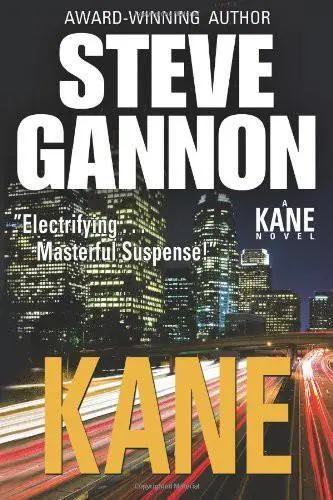
- Название:Kane
- Автор:
- Жанр:
- Год:неизвестен
- ISBN:нет данных
- Рейтинг книги:3 / 5. Голосов: 1
-
Избранное:Добавить в избранное
- Отзывы:
-
Ваша оценка:
Kane: краткое содержание, описание и аннотация
Предлагаем к чтению аннотацию, описание, краткое содержание или предисловие (зависит от того, что написал сам автор книги «Kane»). Если вы не нашли необходимую информацию о книге — напишите в комментариях, мы постараемся отыскать её.
Kane — читать онлайн бесплатно полную книгу (весь текст) целиком
Ниже представлен текст книги, разбитый по страницам. Система сохранения места последней прочитанной страницы, позволяет с удобством читать онлайн бесплатно книгу «Kane», без необходимости каждый раз заново искать на чём Вы остановились. Поставьте закладку, и сможете в любой момент перейти на страницу, на которой закончили чтение.
Интервал:
Закладка:
Whistling contentedly, Carns returned to the living room and took a corridor to the right, passing an unused banquet room with seating for thirty, a granite-countered kitchen with a huge central island, and a darkened stairway leading to the subterranean level of his estate. Continuing, he reached the most lived-in portion of his house, and the area, with the exception of a small room in the basement, in which he derived his most pleasure.
He paused in the doorway, enjoying the anticipation that always gripped him before entering. The glow from a bank of computer screens bathed the room’s interior in greens and reds and blues, creating an illusion of festivity. Carns hesitated a moment more, then touched a switch near the door. Banks of hidden fluorescents flooded the chamber with light.
Like spokes of a wheel, a configuration of desks, counters, and shoulder-high partitions divided the space into three areas. Most prominent, a central, U-shaped desk dominated the assembly, its surface ringed by twenty-seven-inch computer monitors, along with a multiple-line phone terminal that he used to access the options trading floors of Chicago and New York. Two lesser workstations jutted from the main desk. The left branch, Carns’s “weather station,” harbored a computer terminal capable of serving up global weather forecasts, pest and crop reports, an AP wire feed, and an assortment of agricultural newsletters. The right wing, which served as a research center, contained a combination copier, scanner, and fax machine, a bookcase, and two additional computer screens-both displaying programs that Carns used for technical analysis.
Long ago, when he’d first begun futures trading, Carns had realized that up-to-the-minute information provided an immeasurable edge over the field. As a result he spent over a hundred thousand dollars yearly on fundamental data, information that included regular reports from certain feed-yard employees in Kansas, Texas, and southern Nebraska-some of it illegal. Recently his expenditure in this latter category had more than proved its worth.
Before starting his workday, Carns stepped into an auxiliary kitchen off the main office and poured a mug of black coffee from a pot preset to brew at 4:40 AM. Next he toasted an English muffin and ate it with a glass of tomato juice, precisely as he did every weekday morning. Coffee in hand, he moved to the Data Transmission Network weather screen and pulled up precipitation forecasts for various regions of crop production, checking the current six-to-ten-day forecast for each locale. That done, he crossed to the research station for a review of overnight currency moves, also spending time studying commodity reports he had requested on Friday.
Forty-five minutes later, following a regimented schedule, Carns shifted to a review of crop charts, concentrating on recent moves in soybeans. But as he studied the graphs, his mind drifted to the cattle market, the area in which he presently held his biggest position. Unable to concentrate on other matters, he allowed his thoughts to turn to the disastrous slide cattle futures had suffered over previous weeks. Although the market still showed signs of heading even lower, he had begun closing out his “short” contracts last Thursday. The remainder would take days to unload, but if nothing went awry, he stood to make money. A lot of money.
At 5:19 AM, Carns moved to his trading desk. Sixty seconds later he began his day, concentrating on the markets as they opened in turn: bonds, currency, and metals during the first hour, stock-index futures at six-thirty, cattle and hogs a half hour later, then finally grains. Working straight through the morning, he spent considerable time on the telephone conversing with industry sources and representatives on the trading floors, his demeanor curt and concise, revealing nothing of the man behind the voice.
During this time Carns also placed occasional orders, meticulously stamping a trade ticket for each. For the most part, however, his attention remained riveted on five computer monitors perched like oracles atop his desk, serving up a tick-by-tick spreadsheet of his positions, as well as market overviews, position quotes, and real-time pricing information on selected commodities, stock indexes, and foreign exchange futures. On one of the screens he occasionally watched CNN and CNBC to keep himself apprised of breaking financial news, and partway through the morning something on one of the news stations caught his eye. As he turned to the screen, a map of Southern California flashed up behind the news anchor’s desk. The display abruptly zoomed in on Los Angeles, with Pacific Palisades delineated in blood-red letters. Carns turned up the sound.
“… similar to the murder of a family last month in the Orange County community of Mission Viejo. Although members of the Los Angeles police have not yet officially linked the two crimes, Channel Two Action News has learned that authorities fear a serial killer may be at large in the Southern California area. Here with more from Pacific Palisades is Lauren Van Owen.”
The scene switched to a police-choked residential street. Carns listened as a self-assured female reporter embarked on a somber description of Saturday night’s murders. Partway through her report, she stopped. The camera lurched, then followed as she hurried after a large man who had exited the house. Despite Van Owen’s prodding, the man, later identified as Detective Daniel Kane, refused to comment. Initially Carns dismissed the rough-looking investigator as another muscle bound Irish cop. But something about him-a flinty gleam of intelligence in his pale-blue eyes, the unforgiving lines around his mouth-prompted Carns to take a closer look.
The clip ended with the detective promising, “Sooner or later, we’ll get this maggot.”
Carns flipped to CNBC, then ran through the other channels, searching without success for further coverage on the killings. As he was about to switch back to CNN, a call came in on his trading line.
“Carns,” he said, lifting the receiver.
“Good morning, Victor,” a male voice replied.
Carns recognized the clipped diction of John Hall, the CEO of United Western Packers, an Omaha meat packing conglomerate that routinely purchased over thirty-five percent of all cattle sold in the United States. As Carns started to respond, he heard a telltale beep on the line. He checked the recorder switch on his phone terminal.
Off.
Without a word, he hung up.
The phone rang thirty seconds later. Hall again. “Victor?”
Carns waited before replying, making sure that this time Hall had called on an unrecorded line. At last he spoke. “Don’t ever do that again,” he said softly.
“Of course not.” Though Hall replied pleasantly, Carns detected something in his tone that sounded as hard as steel. An alarm went off in Carns’s mind. In his day-to-day transactions, Hall had no reason to be using a recorded trading line. So why had he called on one?
An accident?
Unlikely.
In the event of any suspected impropriety, the National Futures Association and the USDA routinely scrutinized recorded transactions. Carns knew that if brought to light, his association with Hall and their ingenious but extremely illegal market manipulation involving cattle futures would, at minimum, garner them both speedy trials, gigantic fines, and adjoining cells in the nearest federal prison. Hall knew it, too.
“Victor? Are you still there?”
“Yes. Why are you calling?”
“Two things,” Hall answered, his voice brusque and businesslike. “First, United Western Packers has been out of the market for five weeks now, and our captive supply is running short. In order to keep our plants running efficiently, UWP will need to start buying soon.”
Читать дальшеИнтервал:
Закладка:
Похожие книги на «Kane»
Представляем Вашему вниманию похожие книги на «Kane» списком для выбора. Мы отобрали схожую по названию и смыслу литературу в надежде предоставить читателям больше вариантов отыскать новые, интересные, ещё непрочитанные произведения.







Обсуждение, отзывы о книге «Kane» и просто собственные мнения читателей. Оставьте ваши комментарии, напишите, что Вы думаете о произведении, его смысле или главных героях. Укажите что конкретно понравилось, а что нет, и почему Вы так считаете.