Al Sarrantonio - Cold Night
Здесь есть возможность читать онлайн «Al Sarrantonio - Cold Night» весь текст электронной книги совершенно бесплатно (целиком полную версию без сокращений). В некоторых случаях можно слушать аудио, скачать через торрент в формате fb2 и присутствует краткое содержание. Жанр: Триллер, на английском языке. Описание произведения, (предисловие) а так же отзывы посетителей доступны на портале библиотеки ЛибКат.
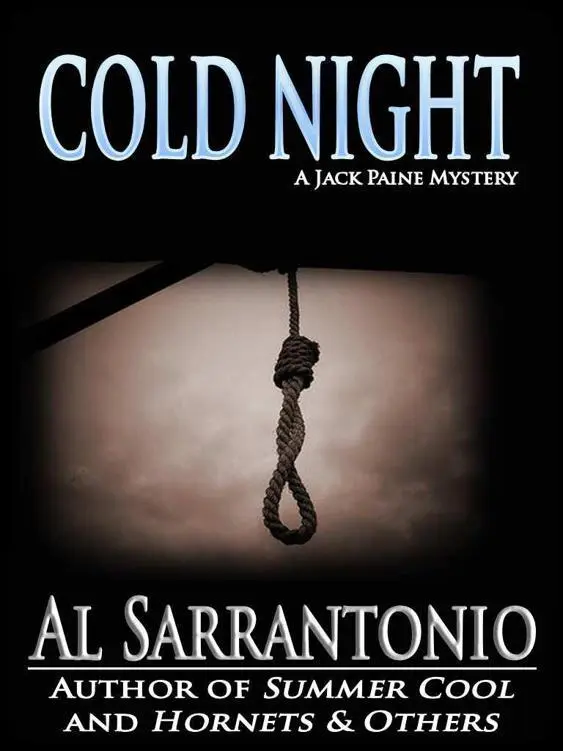
- Название:Cold Night
- Автор:
- Жанр:
- Год:неизвестен
- ISBN:нет данных
- Рейтинг книги:5 / 5. Голосов: 1
-
Избранное:Добавить в избранное
- Отзывы:
-
Ваша оценка:
Cold Night: краткое содержание, описание и аннотация
Предлагаем к чтению аннотацию, описание, краткое содержание или предисловие (зависит от того, что написал сам автор книги «Cold Night»). Если вы не нашли необходимую информацию о книге — напишите в комментариях, мы постараемся отыскать её.
Cold Night — читать онлайн бесплатно полную книгу (весь текст) целиком
Ниже представлен текст книги, разбитый по страницам. Система сохранения места последней прочитанной страницы, позволяет с удобством читать онлайн бесплатно книгу «Cold Night», без необходимости каждый раз заново искать на чём Вы остановились. Поставьте закладку, и сможете в любой момент перейти на страницу, на которой закончили чтение.
Интервал:
Закладка:
Uncle Martin brought him into the house, through a big living room with a huge stone fireplace and attached kitchen, and up the stairs. There were two closed doors off the stairway, and Uncle Martin opened the first one.
There was balloon wallpaper on the walls. A brand-new Sears bed butted one wall, with a rodeo pattern coverlet turned down. The sheets had Roy Rogers's face on them, with Trigger's profile next to him from the neck up. Roy smiled wryly, like he always did, eyes squinting. There was a new Sears chest of drawers, too, the tag still on it; on top of it was a hand mirror, an ebony-handled hairbrush, an old coin bank in the shape of a baseball made out of printed tin. The closet was open, filled with new jeans, shirts and a blue suit. There were pajamas and white shirts and socks still in their bags, the shirts folded around flat pieces of cardboard to keep them stiff, with pins stuck in the collar to keep them in place.
"This is your room," Uncle Martin said quietly, pulling Jack gently in by the cuffs. Behind the door was a long package wrapped in brown paper. Uncle Martin picked it up and handed it to Jack.
"Open it," he said.
Jack opened it. There was fishing tackle in it, a pole, a freshwater lightweight reel spooled with four-pound test line, a clear-plastic tray of panfish lures and red and white bobbers and split-shot sinkers.
"I didn't lie," Uncle Martin said.
Jack stood in the middle of the room, and he began to cry. Tears rolled out of him and he couldn't stop. The fishing pole fell out of his hand to the floor.
His uncle stood nervously next to him, holding the open end of the handcuffs, and then he said quietly, "I'll leave you now," and he dropped the cuffs and left the room and bolted the door behind him.
It was then that Jack saw that there were no windows in the room.
They fished three or four times a week. There were trout streams nearby, and a small lake a quarter mile beyond that. His uncle got him up at six in the morning, made breakfast, sometimes waffles and bacon, and then they dressed and fished. For the first two weeks his uncle told him that this was what his father wanted, but after that he said nothing.
Jack tried to get away the first day they went fishing, but his uncle tracked him down in under an hour and brought him back. A week later he tried again, but his uncle found him in thirty minutes. He didn't try again for a while. He asked small questions here and there, and discovered that his uncle owned five square miles of land. The nearest neighbor was eight miles away to the west.
Sometimes his uncle called him Jerry, his father's name.
Days went by, and weeks, and months. When his uncle went out without him he cuffed Jack to a ring anchored in the stone mantel over the fireplace. His uncle hunted a few times, bringing down a stag deer in late August. His uncle skinned and butchered it. He packed all but two steaks in the freezer, and that night Jack had venison for the first time. Also that night the weather turned cooler.
He hadn't tried to run away since June. He continued to ask small questions.
One day in mid-September his uncle went into town for supplies, cuffing Jack to the ring in the mantel. Jack had patiently worked on the ring for three months. As his uncle's truck pulled away he slipped the ring out of the wall.
Under his bed, he had squirreled a full three days' provisions into a canvas sack. The sack had two strips of heavy cloth sewn to it, making a crude backpack. Jack put it on and went to his uncle's bedroom where he hoped to find one of his uncle's rifles.
He'd never been in this room. "Now, Jerry," his uncle had told him, "I want you to stay out of my room. It's all I've got." There was a dead-bolt lock on the door. Jack tried the knob. It was locked. He threw himself against it. The first time the wood yielded slightly, but held the lock; the second time, the bolt splintered and the door flew inward.
The room was dark. No windows in here, either. Jack felt around for a wall switch but couldn't locate one. Then he saw a pull chain hanging from the ceiling in the center of the room.
He groped for it, found it, pulled the chain.
The light went on in the room.
A chill shot through him.
The room was almost antiseptically empty. There was an army cot, crisply made, against one wall, and nothing else. The cot had white top and bottom sheets and a gray wool camp blanket. The floor was bare, unvarnished wood. There was no dust, no cobwebs; the walls and ceiling were painted bright, clean white. The light bulb in the center of the ceiling was uncovered, unadorned.
Next to the cot, on the floor, was a plainly framed photograph of Uncle Martin and Jack's father. In it, Uncle Martin looked to be twelve or thirteen, which would have made his father seven. A lock of blond-brown hair fell across his father's brow, just like it did on his; his father had the same type of Huckleberry Finn grin. The two of them held fishing poles standing next to them, and both their chests were thrust out at the camera. Uncle Martin held a string of perch out proudly. The two boys had their arms around one another's shoulders.
Someone had scribbled in blue ink at the bottom of the picture: Jerry and Marty, buddies. The word "buddies" had been underlined.
As he put the picture down he heard his uncle's truck returning.
He ran from the room. One of the straps ripped on his backpack. He grasped the burlap sack by the top and ran to the front door. His uncle's truck had not appeared in the circular drive yet, but he could hear it approaching.
He ran to the edge of the deck, jumped off and ran west into the woods.
In five minutes he had reached the nearest trout stream. The day was warm and he had sweated through his shirt. He kneeled and washed his face.
He took off his boots, rolled up his pants.
He waded downstream, keeping to the middle of the water. After a hundred yards he climbed out and made his presence as conspicuous as possible. He went fifty yards into the woods until he reached another, smaller stream, stepped into the middle of it, then carefully retraced his path to the larger creek.
He waded back into it and went upstream, passing the point he had started from. He went on like this for a quarter mile, once falling into a deep pool where the water was up to his chest. After another quarter mile he emerged on the other bank and set off west into the trees.
It was later in the day than he had hoped. Originally, he had planned to reach the nearest house before dark. Now he would have to spend the night in the woods.
That, he knew, would be when he was most vulnerable. His uncle was a good night hunter, had told him that night hunting was the best kind because the prey either thought you would not be there or was so terrified it tripped itself up.
He moved always west, gauging by the late afternoon sun. He had made a good mile when a noise caught his attention. He paused. He was breathing heavily; the single strap on his pack was beginning to dig into his shoulder. He took it off. Noise again. The slam of a door. It did not repeat.
He moved on. He craved sound now, thus to gauge his uncle's pursuit, but the afternoon was so still that fear invaded him for the first time. The knowledge that night was not far off didn't help. He had never spent a night alone in the woods.
He stopped, hearing a final loud noise in the distance-the angry dull boom of a shotgun? — and, stifling a stab of cold terror, he stumbled on.
Night dropped around him. One moment he could clearly distinguish the outline of trees surrounding him; the next he was effectively blind. The afternoon had darkened by degrees, and his eyes had adapted to it, but now real night had come and darkness was real and complete.
He halted. He heard his own breathing, heard the crack of dead twigs under his feet, heard little else but crickets and, far off, the questioning hoot of a waking owl.
Читать дальшеИнтервал:
Закладка:
Похожие книги на «Cold Night»
Представляем Вашему вниманию похожие книги на «Cold Night» списком для выбора. Мы отобрали схожую по названию и смыслу литературу в надежде предоставить читателям больше вариантов отыскать новые, интересные, ещё непрочитанные произведения.










Обсуждение, отзывы о книге «Cold Night» и просто собственные мнения читателей. Оставьте ваши комментарии, напишите, что Вы думаете о произведении, его смысле или главных героях. Укажите что конкретно понравилось, а что нет, и почему Вы так считаете.