Elizabeth Hand - Generation Loss
Здесь есть возможность читать онлайн «Elizabeth Hand - Generation Loss» весь текст электронной книги совершенно бесплатно (целиком полную версию без сокращений). В некоторых случаях можно слушать аудио, скачать через торрент в формате fb2 и присутствует краткое содержание. Город: Northampton, MA, Год выпуска: 2007, ISBN: 2007, Издательство: Small Beer Press, Жанр: Триллер, Ужасы и Мистика, на английском языке. Описание произведения, (предисловие) а так же отзывы посетителей доступны на портале библиотеки ЛибКат.
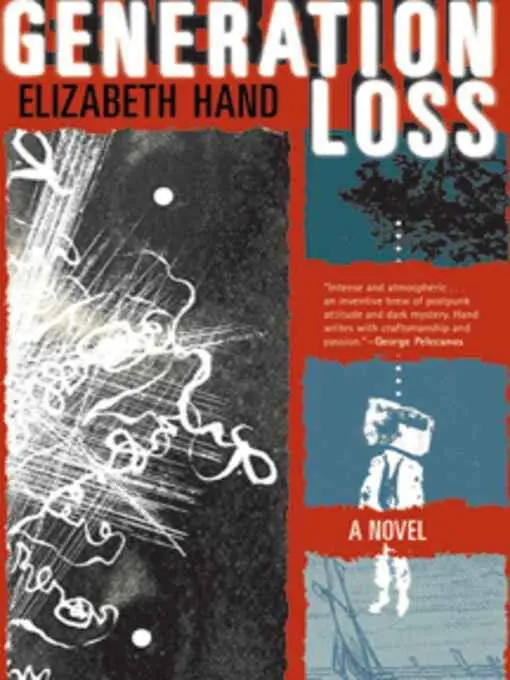
- Название:Generation Loss
- Автор:
- Издательство:Small Beer Press
- Жанр:
- Год:2007
- Город:Northampton, MA
- ISBN:978-1-931520-21-8
- Рейтинг книги:3 / 5. Голосов: 1
-
Избранное:Добавить в избранное
- Отзывы:
-
Ваша оценка:
Generation Loss: краткое содержание, описание и аннотация
Предлагаем к чтению аннотацию, описание, краткое содержание или предисловие (зависит от того, что написал сам автор книги «Generation Loss»). Если вы не нашли необходимую информацию о книге — напишите в комментариях, мы постараемся отыскать её.
Thirty years later she is adrift, on her way down, and almost out when an old acquaintance sends her on a mercy gig to interview a famously reclusive photographer who lives on an island in Maine. When she arrives Down East, Cass stumbles across a decades-old mystery that is still claiming victims, and she finds one final shot at redemption.
Patricia Highsmith meets Patti Smith in this mesmerizing literary thriller.
Praise for Elizabeth Hand’s previous novels: Amazon.com Review
“Inhabits a world between reason and insanity—it’s a delightful waking dream.”
—
“One of the most sheerly impressive, not to mention overwhelmingly beautiful books I have read in a long time.”
—Peter Straub
Generation Loss — читать онлайн бесплатно полную книгу (весь текст) целиком
Ниже представлен текст книги, разбитый по страницам. Система сохранения места последней прочитанной страницы, позволяет с удобством читать онлайн бесплатно книгу «Generation Loss», без необходимости каждый раз заново искать на чём Вы остановились. Поставьте закладку, и сможете в любой момент перейти на страницу, на которой закончили чтение.
Интервал:
Закладка:
“Would I’ve asked for one if I did?”
He leaned back against the ladder, still staring. Not at me; at my camera.
“There’s a mirror in that,” he said.
“Yeah? There’s a mirror in all cameras. This kind, anyway.” I was starting to get pissed. “Is this some kind of superstition? No women on board, no—”
“Put it away.” His tone was less patient now; vaguely threatening. “Here—give it to me and I’ll stow it.”
I started to snap back—I hate people touching my stuff—then shut up.
Something in his expression intimidated me. Usually I can tell if someone’s going to freak on me; there’s that smell of damage, like the smell of a spent match that signals an explosion a few moments later.
There was no hint of that to Toby Barrett.
But there was something else, just as powerful—a sense of occlusion, of an intense self-possession, like an emotional force field. Like the rocks I saw out in the harbor, their edges hidden by mats of seaweed, all their menace beneath the water.
I shoved my camera back into the satchel and handed it to him. Toby opened a cupboard and stashed the bag inside then opened another cupboard that held clothes. He picked up a heavy black wool sweater, gave it a cursory sniff, and tossed it to me. “See if that fits. It’s your color.”
I took off my leather jacket and pulled on the sweater. It was bulky and mouse eaten and smelled of cedar and lanolin.
But it was warm. I was just able to squeeze my jacket back on over it. Toby rubbed his beard and glanced down at my boots.
“You got some pretty big feet there. But not big as mine. I don’t know if I’ve got a pair of shoes to fit you. Maybe Aphrodite’ll have something.”
“I like to wear these. They’re … comfy.”
“I bet. Those steel tips look lethal.”
“They are.” I lifted one foot to display a black full-quill ostrich-leather Tony Lama cowboy boot worn smooth as eelskin by nearly twenty years of wear. I’d had the soles and heels replaced more than once. The steel tips were customized for me, no longer shining but dull gray.
“They won’t keep you warm, though,” said Toby. “We’ll see what we can find for you on the island.”
He moved back to the ladder, lifted it and set it aside, revealing a pair of doors. He opened these then stepped into a small engine room. His voice echoed back to me.
“Got to hand crank the engine. This could take a minute…”
I heard the rhythmic sound of a handle turning. There was a small sputter, the smell of diesel. Toby swore under his breath.
I turned and gave the cabin a quick once-over. The portholes were so crusted with salt that only an opaque, pearly light filtered through them. The woodstove was black from use, as was the cookstove. All of the metal flatware was tarnished. Everything had a comfortable sort of glow, but nothing gleamed or glittered.
I frowned. It was weird, but also weirdly methodical, and that was puzzling; as though there were some pattern here that just escaped my recognition. I sat on one of the berths and looked around, trying to filter out all the stuff —the shelves, the books, the tools—and concentrate on what, exactly, ordered the space around me. What made it lucid; literally, what made it shine.
Or not.
You learn to do this as a photographer. You’re always searching for light—its source, its distance; always measuring how diffuse it is, how long it’s going to last. You think about the same thing when you’re in the darkroom printing.
As I sat in Northern Sky, I began to see more and more darkness around me, despite the fact that there were no curtains drawn, despite the fact that it was early morning of a cloudless early winter day. Another minute and I began to lose a sense of perspective. The cabin seemed larger than it was; the darkness at the bow crept toward me until it enveloped the outlines of berths, bookshelves, the gimbels’ copper mouths. Everything blurred to a deep russet-brown, like a sepia image foxed with mold.
Toby Barrett may not have had something to hide, but he certainly cultivated the shadows. At the very least he wanted very much to preserve the illusion that he was safe from scrutiny, even if he was in a tiny cabin with no doors or screens.
A sudden roar shook the boat.
“Got it!” Toby ducked out of the engine room. “For a minute there I was afraid she wouldn’t start.”
He shut the doors, threw the ladder back into place, and disappeared up the companionway. I clambered after him. He was already in the cockpit, tiller in hand.
“Have a seat,” he said. An unlit cigarette protruded from one corner of his mouth. He brought the boat about until the nearest of the islands was ahead of us, lit the cigarette and took a long drag. “Want one?”
“Just give me a hit off that,” I said and took it from his mouth.
The cigarette tasted of diesel fuel and hashish. I passed it back to Toby and stared out at the dark bulk of Paswegas and the archipelago behind it. “How come you don’t use a powerboat?”
Toby shifted the tiller. He sat straight backed, oblivious of the wind and icy spray, his eyes fixed on the island. “How come you don’t use a digital camera?”
“It feels weird to me. Like a step is missing. Or a wall.”
“A wall?”
“Well, not a wall exactly. But you get used to having something between you and whatever it is you’re shooting. Maybe it’s just that you have time to worry if the picture’s going to come out or not. With digital it all happens immediately.”
“And that’s a bad thing?”
“Maybe not bad. But different.”
I hesitated. I was surprised to hear myself admitting this. I’d never really articulated it before, certainly not aloud.
“Maybe it was just too much trouble to keep up with it all,” I said at last. “Everything changed so fast. I guess I just didn’t care enough anymore.”
“What kind of pictures did you do? Magazine pictures? Anything I would’ve seen?”
“I doubt it. I had only one book, and not many copies were printed. My stuff was pretty dark. Dead people. I shot the downtown punk scene in New York for a while, before it went belly-up.”
“A dead scene,” said Toby. He flicked his cigarette into the water.
“Yeah, I guess.”
“So you must know all about Aphrodite’s photography. That’s why you’re here, right? You must like her work.”
“Yeah.” I shifted, trying vainly to get out of the wind, and bumped my knee against his. “Her pictures of the islands. She took those forty years before Photoshop, and people still can’t figure out how she did it.”
“I never got the impression she was that well known. She just had one or two books, right?”
“Yeah. But they were influential books.”
“Maybe your book will be influential someday. Maybe it’s influential right now and you just don’t know it.”
I shook my head. “No. She was a genius, even if she was only a kind of minor genius. I was just lucky. If you can call taking pictures of dead junkies lucky. I wasn’t even very good at that.”
My back was starting to ache, from the cold and being hunched against the wind. I stood, balancing myself against my seat, and gazed out at the island. It was an unwelcoming sight, thorny-looking evergreens and spiky outcroppings of black and gray stone. The buildings scattered across the rocky hillside looked as though they’d been thrown there and forgotten, falling down houses and gritty trailers.
“So that’s where you live,” I said. “What about your friend back in the bar?”
“Gryffin? No. He just comes up sometimes on business.” He craned his neck to stare past Paswegas. “You ever hear of someone named Lucien Ryel? He was pretty well known ten or twenty years ago.”
Читать дальшеИнтервал:
Закладка:
Похожие книги на «Generation Loss»
Представляем Вашему вниманию похожие книги на «Generation Loss» списком для выбора. Мы отобрали схожую по названию и смыслу литературу в надежде предоставить читателям больше вариантов отыскать новые, интересные, ещё непрочитанные произведения.






Обсуждение, отзывы о книге «Generation Loss» и просто собственные мнения читателей. Оставьте ваши комментарии, напишите, что Вы думаете о произведении, его смысле или главных героях. Укажите что конкретно понравилось, а что нет, и почему Вы так считаете.