Chevy Stevens - Always Watching
Здесь есть возможность читать онлайн «Chevy Stevens - Always Watching» весь текст электронной книги совершенно бесплатно (целиком полную версию без сокращений). В некоторых случаях можно слушать аудио, скачать через торрент в формате fb2 и присутствует краткое содержание. Город: New York, Год выпуска: 2013, ISBN: 2013, Издательство: St. Martin's Press, Жанр: Триллер, на английском языке. Описание произведения, (предисловие) а так же отзывы посетителей доступны на портале библиотеки ЛибКат.
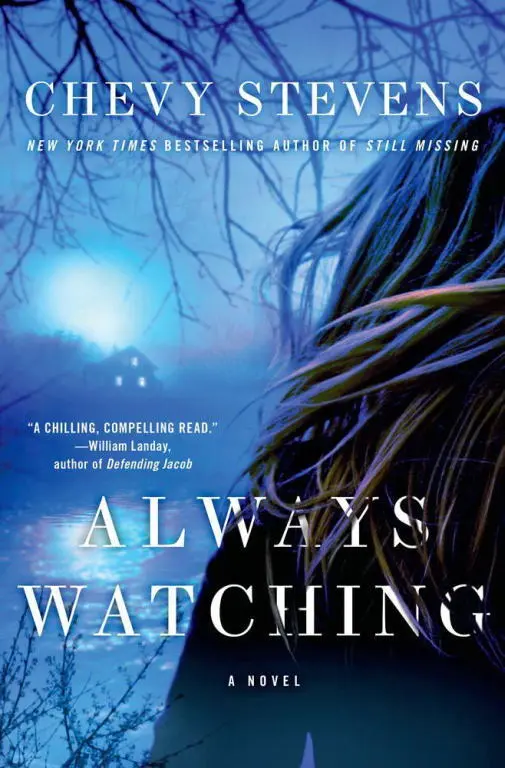
- Название:Always Watching
- Автор:
- Издательство:St. Martin's Press
- Жанр:
- Год:2013
- Город:New York
- ISBN:978-0-312-59569-2
- Рейтинг книги:4 / 5. Голосов: 1
-
Избранное:Добавить в избранное
- Отзывы:
-
Ваша оценка:
Always Watching: краткое содержание, описание и аннотация
Предлагаем к чтению аннотацию, описание, краткое содержание или предисловие (зависит от того, что написал сам автор книги «Always Watching»). Если вы не нашли необходимую информацию о книге — напишите в комментариях, мы постараемся отыскать её.
When a distraught woman, Heather Simeon, is brought into the Psychiatric Intensive Care Unit after a suicide attempt, Nadine gently coaxes her story out of her—and learns of some troubling parallels with her own life. Digging deeper, Nadine is forced to confront her traumatic childhood, and the damage that began when she and her brother were brought by their mother to a remote commune on Vancouver Island. What happened to Nadine? Why was their family destroyed? And why does the name Aaron Quinn, the group’s leader, bring complex feelings of terror to Nadine even today?
And then, the unthinkable happens, and Nadine realizes that danger is closer to home than she ever imagined. She has no choice but to face what terrifies her the most…and fight back.
Sometimes you can leave the past, but you can never escape. Told with the trademark powerful storytelling that has had critics praising her work as “Gripping” (
), “Jaw-dropping” (
) and “Crackling with suspense” (
), ALWAYS WATCHING shows why Chevy Stevens is one of the most mesmerizing new talents of our day.
Always Watching — читать онлайн бесплатно полную книгу (весь текст) целиком
Ниже представлен текст книги, разбитый по страницам. Система сохранения места последней прочитанной страницы, позволяет с удобством читать онлайн бесплатно книгу «Always Watching», без необходимости каждый раз заново искать на чём Вы остановились. Поставьте закладку, и сможете в любой момент перейти на страницу, на которой закончили чтение.
Интервал:
Закладка:
I tried to hypnotize myself, counted backward several times, focusing on the flame of a candle, but I couldn’t get to that memory, the images that had seemed so sharp were now blurred. I didn’t know what was real anymore.
CHAPTER FIFTEEN
That night, I spoke to Connie about my experience at Heather’s funeral. We also discussed my concerns about the commune, the damaging effect they could have on the mental health of their members, and that if my memory was indeed real, there could be more victims of sexual abuse. I considered making a report to the police. In the end, I decided that I wasn’t ready to share my story—it was deeply upsetting, but I still wasn’t confident enough in my facts and wanted to think about it longer, see if anything else surfaced. I did, however, want to make them aware that they should look into the center’s operations. Hopefully, when they saw that things weren’t on the up-and-up, they’d investigate and shut it down.
After work the following day, I stopped at the police station. In other places in BC, the RCMP service the area, but Victoria and the township of Esquimalt, which borders Victoria, are handled by municipal police. I spoke to a pleasant officer, who listened patiently, then said, “Do you know of anyone being harmed at the commune?”
“No, but if they are convincing people to stop taking their medications, they’re at risk. And there are other concerns.” I shared how they’d harassed Heather after she left, and that she’d been donating large sums of money. Also that I feared Aaron was using mind-control techniques.
He said, “Did your patient say that she was held against her will?”
“Well, no, but—”
“Did they force her to give them money, by means of a threat or any other intimidation tactic?”
“Not that I’m aware of. It’s more about pressure and manipulation.”
The officer said, “If no one at the center has made a complaint, then our hands are tied. The River of Life is a respected business in this community. We can’t just go in there and ask a bunch of questions without a good reason.”
I thought about my memory of Aaron at the river. They obviously weren’t going to look into the commune’s activities without more evidence of a crime. I hadn’t wanted to open this can of worms when I was still uncertain myself, but if it was real, and other girls were being hurt…
“What if the leader was abusing underage girls?”
“Is he?”
I couldn’t waver now or signal any uncertainty. I had to go forward.
“He has… in the past.” I took a breath and briefly explained about my recovered memory and my previous experience with the group as a child.
When I was finished, the officer didn’t give me a sense of whether he believed my story, but his face was sympathetic. He said he could take a statement from me, but it would get sent to the RCMP in Shawnigan, where the crime occurred. His careful explanation that they wouldn’t be the ones following up told me that he personally believed I should make the statement directly to the police who would handle the investigation. When I suggested as much, he said, “It’s up to you. I’m sure it’s been hard for you to come in here today, and you might want to just get it over with. But they’ll probably still want to interview you, so you’ll have to go through it twice. If you don’t mind driving up there, it might be better—”
“I’ll go to Shawnigan.”
I left feeling exhausted—it had been difficult and embarrassing to tell a stranger that I’d been abused, especially when I still didn’t have many memories of the experience. It was like feeling around in the dark, stumbling into sharp edges. The officer told me that someone would be in touch soon, but I still wasn’t sure how far I wanted to go with it personally. I just wanted them to check into the center.
I wondered if I should tell Robbie—in case the police needed to speak with him. He wouldn’t be happy about it. Robbie isn’t the type who likes to discuss his emotions at the best of times, even less so with me, and he’d probably rather drive off a cliff than talk to the police about anything. Still, I didn’t feel right about not sharing this with him. In the end, I decided I’d tell him after I’d met with the police.
The next morning, I got a call from Corporal Cruikshank, a female officer who sounded very professional and matter-of-fact. We arranged to meet the following Friday afternoon at the station. That day, I finished work early and drove up the Malahat Highway to Shawnigan, which is about forty minutes from downtown Victoria. The Malahat could be treacherous in winter, with its winding turns through Goldstream Park, rugged steep slopes, and the occasional waterfall cascading down a sheer rock wall, but that day it was clear and the traffic light. I would have enjoyed the drive if my head hadn’t been consumed with thoughts of the commune, my brother’s reaction, what Aaron might do after he found out I’d made a statement. My body tense with dread, I reminded myself that there was no sense worrying until I had more information, but a small voice still niggled at the back of my mind. Are you sure you’re ready for this?
I took the turnoff to Shawnigan, just before the summit of the Malahat, and followed Shawnigan Lake Road down through the mountain into the valley, noticing that they had logged some of the area. Once I reached the junction at the south end of the lake, I stayed right and headed into the village on the east shore, which is where the police station was located, passing numerous summer cabins on the way. Shawnigan has a population of only about eight thousand people, and most of the vacation homes are owned by residents of Victoria, taking advantage of the quick commute and the lake’s beaches and waterskiing.
The village itself was still small, with two general corner stores, a gas station, barbershop, video store, coffee shop, and a couple of restaurants. If you keep going past the west arm of the lake, it was mostly farmlands and forest, also, from what I remembered, a popular area for hunters and four-wheelers.
The police station was built out of red-toned bricks. It wasn’t very large and reminded me of an old schoolhouse. I could see most of it from the waiting room as I sat on the wooden bench, watching officers come and go in their uniforms, the odd laugh breaking out as they joked about something. After a few moments, a young woman in a dark blue suit came through the door with a pleasant smile. Her blond hair was pulled back in a bun, and she had a heart-shaped face, with big brown eyes. She walked with a certain swagger that made me think she must be an athlete. She also didn’t look much older than my daughter, which didn’t inspire much confidence in her abilities.
I felt a flash of shame at my unkind thought. If she’d achieved this level in her career, then I was sure she was more than capable.
She said, “Good afternoon, I’m Corporal Cruikshank.”
I shook her hand. “Hello, I’m Dr. Nadine Lavoie.” I’m not making this up. I’m a doctor.
We sat down at a metal table in a small gray room, a camera in the corner. She leaned in. “So I understand you’d like to make a report?”
“Yes.” My throat was dry, cracking slightly as I spoke. She offered me some water, and when I said, please, she brought back a bottle.
“We’re going to record you so we can make sure we have everything, but I’ll also be taking notes, just in case there’s anything I need to ask you more about.”
“That’s fine.”
The policewoman, proving she was more in tune than I’d given her credit for, said, “I know how uncomfortable this must be for you, and that the crime was a long time ago, but it’s important you try to give me as much detail as possible. I’d like you to close your eyes and walk me through it. Try to use all your senses, scent, anything you heard, all of this can help.”
Читать дальшеИнтервал:
Закладка:
Похожие книги на «Always Watching»
Представляем Вашему вниманию похожие книги на «Always Watching» списком для выбора. Мы отобрали схожую по названию и смыслу литературу в надежде предоставить читателям больше вариантов отыскать новые, интересные, ещё непрочитанные произведения.












Обсуждение, отзывы о книге «Always Watching» и просто собственные мнения читателей. Оставьте ваши комментарии, напишите, что Вы думаете о произведении, его смысле или главных героях. Укажите что конкретно понравилось, а что нет, и почему Вы так считаете.