Luke Delaney - Cold Killing
Здесь есть возможность читать онлайн «Luke Delaney - Cold Killing» — ознакомительный отрывок электронной книги совершенно бесплатно, а после прочтения отрывка купить полную версию. В некоторых случаях можно слушать аудио, скачать через торрент в формате fb2 и присутствует краткое содержание. Жанр: Триллер, на английском языке. Описание произведения, (предисловие) а так же отзывы посетителей доступны на портале библиотеки ЛибКат.

- Название:Cold Killing
- Автор:
- Жанр:
- Год:неизвестен
- ISBN:нет данных
- Рейтинг книги:4 / 5. Голосов: 1
-
Избранное:Добавить в избранное
- Отзывы:
-
Ваша оценка:
Cold Killing: краткое содержание, описание и аннотация
Предлагаем к чтению аннотацию, описание, краткое содержание или предисловие (зависит от того, что написал сам автор книги «Cold Killing»). Если вы не нашли необходимую информацию о книге — напишите в комментариях, мы постараемся отыскать её.
Cold Killing — читать онлайн ознакомительный отрывок
Ниже представлен текст книги, разбитый по страницам. Система сохранения места последней прочитанной страницы, позволяет с удобством читать онлайн бесплатно книгу «Cold Killing», без необходимости каждый раз заново искать на чём Вы остановились. Поставьте закладку, и сможете в любой момент перейти на страницу, на которой закончили чтение.
Интервал:
Закладка:
“Which means?” Sally asked.
“Well, normally I would have said that you were mistaken. That Korsakov’s prints could never have been submitted.”
“But. .?”
“But I have this.” He patted the index book. “This is a record of all fingerprints that are removed from Fingerprint Branch. We still use it as a backup for our new computer records, and this way we actually get the signature of the removing party, which helps ensure their safe return. This volume goes back to ninety-nine.”
Collins went to the page showing all the fingerprints of people whose surnames began with the letter K that were removed that year. It was a comparatively short list. Fingerprints were rarely removed.
“Here,” he pointed. “On the fourteenth of December 1999, fingerprints belonging to one Stefan Korsakov were removed by a DC Graham Wright, from the CID at Richmond.”
“So they were here?” Sally asked.
“They must have been.”
“But this DC Wright never returned them?”
“That’s the bit I don’t understand,” said Collins, frowning. “They were returned. Two days later by the same detective, along with the microfiche of the prints, which he’d also booked out.”
“Then where are they?”
“I have no idea,” Collins admitted.
Sally paused for a few seconds. “Could someone have simply walked in here and taken the prints and microfiche?”
“I seriously doubt it. The office is always manned and all prints and fiches are locked away. Only someone who worked in the Fingerprint Branch would have that level of access.”
Why the hell would someone from Fingerprints want to make Korsakov’s records disappear? Had he corrupted someone there? Paid them for a little dirty work? But in 1999 he was still in prison, so how could he possibly have known whom to approach? No, Sally decided. Something else.
“When fingerprints are returned, are they checked?” she asked. “Before being accepted.”
“A quick visual check, no more,” Collins told her.
“And the microfiche?”
“No. That wouldn’t have been standard practice. So long as the fingerprints were in good order, that would have been that.”
Sean and Brown moved into the outbuilding. There was still light outside, but inside it was dim and damp. Sean could clearly see the last remains of that horrific night: a large circular bloodstain in the middle of the floor. It was rusty brown now. The inexperienced eye would have thought it nothing. He sometimes wished his eyes could be so innocent.
The arterial spray marks went from Sean’s left to right across the room. They’d almost hit the wall over twelve feet away. The detectives moved around slowly in the gloom. The scene had long since been examined and any evidence taken away, but Sean studied it closely nonetheless. He knew nothing would have been missed, but that wasn’t why he was there. He was seeing that night through the victim’s eyes. Through the killer’s eyes.
Brown broke the silence. “We know she was on her knees when he cut her,” he said solemnly, “from the distance her blood traveled and the body’s final resting position. He pulled her head back and then slit her throat.” Brown obviously didn’t enjoy recounting their findings. “You really think these murders could be linked?”
Sean didn’t answer. He knelt down. This was how Heather last saw the world. “We have a suspect,” he announced suddenly.
“A suspect?” Brown asked.
“Yeah,” Sean said. He could feel the clouds lifting from his mind. Could see things he’d never considered before. Standing on the spot where Heather Freeman had died fired his mind, his imagination, the dark side he buried so deep. “James Hellier,” Sean continued. “Up until this point he’s been hiding from us. Hiding behind a mask of respectability. A wife and children. A career. But he’s out now. He’s showing himself to us.
“The gender of the victims doesn’t matter to him. Male, female-makes no difference. It’s not a matter of sex with Hellier. It’s about power. About victimization. The gender is coincidental. Two young and vulnerable victims. Easy targets.”
“Why’s he not bothered about leaving his footprints,” Brown asked, “if he’s so damn careful where everything else is concerned?”
“No.” Sean spoke softly. “He’s extremely concerned about footprints. He’s probably experimented with dozens of methods, maybe even hundreds, but each time he comes up with the same conclusion. No matter what he tries, no matter what shoes he wears, what surface he walks on, he nearly always leaves some type of print. Even if it’s the slightest impression in a carpet, like in Daniel Graydon’s flat.
“He knows he’ll almost certainly leave prints at his scenes, so he gives up trying not to. Instead he masks them as best he can. He wears bland shoes, probably brand-new. He changes the size of the shoes he wears. He can’t change it too much, but he tries.”
“Why doesn’t he just commit his crimes on solid surfaces?” Brown asked. “That way he wouldn’t leave an impression.”
Sean fired the answer back: “Too restrictive. He would have considered it, but discounted it. He needs to spend time with them. In their own homes or somewhere like this. Spending time with them is more important to him than leaving a shoe print. For him, the risk is worth it. And what’s he leaving us? Virtually unidentifiable, totally un-unique shoe marks. He’ll take that chance.
“He knows how we link murder scenes,” Sean continued. “We look for exact matches. Unique items. Same weapon. Same method. Same type of victim. Not ‘almosts.’ So he picks victims of different genders. Kills them in different ways and in different types of locations. Your victim he abducts, ours he already knew. He keeps it mixed up.”
Sean kept talking. “Most repeat killers work to a pattern. To leave their calling card. When they settle on a method that works for them, they stick with it. Many only kill in their own neighborhood, where everything is familiar, where they feel safe. When they attempt to disguise their work, then you know you’re dealing with a killer whose primary instinct is not to get caught.”
“And your suspect fits this profile?” Brown asked.
“He paid for violent sex-been doing so for years, no doubt. That probably kept his urges, his impulses suppressed for a while, but ultimately it wasn’t enough. He would have seen your victim. Fantasized about her. It’s more than he can bear. He plans it thoroughly. He’s extremely careful. He finds the planning thrilling, so he takes his time. Finally he grabs her. He uses a big car, or better still, a van. He probably steals one or maybe rents one.
“He brings her out here. He’d have been here, no more than a day or so previously. He wants his intelligence to be up to date. He brings her inside. .” Sean broke off and turned to Brown. “How much did she weigh?”
Brown stuttered, taken aback by the unexpected question. “I don’t know,” he said with a shrug.
“Was she big? Small?” Sean pressed him.
“She was small,” Brown answered. “I went to the autopsy. She was tiny.”
“Then he carried her in,” Sean said. “It was quicker and quieter than dragging her.” He snapped another question at Brown: “Was she tied or taped in any way?”
“We believe she was taped,” Brown replied. “There were traces of adhesive across her mouth, ankles, wrists, and around her knees. The adhesive matches a common brand of masking tape. Nothing rare.”
“Once inside, he dumps her on the ground,” Sean continued. “He wants her untied, but he’s worried she’ll fight or scream. So how does he stop that happening?” He looked at Brown.
Читать дальшеИнтервал:
Закладка:
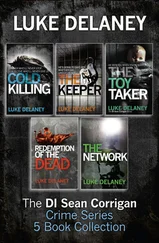
Похожие книги на «Cold Killing»
Представляем Вашему вниманию похожие книги на «Cold Killing» списком для выбора. Мы отобрали схожую по названию и смыслу литературу в надежде предоставить читателям больше вариантов отыскать новые, интересные, ещё непрочитанные произведения.
Обсуждение, отзывы о книге «Cold Killing» и просто собственные мнения читателей. Оставьте ваши комментарии, напишите, что Вы думаете о произведении, его смысле или главных героях. Укажите что конкретно понравилось, а что нет, и почему Вы так считаете.