Sarah Rayne - What Lies Beneath
Здесь есть возможность читать онлайн «Sarah Rayne - What Lies Beneath» весь текст электронной книги совершенно бесплатно (целиком полную версию без сокращений). В некоторых случаях можно слушать аудио, скачать через торрент в формате fb2 и присутствует краткое содержание. Город: London, Год выпуска: 2011, ISBN: 2011, Издательство: Simon and Schuster, Жанр: Триллер, на английском языке. Описание произведения, (предисловие) а так же отзывы посетителей доступны на портале библиотеки ЛибКат.
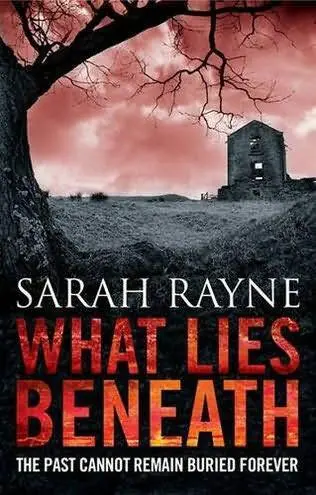
- Название:What Lies Beneath
- Автор:
- Издательство:Simon and Schuster
- Жанр:
- Год:2011
- Город:London
- ISBN:9780857200600
- Рейтинг книги:5 / 5. Голосов: 1
-
Избранное:Добавить в избранное
- Отзывы:
-
Ваша оценка:
What Lies Beneath: краткое содержание, описание и аннотация
Предлагаем к чтению аннотацию, описание, краткое содержание или предисловие (зависит от того, что написал сам автор книги «What Lies Beneath»). Если вы не нашли необходимую информацию о книге — напишите в комментариях, мы постараемся отыскать её.
When the village is reopened, Ella Haywood, who used to play there as a child, is haunted by the discovery of two bodies. Shortly before the isolation of the village, she and her two oldest friends had a violent and terrifying encounter with a stranger - with terrible consequences. They made a pact of silence at the time, but the past has a habit of forcing the truth to the surface.
With the mystery surrounding the now derelict Cadence Manor drawing increasing local interest, Ella finds that she will have to resort to ever more drastic measures if she is to make sure that no one discovers what really happened all those years ago.
About the Author
The author of seven terrifying novels of psychological suspense, Sarah Rayne lives in Staffordshire. Visit
What Lies Beneath — читать онлайн бесплатно полную книгу (весь текст) целиком
Ниже представлен текст книги, разбитый по страницам. Система сохранения места последней прочитанной страницы, позволяет с удобством читать онлайн бесплатно книгу «What Lies Beneath», без необходимости каждый раз заново искать на чём Вы остановились. Поставьте закладку, и сможете в любой момент перейти на страницу, на которой закончили чтение.
Интервал:
Закладка:
‘Yes.’
‘Really?’ Amy looked round in surprise.
Gran said with an obvious effort, ‘Somebody I knew used to play it – well, parts of it.’
This was instantly intriguing. Amy sat down in the other chair and pushed the cup of tea across. ‘Who used to play it, Gran?’
‘Oh, just a man I once knew.’ The tea seemed to be reviving her. ‘A long time ago, it was – before you were even thought of, Amy. Before your father was even thought of, as a matter of fact.’
‘A boyfriend?’ said Amy hopefully, but Gran gave the small laugh that Amy sometimes thought must have irritated the hell out of Gramps for the last forty years, and said, dear goodness, no, nothing like that.
‘Just someone I knew. Rather an unpleasant man.’ Amy thought she repressed a small shiver, but she only said, ‘So hearing that music gave me a bit of a jolt.’ She finished the tea and set the cup down. ‘That was very nice,’ she said. ‘I feel much better. I’ll just take one of my pills.’
Amy had no idea what Gran’s pills were, but she said, ‘Well, OK. But we could phone Gramps, you know. He’d come whizzing back from his rehearsal like a shot.’
‘I don’t want anyone whizzing back from anywhere.’
After Amy had gone upstairs Ella sat for a long time, staring at nothing, the past tumbling through her mind.
The music was his music. Ella had recognized it at once, even though it was a very long time – over fifty years – since she had heard it. A deserted village, Amy had said, and the music based on some poem or other. Ella had never heard of the poem, but the music was unquestionably the music that had threaded itself through all the nightmares of her childhood, sometimes rich and sombre, as it had been inside St Anselm’s that day, but at other times scratchy and cracked like an old gramophone.
Why had Amy made such a point of getting this particular piece of music and playing it tonight? It was hardly her usual choice. Was Amy taunting her? Surely not. Was someone taunting Ella through Amy? But who? Who else knew about the music?
Amy had said someone in the library had mentioned it. Had that been Clem? His parents had been a bit arty and highbrow – they had listened to the Home Service in the days when everyone Ella knew listened to the Light Programme. When Clem’s mother was alive, she and Clem’s father went to symphony concerts, taking Clem with them, which most of Upper Bramley regarded as very snobby.
A beat of apprehension began to pulsate inside Ella’s head. Was Clem Poulter, stupid clucking old hen, playing some silly mind game? Perhaps even lending Amy the CD in the hope Ella would hear it? But how would Clem know what that particular piece of music meant to Ella? How would anyone know?
The CD was still in the machine, and, almost of its own volition, her hand reached out to the switch. There was a faint whirr of sound, then the notes floated out into the quiet kitchen. The homely scent of washing-up liquid and the faint spicy drift of Amy’s chilli dissolved, and Ella was back in that long-ago summer afternoon, with the cuckoo calling in Mordwich Copse, and the scent of lilac and grass everywhere, and the squashy packet of sandwiches her mother had made in her bag. She was ten years old again, walking through a doomed village with her two friends, on her way to kill a man. She had waited nearly six months to kill him and the Geranos experiment had occurred to her as a possible way. She had not, at first, seen how it could be done; only that somewhere in the general disruption an opportunity might arise.
As the music moved to its conclusion the emotions that had driven her ten-year-old self rose fiercely to the surface again. She had felt no guilt that day and she felt none now, all these years later. What she did feel was anxiety verging on panic that after so many years his death might be traced back to her.
Because his death had not been the only murder that had happened inside Cadence Manor. The other one had happened on an autumn evening, that hour when the afternoon slides down into the evening. The sun had been setting over Mordwich Meadow and the scents had been the golden scents of bonfires and chrysanthemums. And on that autumn evening something had happened that no one had ever known about. Something Ella had never talked about, not even to her two best friends, Veronica and Clem.
Chapter 13
Ella usually walked to school and back home with Clem and Veronica and a few others. None of them lived far from the school, but one of the mothers generally went with them – they told each other you could not be too careful these days; you heard of such awful things happening to children. So they took it in turns to shepherd the children safely through the school gates, then went on for their shopping in Upper Bramley. ‘And for coffee in Peg’s Pantry,’ said Ella’s mother acidly. She was never part of the school-escorting or the shopping and coffee expeditions; she said she had better things to do with her time, and anyway she did not like coffee. Ella sometimes thought her mother would quite like to join in but had never been asked.
Usually the children reached home around half-past four, but on this particular autumn afternoon they were a bit later because they had to stay on to hear who was going to be in the end-of-term play. Ella stayed, too; originally she had thought she would like to be in the play, but when her name was not read out she changed her mind and saw it was a stupid, babyish play. Veronica was in it, of course; she was playing a princess, which Ella thought soppy. She would not have wanted to play a princess herself, and Veronica had only been picked because she smarmed up to the teachers.
A boy called Derek Haywood in Veronica’s class was going to play the prince. He had only just moved to Upper Bramley so nobody knew him very well, but Veronica said his parents had been in an operatic society in the town where they had lived before, and Derek had been on stage twice already, singing in a children’s choir. Clem said it was nothing to do with operatic societies or children’s choirs; it was just that the teachers thought they should make a new pupil feel welcome. Clem himself had not been chosen to be in the play, even though he had sung ‘Someday My Prince Will Come’, and had got all the way through without forgetting the words. He told Ella he did not care and he was going to help write the programme instead. Ella could help if she liked, they could make it really good and have their names in it as the programme’s authors. Ella did not particularly want to write a stupid programme but it would be better than not being part of the play at all, so she said yes. She thought Clem had not been picked because he did not look anything like a prince, whereas Derek Haywood was quite nice-looking.
It was an exciting afternoon. People who had been chosen were bursting with importance and telling their friends how good they would be. Then the mother whose turn it was to walk them home had to be told about it, and it all meant Ella was home a bit late.
Her mother was not exactly angry, but she was a bit annoyed. Where on earth had Ella been? When Ella explained about the play, she said, ‘Oh, that. Are you going to be in it?’
‘No.’
‘Well, I don’t suppose you mind. You wouldn’t want to be bothered with a lot of play-acting anyway.’
‘No,’ said Ella again. ‘But Clem and me—’
‘Clem and I.’
‘—we’re going to write the programme. It’ll be really good, Clem says.’
Her mother was not very interested in the play or the writing of the programme, Ella saw that. She was more bothered about Ella being late because she had to go out. The lady from the end cottage had been going to sit with Ella for the hour it would take, but because Ella was so late she could no longer do so.
Читать дальшеИнтервал:
Закладка:
Похожие книги на «What Lies Beneath»
Представляем Вашему вниманию похожие книги на «What Lies Beneath» списком для выбора. Мы отобрали схожую по названию и смыслу литературу в надежде предоставить читателям больше вариантов отыскать новые, интересные, ещё непрочитанные произведения.





Обсуждение, отзывы о книге «What Lies Beneath» и просто собственные мнения читателей. Оставьте ваши комментарии, напишите, что Вы думаете о произведении, его смысле или главных героях. Укажите что конкретно понравилось, а что нет, и почему Вы так считаете.