Thomas Enger - Scarred
Здесь есть возможность читать онлайн «Thomas Enger - Scarred» весь текст электронной книги совершенно бесплатно (целиком полную версию без сокращений). В некоторых случаях можно слушать аудио, скачать через торрент в формате fb2 и присутствует краткое содержание. Город: London, Год выпуска: 2014, ISBN: 2014, Издательство: Faber & Faber, Жанр: Триллер, на английском языке. Описание произведения, (предисловие) а так же отзывы посетителей доступны на портале библиотеки ЛибКат.
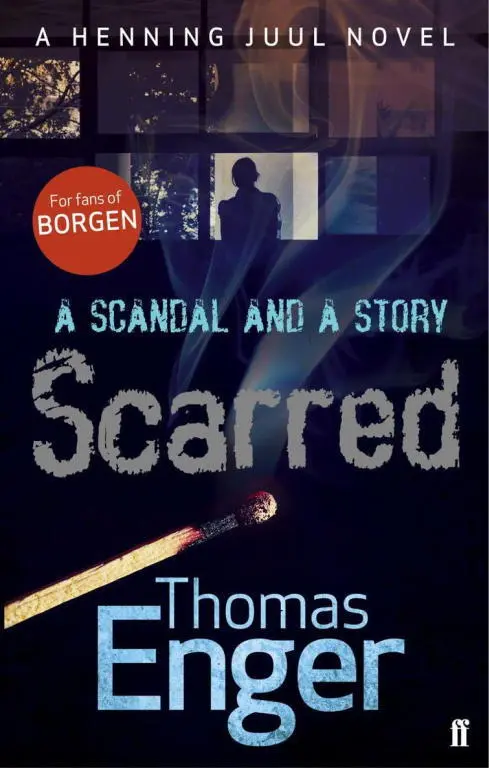
- Название:Scarred
- Автор:
- Издательство:Faber & Faber
- Жанр:
- Год:2014
- Город:London
- ISBN:978-0-571-27250-1
- Рейтинг книги:3 / 5. Голосов: 1
-
Избранное:Добавить в избранное
- Отзывы:
-
Ваша оценка:
Scarred: краткое содержание, описание и аннотация
Предлагаем к чтению аннотацию, описание, краткое содержание или предисловие (зависит от того, что написал сам автор книги «Scarred»). Если вы не нашли необходимую информацию о книге — напишите в комментариях, мы постараемся отыскать её.
Trine Juul-Osmundsen, Norway’s Secretary of State and Henning Juul’s sister, is accused of sexually harassing a young male politician. As the allegations cause a media frenzy, Trine receives an anonymous threat telling her to resign. If she doesn’t, the truth about what she
did that night will be revealed.
Scarred reporter Henning Juul, finds himself torn between the two high profile cases. He wants to help his estranged sister, but as he digs into their past, he discovers memories that haunt them both. Memories of a broken home. Memories of a dead father.
As the two cases collide, both their worlds threaten to fall apart.
Scarred
Burned
Pierced
Thomas Enger is the author of two previous Henning Juul novels, most recently
, which was described in Shotsmag as ‘excellent, another superbly compelling read by Thomas Enger’. As well as writing, he also composes music. He lives in Oslo and is currently at work on the fourth novel of the series. Review
About the Author “Slick, compelling and taut, Thomas Enger’s
combines a sophisticated layering of mysteries with an intensely scarred hero embarked on a tragic quest. A dark and suspenseful blast of Nordic exposure.”
(Christopher Ewan, author of
) “An intriguing new voice in crime.”
(NJ Cooper) “This promises to be a crime fiction series worth watching.”
(
) “The careful revealing of clues, the clever twists, and the development of Henning Juul and the supporting characters make this a very promising start to a new series.”
(
) “Suspenseful, dark, and gritty, this is a must-read.”
(
) “A gripping narrative that begs comparison to Stieg Larsson.”
(
) “The name is Thomas Enger. Make sure you remember it, because he’s a man about to join the ranks of the best crime novel writers of the Nordic countries… and he has achieved something quite exceptional already with his first novel,
… It’s one of the best crime novels this reviewer has read for a long time, in a language that sparkles and gleams in strong images and a tempo that almost makes you forget to draw breath.”
(Kristeligt Dagblad) “Thomas Enger has written a solid and effective crime novel.”
(Jyllandsposten Posten) “It’s an excellent debut, the main character and his fate is brilliantly drawn.”
(
, Denmark) “Impressive new Norwegian thriller.”
(Vejle Amts Folkeblad)
Scarred — читать онлайн бесплатно полную книгу (весь текст) целиком
Ниже представлен текст книги, разбитый по страницам. Система сохранения места последней прочитанной страницы, позволяет с удобством читать онлайн бесплатно книгу «Scarred», без необходимости каждый раз заново искать на чём Вы остановились. Поставьте закладку, и сможете в любой момент перейти на страницу, на которой закончили чтение.
Интервал:
Закладка:
You can’t tell him , she thinks to herself. You just can’t .
After dinner they sit down on the sofa with some more wine. Listen to music. Chet Baker. Trine has never liked jazz all that much, but the sensitive trumpet-playing goes well with the soft lighting. They don’t turn on the TV. They don’t ask each other anything. Their teeth turn dark blue, but when Pål Fredrik returns with another bottle of red wine, there is a harder and more determined quality to his footsteps.
‘I have a plan,’ he announces and sits down. ‘I’m going to get you very drunk.’
He isn’t smiling or laughing. The light in his eyes bores into hers.
‘But it’s not so that you’ll blurt out the truth. I’m actually not that interested in what the papers say. I believe you when you say that you didn’t do the things they’re accusing you of.’
He pauses before he goes on.
‘But we’ve been married quite a long time now, Trine. And though I might know you better than anyone, I don’t think I can say that I know you all that well.’
Trine bows her head.
‘We live our lives in the public eye. I signed up for it, I’ve enjoyed it. But not any more. Not after this. You owe me much more explanation than what’s written in the papers, Trine.’
He pauses again.
‘I’ll only say this to you once.’
He waits until she looks up at him.
‘I love you. I’ll probably always love you. But if you want me to stay, then you have to give me all of you. I want all of you. It’s about time that you tell me who you really are, Trine. Who Trine Juul is. Who Trine Juul was before she met me.’
He tries to penetrate her gaze, but she shuts him out.
‘You can start by telling me about your family,’ he says firmly. ‘Tell me about your parents. Tell me about Henning. What happened to you? Why are you no longer in touch?’
Trine lifts her head and looks at him anxiously.
‘Henning?’ she says. ‘Have you been talking to him?’
Pål Fredrik is about to reply, but he stops. And Trine sees that she is right.
‘He came to me, Trine. He also sent me a text message last night to tell me that he’d found you and that you were still alive.’
Trine stands and starts walking over to the living-room window. She turns her back to him. Pål Fredrik doesn’t follow her. Trine stops at the piano.
‘He was only trying to help you,’ Pål Fredrik says and gets up. ‘And now you’re doing it again.’
He comes over to her.
‘Every time I ask you about Henning and your family, you shut me out. I asked Henning why, but he says he has no idea why the two of you fell out. So what’s really going on here?’
She spins around to face him.
‘Is that what he said? That he doesn’t know?’
‘Yes.’
Again, she walks away from him, but Pål Fredrik follows her. Neither of them says anything for a long time. He positions himself in front of her, takes her by the shoulders and tries to look into her eyes. She can’t manage to look back at him so she wriggles free and goes over to her wine glass and swallows a big gulp. She puts down the glass hard.
Pål Fredrik continues to follow her. He says nothing. He just looks at her.
Trine thinks about all the things she doesn’t want to think about. Events she has been trying to forget. What she saw that night. The subject of some of her nightmares.
It takes a long time before she can look at him.
‘I’ve never told anyone,’ she begins. ‘And you must take this with you to your grave. Will you promise me that?’
Pål Fredrik nods quickly.
Trine sighs and drinks another mouthful of wine. She massages her temples. Then she sits down. The room is silent. Chet Baker stopped playing long ago.
She lowers her gaze. She knows she won’t be able to look at him while she talks. So she picks a spot on the coffee table in front of her. And she says: ‘I’ve told you about my dad?’
Pål Fredrik nods.
‘He died when I was fifteen years old.’
She can barely hear her own voice. She pauses again.
‘You want to know why we don’t talk to each other in my family?’ she says and looks at Pål Fredrik. ‘Why I can’t bear to have anything to do with Henning?’
Pål Fredrik nods again.
‘I need to tell you a couple of things about my dad.’
Chapter 64
Henning stays at the office until late that afternoon. He spends most of his time in the small telephone cubicle where he can talk undisturbed.
He finally realised who to call. And when he has finished, he has a good feeling about it. Things have been set in motion. He has done everything he can do. The rest is up to Trine.
There are still people left in the office, but most have gone home. Henning sits down in his chair, unlocks his mobile and sees to his immense frustration that no one has called him back yet. Neither Ole Christian Sund nor Erna Pedersen’s old neighbours.
But there’s nothing new about that. A journalist casts his line hoping to get a bite. Usually he ends up with nothing.
Henning is about to try Bjarne Brogeland again when a number further down his call list catches his attention. It’s the number for Andreas Kjær. The man who was on duty on the night Henning’s flat burned down. There was something curt about the way he spoke to me, wasn’t there? Henning asks himself. Kjær couldn’t wait to get rid of me especially once I mentioned Tore Pulli’s name .
And again Henning thinks about priorities. What is more important – the suicide in Grorud or the fire in his own flat?
He puts down the telephone, goes online and discovers that the Kjær family lives in Tåsen Allé. He leaves the office and finds the nearest bus stop.
Forty minutes later Henning is standing on the drive outside a large, red house. The roof tiles might once have been orange, now they are dark brown. The ridge tiles are sagging.
Henning walks past a trailer with a pile of shingle and up some stone steps staying close to the black painted railings, and presses the doorbell. He takes a step back, waits and checks the time on his mobile. 5.30 p.m. No one answers. He rings the bell a couple of times and waits again. He hears no footsteps coming from inside the house.
Henning swears under his breath, then he steps back down on the crunchy gravel in front of the house. He takes a brief moment to decide before he walks out on to the dewy grass, continues past the garage and around to the rear of the house. He stops next to a tall hedge. The smell of freshly mown grass reminds Henning of his childhood garden back in Kløfta, big with lots of pine cones, a peat bog and tall trees.
A boy of twelve or thirteen and wearing the obligatory earphones is raking up the freshly cut grass. Henning holds up his hand, puts on his I’m-not-a-pervert face, but isn’t convinced if the boy is able to see past his scars.
‘Hi,’ Henning mouths.
The boy removes the earphones and grips the rake harder.
‘I wanted a word with your dad. Is he in?’
The boy doesn’t say anything.
‘My name is Henning Juul. I’m a reporter for an Internet newspaper.’
The boy loosens his grip slightly.
‘My dad’s not here,’ he says in a surly voice.
‘Do you know where he is?’
‘At work, I guess. I don’t know.’
Henning nods, irritated with himself for not calling ahead.
‘So you don’t know when he’ll be home?’
‘No.’
‘No, I guess not,’ Henning says while his gaze sweeps across the large garden, the small strawberry patch, the redcurrant bushes, the hedges that provide privacy from the neighbours. He is about to leave when his eyes are drawn to something white sticking out of the ground under one of the cherry trees nearby.
Читать дальшеИнтервал:
Закладка:
Похожие книги на «Scarred»
Представляем Вашему вниманию похожие книги на «Scarred» списком для выбора. Мы отобрали схожую по названию и смыслу литературу в надежде предоставить читателям больше вариантов отыскать новые, интересные, ещё непрочитанные произведения.












Обсуждение, отзывы о книге «Scarred» и просто собственные мнения читателей. Оставьте ваши комментарии, напишите, что Вы думаете о произведении, его смысле или главных героях. Укажите что конкретно понравилось, а что нет, и почему Вы так считаете.