Thomas Enger - Scarred
Здесь есть возможность читать онлайн «Thomas Enger - Scarred» весь текст электронной книги совершенно бесплатно (целиком полную версию без сокращений). В некоторых случаях можно слушать аудио, скачать через торрент в формате fb2 и присутствует краткое содержание. Город: London, Год выпуска: 2014, ISBN: 2014, Издательство: Faber & Faber, Жанр: Триллер, на английском языке. Описание произведения, (предисловие) а так же отзывы посетителей доступны на портале библиотеки ЛибКат.
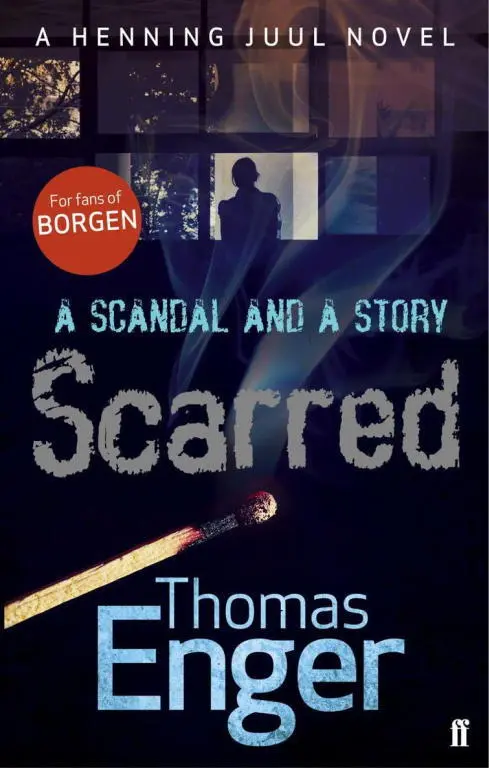
- Название:Scarred
- Автор:
- Издательство:Faber & Faber
- Жанр:
- Год:2014
- Город:London
- ISBN:978-0-571-27250-1
- Рейтинг книги:3 / 5. Голосов: 1
-
Избранное:Добавить в избранное
- Отзывы:
-
Ваша оценка:
Scarred: краткое содержание, описание и аннотация
Предлагаем к чтению аннотацию, описание, краткое содержание или предисловие (зависит от того, что написал сам автор книги «Scarred»). Если вы не нашли необходимую информацию о книге — напишите в комментариях, мы постараемся отыскать её.
Trine Juul-Osmundsen, Norway’s Secretary of State and Henning Juul’s sister, is accused of sexually harassing a young male politician. As the allegations cause a media frenzy, Trine receives an anonymous threat telling her to resign. If she doesn’t, the truth about what she
did that night will be revealed.
Scarred reporter Henning Juul, finds himself torn between the two high profile cases. He wants to help his estranged sister, but as he digs into their past, he discovers memories that haunt them both. Memories of a broken home. Memories of a dead father.
As the two cases collide, both their worlds threaten to fall apart.
Scarred
Burned
Pierced
Thomas Enger is the author of two previous Henning Juul novels, most recently
, which was described in Shotsmag as ‘excellent, another superbly compelling read by Thomas Enger’. As well as writing, he also composes music. He lives in Oslo and is currently at work on the fourth novel of the series. Review
About the Author “Slick, compelling and taut, Thomas Enger’s
combines a sophisticated layering of mysteries with an intensely scarred hero embarked on a tragic quest. A dark and suspenseful blast of Nordic exposure.”
(Christopher Ewan, author of
) “An intriguing new voice in crime.”
(NJ Cooper) “This promises to be a crime fiction series worth watching.”
(
) “The careful revealing of clues, the clever twists, and the development of Henning Juul and the supporting characters make this a very promising start to a new series.”
(
) “Suspenseful, dark, and gritty, this is a must-read.”
(
) “A gripping narrative that begs comparison to Stieg Larsson.”
(
) “The name is Thomas Enger. Make sure you remember it, because he’s a man about to join the ranks of the best crime novel writers of the Nordic countries… and he has achieved something quite exceptional already with his first novel,
… It’s one of the best crime novels this reviewer has read for a long time, in a language that sparkles and gleams in strong images and a tempo that almost makes you forget to draw breath.”
(Kristeligt Dagblad) “Thomas Enger has written a solid and effective crime novel.”
(Jyllandsposten Posten) “It’s an excellent debut, the main character and his fate is brilliantly drawn.”
(
, Denmark) “Impressive new Norwegian thriller.”
(Vejle Amts Folkeblad)
Scarred — читать онлайн бесплатно полную книгу (весь текст) целиком
Ниже представлен текст книги, разбитый по страницам. Система сохранения места последней прочитанной страницы, позволяет с удобством читать онлайн бесплатно книгу «Scarred», без необходимости каждый раз заново искать на чём Вы остановились. Поставьте закладку, и сможете в любой момент перейти на страницу, на которой закончили чтение.
Интервал:
Закладка:
Wait , he says to himself. Be patient .
He clenches his fists, but he can’t feel a thing. There is no pain. The pills are working. And that’s wonderful.
He blinks a second time. Suddenly he can focus.
‘You owe me an apology,’ he says.
Her eyebrows shoot up.
‘Me? What for?’
Then his sight grows fuzzy again; he doesn’t feel his hand punch the picture on the wall, all he can hear is the shattering of glass. Johanne raises her hands up to her face to protect herself. When she takes them away, he lashes out again; he is not sure what he hits, but he hopes it’s her head this time. Whatever it is, it makes her fall backwards across the glass coffee table; she lands on the sofa and bangs the back of her head against the wooden armrest. Then she goes quiet.
Not yet , he tells himself, wait for the veil to fall. Wait until you can see . When his eyes can focus again, he sees that although the years have changed her, it’s still there. Her contempt for him. She still despises him, the boy who saved her life that cold night in 1994.
It had been a Friday like any other Friday in Jessheim. Emilie and Johanne had been to Gartneriet Bar and as usual were high on life. They staggered along the pavement, arms linked. On their way home they had stopped at the takeaway by the Esso petrol station, right by the junction, for something to eat. And as usual Emilie was surrounded by boys.
He was there with some friends and they watched as the girls’ behaviour, giggling and eating drunkenly, changed completely when Johanne choked on some food and couldn’t breathe. Emilie freaked out and screamed at the top of her voice for someone to please help Johanne. In the light from the takeaway he could see everyone freeze to the spot while Emilie’s shrill voice hurt his ears. A strange calm came over him. What he really wanted to do was stay where he was and watch Johanne’s light go out. But what about Emilie. Sweet, lovely Emilie, who was running around wailing and shouting.
So he went over to Johanne who was clutching her throat. Her lips were starting to turn purple. He had to make an effort to snap out of his trance and remember the first-aid course they had been taught at school; the soft, revolting plastic doll he had pressed his lips against and that had tasted grotesquely sterile, and he thought about the other procedures they had learned, the bit about the Heimlich manoeuvre and he couldn’t quite remember how to do it, but he positioned himself behind her and half lifted and half squeezed her, and suddenly Johanne was able to breathe again. She stood there, spitting and coughing, hawking and crying.
Emilie threw herself around his neck and stayed there. She stayed there for a while. And, he supposed, that was what Johanne had never been able to accept. That someone could get between her and her best friend for more than a few weeks.
Seriously, Emilie, it’ll never last. You’re not going to marry him, are you?
And he knows now that she won’t ever apologise to him. She is another one of those who won’t. So he bends down and waits until signs of life return behind her eyelids. The moment she regains consciousness she tries to escape, but she is trapped. Frantically she looks around; she kicks and screams so he squeezes her neck. A little harder while he tells himself to stay calm. Remember, you want to watch. You want to watch , he repeats to himself while he straddles her midriff. Her legs hit his back and thrash in the air, her arms flail wildly and she claws at his jumper and gloves. But when he tightens his grip around her neck and feels her sinking into the sofa like a balloon slowly deflating, that’s when he sees it.
He sees it.
And it’s the most incredible sight ever.
Chapter 44
Two journalists are hanging around outside the entrance to 123news when Henning parks the hire car and gets out. He doesn’t recognise them and tries to ignore them by looking up at the autumn clouds, but one of the reporters blocks his path when he walks past them.
‘Hey,’ says the journalist, a small, fat man with very little hair and thin, round Harry Potter glasses. ‘Do you have anything to say about what your sister has done?’
Henning stops and smiles.
‘Forget it, I’m not going to throw you a bone.’
The journalists glance at each other.
‘No, no comment,’ Henning says and pushes his way past them.
‘But—’
The journalists’ voices rise behind Henning as he walks out through the gates, but he shrugs them off. Instead he walks as quickly as he can in the direction of Grønland towards Stargate. The pub isn’t far away, but he makes a few detours to be sure that he isn’t being followed.
Henning sees that the rundown watering hole has just opened when he arrives and it strikes him that this choice of meeting place was really quite clever. The press has laid siege to both Pål Fredrik’s office and his private home, but no one would ever suspect him of frequenting a dump like this.
Henning orders a cup of coffee and takes a seat in the furthest corner of the room. The dark interior suits him fine; it makes it easy to hide, to disappear in a fog of stale alcohol and sweat against which soap and water stand no chance. A man with stubble and faded clothes comes out from the gents with his trousers still hanging halfway down his knees. On the loudspeakers Johnny Cash reminds the customers that pain is good.
Pål Fredrik Osmundsen arrives fifteen minutes after Henning. His grey suit is elegant and, in view of his red eyes and the bags under them, he could have come straight from a late-night drinking session at the more upmarket Aker Brygge. Henning barely recognises him from the photos in the newspapers.
Pål Fredrik Osmundsen is a business economist who graduated from BI Norwegian Business School. He has worked for Tvenge Brothers Investment, been a consultant and a private investor, but he is now in charge of an asset management fund specialising in European property. Henning doesn’t know how many millions Osmundsen is worth, but it’s a lot. He has also gained a reputation for himself as a bit of a modern-day explorer. The magazine Vi Menn featured him a couple of years ago when Osmundsen gave them access to some of his private photographs from when he climbed K2, Kilimanjaro and crossed Greenland on skis. He has taken part in the Trondheim to Oslo bike ride many times as well as other popular endurance events such as Birken.
Henning waves to the athletic man who weaves his way through chairs and tables.
‘Over here,’ Henning calls out.
Osmundsen takes Henning’s outstretched hand and presses it firmly. They sit down. A silence ensues. Quick glances sweep across the table.
‘Funny way to meet you, brother-in-law,’ Osmundsen says at last.
Henning smiles briefly.
‘Are you here as a journalist or as her brother?’
Henning doesn’t reply immediately.
‘I’m automatically disqualified from writing about Trine because I’m her brother.’
‘So why are you here?’
‘Because I—’
Henning thinks about it.
‘Because there’s something about the story that troubles me, only I don’t know what it is. Perhaps it’s this alleged victim, who…’
Henning searches for the right word.
‘I just don’t buy it,’ he says finally.
A waiter comes over and takes Osmundsen’s order, a cup of coffee and a glass of water.
‘But if you can’t investigate the story,’ Osmundsen begins, ‘how will you be able to help Trine?’
Henning hesitates.
‘I don’t know,’ he says and flashes a cautious smile. ‘I haven’t even started thinking about it.’
Osmundsen nods calmly. An ambulance with howling sirens drives past outside; the sound fills the room before fading away like a dying lament.
Читать дальшеИнтервал:
Закладка:
Похожие книги на «Scarred»
Представляем Вашему вниманию похожие книги на «Scarred» списком для выбора. Мы отобрали схожую по названию и смыслу литературу в надежде предоставить читателям больше вариантов отыскать новые, интересные, ещё непрочитанные произведения.











Обсуждение, отзывы о книге «Scarred» и просто собственные мнения читателей. Оставьте ваши комментарии, напишите, что Вы думаете о произведении, его смысле или главных героях. Укажите что конкретно понравилось, а что нет, и почему Вы так считаете.