Thomas Enger - Scarred
Здесь есть возможность читать онлайн «Thomas Enger - Scarred» весь текст электронной книги совершенно бесплатно (целиком полную версию без сокращений). В некоторых случаях можно слушать аудио, скачать через торрент в формате fb2 и присутствует краткое содержание. Город: London, Год выпуска: 2014, ISBN: 2014, Издательство: Faber & Faber, Жанр: Триллер, на английском языке. Описание произведения, (предисловие) а так же отзывы посетителей доступны на портале библиотеки ЛибКат.
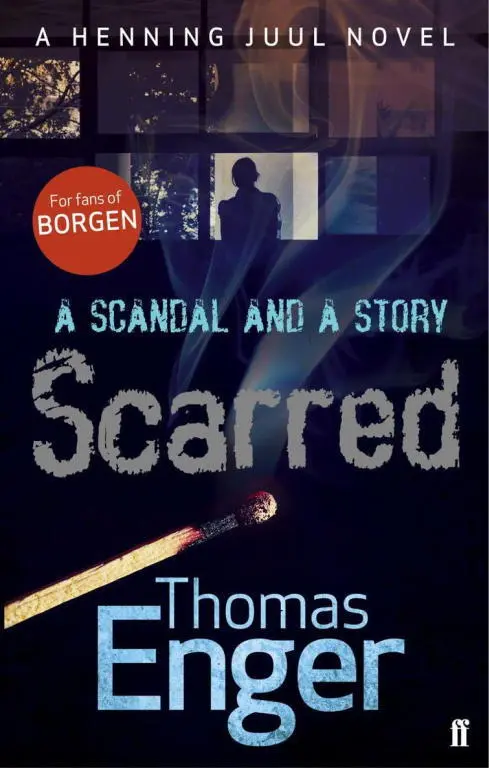
- Название:Scarred
- Автор:
- Издательство:Faber & Faber
- Жанр:
- Год:2014
- Город:London
- ISBN:978-0-571-27250-1
- Рейтинг книги:3 / 5. Голосов: 1
-
Избранное:Добавить в избранное
- Отзывы:
-
Ваша оценка:
Scarred: краткое содержание, описание и аннотация
Предлагаем к чтению аннотацию, описание, краткое содержание или предисловие (зависит от того, что написал сам автор книги «Scarred»). Если вы не нашли необходимую информацию о книге — напишите в комментариях, мы постараемся отыскать её.
Trine Juul-Osmundsen, Norway’s Secretary of State and Henning Juul’s sister, is accused of sexually harassing a young male politician. As the allegations cause a media frenzy, Trine receives an anonymous threat telling her to resign. If she doesn’t, the truth about what she
did that night will be revealed.
Scarred reporter Henning Juul, finds himself torn between the two high profile cases. He wants to help his estranged sister, but as he digs into their past, he discovers memories that haunt them both. Memories of a broken home. Memories of a dead father.
As the two cases collide, both their worlds threaten to fall apart.
Scarred
Burned
Pierced
Thomas Enger is the author of two previous Henning Juul novels, most recently
, which was described in Shotsmag as ‘excellent, another superbly compelling read by Thomas Enger’. As well as writing, he also composes music. He lives in Oslo and is currently at work on the fourth novel of the series. Review
About the Author “Slick, compelling and taut, Thomas Enger’s
combines a sophisticated layering of mysteries with an intensely scarred hero embarked on a tragic quest. A dark and suspenseful blast of Nordic exposure.”
(Christopher Ewan, author of
) “An intriguing new voice in crime.”
(NJ Cooper) “This promises to be a crime fiction series worth watching.”
(
) “The careful revealing of clues, the clever twists, and the development of Henning Juul and the supporting characters make this a very promising start to a new series.”
(
) “Suspenseful, dark, and gritty, this is a must-read.”
(
) “A gripping narrative that begs comparison to Stieg Larsson.”
(
) “The name is Thomas Enger. Make sure you remember it, because he’s a man about to join the ranks of the best crime novel writers of the Nordic countries… and he has achieved something quite exceptional already with his first novel,
… It’s one of the best crime novels this reviewer has read for a long time, in a language that sparkles and gleams in strong images and a tempo that almost makes you forget to draw breath.”
(Kristeligt Dagblad) “Thomas Enger has written a solid and effective crime novel.”
(Jyllandsposten Posten) “It’s an excellent debut, the main character and his fate is brilliantly drawn.”
(
, Denmark) “Impressive new Norwegian thriller.”
(Vejle Amts Folkeblad)
Scarred — читать онлайн бесплатно полную книгу (весь текст) целиком
Ниже представлен текст книги, разбитый по страницам. Система сохранения места последней прочитанной страницы, позволяет с удобством читать онлайн бесплатно книгу «Scarred», без необходимости каждый раз заново искать на чём Вы остановились. Поставьте закладку, и сможете в любой момент перейти на страницу, на которой закончили чтение.
Интервал:
Закладка:
At least for now.
He sits down in front of his computer again and feels the soft latex around his fingers when he rubs them together. He goes on Facebook to check the latest updates. Shakes his head. Everyone is so bloody happy and successful. He starts to play a computer game, but finds it impossible to concentrate.
He thinks about yesterday and how it all happened before he had time to savour it. The old woman died almost immediately. He didn’t really know what he had done before he had done it and so he never saw the light go out. He never felt the struggle, no matter how short and feeble it would have been, in her fingers.
Four intense beeps from his mobile snap him out of his reverie. He picks up the phone and heaves a sigh.
He visualises his mother on her lunch break at work calling him to find out what he is up to, if he would like to come home for dinner tomorrow. He can’t be bothered to reply. Nag, nag, nag. Every time the same questions: ‘Have you been down to the job centre yet?’ ‘How do you pass the time?’
If only you knew , he thinks. And he won’t be coming home for dinner tomorrow. He has plans. Big plans.
He looks at the boy again. Then he scrunches up the printout and throws it at the wall, finds his USB-driven mini Hoover, points its nozzle at the keyboard and removes any breadcrumbs or dust that might have settled in the last few days. And especially any DNA.
When he has finished, he pushes himself away from the desk, opens the desk drawer and looks at the open envelope with the large, green ‘G’ on the outside. He takes it out and puts it next to a wrap – slightly bigger than a street dose – of morphine capsules.
He can hardly wait until the next struggle. He is desperate to experience that. He wants to see the light. Especially when it goes out.
Chapter 20
Back at the offices of 123news Henning sits down at his desk and reflects. Did he actually glean anything from his meeting with Pia Nøkleby?
Only a professional liar can control the reflexes of their facial muscles when confronted with compromising information. The tell is in the movements of the eyes. But rather than getting nervous or appearing ill at ease, Pia looked inquisitive and alert.
Is she really that good a liar?
If that’s the case he has to find another way of solving the Indicia problem. And he thinks he has.
According to 6tiermes7 , Henning’s secret Internet source, a man called Andreas Kjær was the officer on duty on the night of the fire. It’s not unthinkable that he might remember something from that night. Perhaps he can provide Henning with information about which patrol car he despatched to investigate what Tore Pulli was doing in Markveien around 8.30 p.m. Perhaps the officers in that patrol car could be traced. It’s definitely worth following up, especially now when Henning has some free time. The police investigation at the care home is trundling along and the online newspapers are focusing mainly on Trine.
Henning discovers that Directory Enquiries list several Andreas Kjærs, but only one who lives in Oslo. Henning steps inside an office the size of a telephone booth and calls the number. A deep, male voice answers after just two rings.
‘Hi, my name’s Henning Juul. I’m looking for Andreas Kjær.’
‘That’s me.’
‘Hi,’ Henning says again. ‘I’m calling because two years ago you were working at Oslo Police’s control centre. Is that right?’
‘Yes, that’s correct. I’m still there.’
‘Okay. Fine. I have a question that might be a bit – which might not make sense straightaway, but I ask you to bear with me because it’s important.’
Henning gets no reply and takes it as a sign that he should keep talking.
‘On 11 September in 2007 there was a fire in my flat in Markveien in Grünerløkka. You were on duty that night and I know that a patrol car was despatched to Markveien 32 shortly before the fire started.’
Henning stops to make sure that Kjær is keeping up with him.
‘Okay?’ Kjær says, sounding unwilling. ‘I’m sorry to hear that. But why are you calling me?’
‘Because you were on duty that night. I also know that it was—’
‘How do you know that?’
‘I lost my son in that fire,’ Henning says and clears his throat. ‘And apart from being more than understandably keen to know what happened, I’m also a journalist. I have sources.’
Kjær says nothing. Henning decides to plough on.
‘A traffic warden had observed a man sitting in a car several evenings in a row outside the building where I lived; he got suspicious, called it in and you despatched a patrol car to the address.’
Henning holds another pause.
‘Ring any bells, Kjær?’
Silence.
‘The man sitting in the car was Tore Pulli,’ Henning continues when Kjær still doesn’t say anything. ‘You’ve heard of him, haven’t you?’
‘Yes, of course. But I don’t remember the case.’
‘Are you sure? It would be really helpful if you could try to think back. Like I said, it’s very important to me.’
‘I understand,’ Kjær replies. ‘But yes, I’m sure. And even if I did remember that case I wouldn’t be able to discuss it with you.’
‘Okay, I understand, but—’
‘I have to go now.’
Henning is about to launch a fresh protest before he realises his words will have no effect. The line has already gone dead.
Chapter 21
Pernille Thorbjørnsen is perching on the edge of a chair and leaning forwards with one leg slung over the other. The care worker has a round face with dimpled cheeks. Her brown hair is swept back in a low ponytail. Bjarne Brogeland puts her at thirty, perhaps a few years older.
They are in a meeting room on the ground floor of the care home where a couple of IKEA tables have been pushed together. The light from two large windows casts a layer of something sallow across Thorbjørnsen’s face.
‘Thanks for coming in at such short notice,’ he says.
‘Don’t mention it,’ she smiles and leans back.
‘When did you leave work yesterday?’
‘My shift ended at five o’clock.’
‘Okay. Did anything strike you as unusual? I’m thinking about anyone who might have been acting differently. Staff. Patients. Visitors.’
Bjarne flings out his hands.
‘Anything and anyone is of interest,’ he says.
Thorbjørnsen squeezes her fingers for a moment, brushes a few stray strands of hair behind her ears; then she folds her arms across her chest.
‘I don’t think so,’ she begins. ‘I can’t really think of anything. I was working and I didn’t realise I was meant to be looking out for something.’
‘No, I know. But try to think back. Was anyone a bit more agitated than they normally were, or calmer than usual, or more exalted—’
Thorbjørnsen looks up to the left.
‘I don’t think so.’
Bjarne doesn’t continue until he is sure that she has finished sifting through her memories.
‘Were you here when the people from the Volunteer Service arrived?’
‘Yes, but I didn’t join in the entertainment this time.’
‘Why not?’
‘I had things to do. The residents here are ill, Officer. Not everyone is able to take part in the entertainment every time. And there isn’t room for us all, either.’
‘So you don’t know if Erna Pedersen took part yesterday?’
‘Yes, I do actually. Ole Christian told me that she didn’t.’
‘Ole Christian – you mean Ole Christian Sund?’
Thorbjørnsen nods.
‘When did you talk to him?’
‘Last night.’
Bjarne looks at her for several long moments. A hand shoots up to her cheek and her nails scratch a dark brown mole.
Читать дальшеИнтервал:
Закладка:
Похожие книги на «Scarred»
Представляем Вашему вниманию похожие книги на «Scarred» списком для выбора. Мы отобрали схожую по названию и смыслу литературу в надежде предоставить читателям больше вариантов отыскать новые, интересные, ещё непрочитанные произведения.












Обсуждение, отзывы о книге «Scarred» и просто собственные мнения читателей. Оставьте ваши комментарии, напишите, что Вы думаете о произведении, его смысле или главных героях. Укажите что конкретно понравилось, а что нет, и почему Вы так считаете.