Peter May - The Firemaker
Здесь есть возможность читать онлайн «Peter May - The Firemaker» весь текст электронной книги совершенно бесплатно (целиком полную версию без сокращений). В некоторых случаях можно слушать аудио, скачать через торрент в формате fb2 и присутствует краткое содержание. Город: London, Год выпуска: 2012, ISBN: 2012, Издательство: Quercus, Жанр: Триллер, на английском языке. Описание произведения, (предисловие) а так же отзывы посетителей доступны на портале библиотеки ЛибКат.
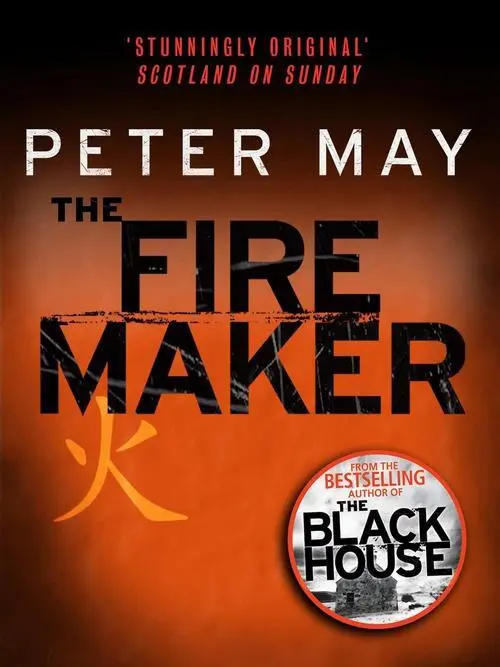
- Название:The Firemaker
- Автор:
- Издательство:Quercus
- Жанр:
- Год:2012
- Город:London
- ISBN:978 1 78206 074 1
- Рейтинг книги:3 / 5. Голосов: 1
-
Избранное:Добавить в избранное
- Отзывы:
-
Ваша оценка:
The Firemaker: краткое содержание, описание и аннотация
Предлагаем к чтению аннотацию, описание, краткое содержание или предисловие (зависит от того, что написал сам автор книги «The Firemaker»). Если вы не нашли необходимую информацию о книге — напишите в комментариях, мы постараемся отыскать её.
The Firemaker — читать онлайн бесплатно полную книгу (весь текст) целиком
Ниже представлен текст книги, разбитый по страницам. Система сохранения места последней прочитанной страницы, позволяет с удобством читать онлайн бесплатно книгу «The Firemaker», без необходимости каждый раз заново искать на чём Вы остановились. Поставьте закладку, и сможете в любой момент перейти на страницу, на которой закончили чтение.
Интервал:
Закладка:
Margaret tried to imagine how it must have been, to have all the constraints of a civilised society removed, for power to be in the hands of children run riot. But it was unimaginable.
‘All the worst and most basic instincts of human nature were given free rein,’ Li said. ‘And you know how cruel children can be. In my classroom at primary school, my teacher was made by some of the older kids to sit in front of class wearing a dunce’s cap and recite over and over, “I am a cow demon”. For a short time you think it is funny. But then when your teacher is found kicked to death in the school dining room, you get pretty scared.
‘It all got out of control. Even the extremist cadres in the Party, who had set it all in motion, and thought they could control it for their own ends, lost control. Many of the country’s leaders had been purged, Deng Xiaoping among them. And eventually the army had to be sent in to restore some kind of order. But we had twelve years of it. Twelve years of madness. I was born the year before it began. I was thirteen when it ended, and my family was destroyed.’
Margaret was shocked. ‘What do you mean, destroyed?’
Both my parents were sent to labour camps. They had been denounced as ‘rightists’. They were educated, you see. My mother died there, and my father was a broken man. My Uncle Yifu was a policeman in Beijing. He was denounced and spent three years in prison.’
Margaret was stunned. ‘I had no idea. I really had no idea.’
She thought of all the Chinese she had met since her arrival. Every one of them had lived through the Cultural Revolution. Some of them would have been Red Guards, others their victims. Now, it seemed, they lived and worked together as if nothing had happened. ‘How do people do that?’ she said. ‘I mean, live with each other again. Red Guards, and the people they persecuted.’ A society riddled with the forces of guilt and revenge.
Li shrugged. ‘I don’t know. It just seemed natural. Like being better after being ill. You just got on with your life. People didn’t talk much about it at the time. They do now, if you ask. For many people being a Red Guard was the most exciting time of their lives. They travelled all over the country. They didn’t have to pay for their train fares or their food. People were scared of them. They had power.
‘You know, maybe like old soldiers remembering a war, no matter whether it had been good or bad for them, the experience was so heightened, everything in their lives after it seems dull.’
‘And their victims?’
‘When the war ends you don’t go on fighting,’ Li said. ‘You get on with the peace.’
Margaret was not convinced she could have been so philosophical. ‘What happened to Mei Yuan?’
‘She was sent to a labour camp in Hunan where she was forced to work in the fields along with the peasants. But in some ways she was lucky.’
‘Lucky!’
‘Her husband was sent to the same camp. They were not separated like so many others.’ His face clouded. She saw it immediately.
‘What?’
He shrugged. ‘In other ways she was not so lucky.’ There was a catch in his voice. ‘Their baby boy was taken away from them. She never saw him again.’
A towering marble statue of Chairman Mao in greatcoat and peaked cap stood just inside the gate of the Ministry of Agriculture on Hepinglidong Street, an arm outstretched in welcome. The Ministry, set in its sprawling, leafy compound, was housed in a huge concrete edifice behind stone-pillared gates. A stone-faced guard stood outside, glowering at a crowd of several dozen schoolchildren and their teachers, who had set up a long table on the sidewalk. A strip of white linen ran its length, and the children were trying to persuade passers-by to sign it in support of some conservation issue.
Li skirted the schoolchildren and turned past the guard and parked the Jeep in the shade of a large tree inside the compound walls. He said, ‘Perhaps you should wait for me here. It might not be politic for me to take you into a government building.’
She nodded. ‘Sure.’ She watched him head off inside and sat for a long time thinking about the Cultural Revolution, about what it must have meant to have had your parents torn away from you as a child, to grow up in a world where all the norms of civilised behaviour were turned on their head. That was all Li had known until he was thirteen. What would ‘normal’ have meant to him? She wondered who had raised him when his parents were in labour camp. Did he have any brothers or sisters?
After a time she found herself succumbing again to an overpowering desire to sleep, and she did not want Li returning to find her snoring in the passenger seat. She got out of the Jeep and wandered back through the gates to the street to see what cause the children were espousing. Beneath green Chinese characters on a long white banner was an explanation in English. They were collecting a million signatures in support of an international drive to save the world from desertification.
Almost immediately she was besieged by clamouring teenage girls who took her hands and pulled her towards the table. A teacher on the other side smiled and handed her a red marker pen. What the hell, she thought. It seemed like a reasonable enough cause. She glanced briefly at all the multicoloured character signatures scrawled across the cloth, before stooping to sign her own name in looping Roman letters. All the children gathered round to watch in amazement, and her signature provoked both astonishment and amusement.
The girls were eager to try out their embryonic English. ‘You British?’
‘No, American.’
‘American! Coca-Cola. Big Mac.’
Margaret smiled wryly. Maybe Li was right. Perhaps that was how the rest of the world saw America’s contribution to international culture after all. In a country whose culinary creations included aromatic crispy duck and lamb that ‘tastes like honey’, fizzy drinks and hamburgers probably seemed pretty crass. But then, she reflected, there were always long queues at the McDonald burger joints she had seen in Beijing.
As she turned back towards the gate, a taxi drew up and a familiar figure emerged. Perspiring profusely, and gasping with the effort of getting out of the car, McCord leaned through the window to pay the driver. As the taxi pulled away, and he turned into the Ministry of Agriculture, Margaret fell into step beside him. ‘Well, hello again,’ she said.
He turned, startled, with eyes like a frightened rabbit. When he saw who it was his face relaxed into a sneer. ‘What the hell are you doing here?’
‘I was going to ask you the same thing.’
‘I work here, remember?’
‘Of course.’ She paused. ‘You were very rude to me in the bar last night.’ He looked at her blankly. ‘You probably don’t even remember.’
‘So what are you doing here?’ he persisted.
‘Oh, nothing much. Lending my expertise to the fight against Chinese crime would probably be a good way of putting it.’ He frowned. ‘I did an autopsy on a murder victim who used to work here.’
McCord stopped in his tracks. ‘ You did the autopsy on Chao Heng?’
‘Yes. Why? Did you know him?’
McCord brought out a grubby white handkerchief and mopped his face, avoiding her eye. ‘Worked with him for five years. A real weirdo.’ Then he looked at her very strangely, she thought. ‘I heard he committed suicide.’
But her mind was riffling back through the things Li had told her earlier about Chao Heng, making a connection that hadn’t occurred to her before. ‘Wait a minute. After his postgrad year at Wisconsin, he spent seven years at the Boyce Thompson Institute at Cornell University. Isn’t that the place you got kicked out of?’
Читать дальшеИнтервал:
Закладка:
Похожие книги на «The Firemaker»
Представляем Вашему вниманию похожие книги на «The Firemaker» списком для выбора. Мы отобрали схожую по названию и смыслу литературу в надежде предоставить читателям больше вариантов отыскать новые, интересные, ещё непрочитанные произведения.

Обсуждение, отзывы о книге «The Firemaker» и просто собственные мнения читателей. Оставьте ваши комментарии, напишите, что Вы думаете о произведении, его смысле или главных героях. Укажите что конкретно понравилось, а что нет, и почему Вы так считаете.