Alan Evans - Thunder at Dawn
Здесь есть возможность читать онлайн «Alan Evans - Thunder at Dawn» весь текст электронной книги совершенно бесплатно (целиком полную версию без сокращений). В некоторых случаях можно слушать аудио, скачать через торрент в формате fb2 и присутствует краткое содержание. Год выпуска: 2013, ISBN: 2013, Издательство: Endeavour Press, Жанр: Триллер, prose_military, на английском языке. Описание произведения, (предисловие) а так же отзывы посетителей доступны на портале библиотеки ЛибКат.
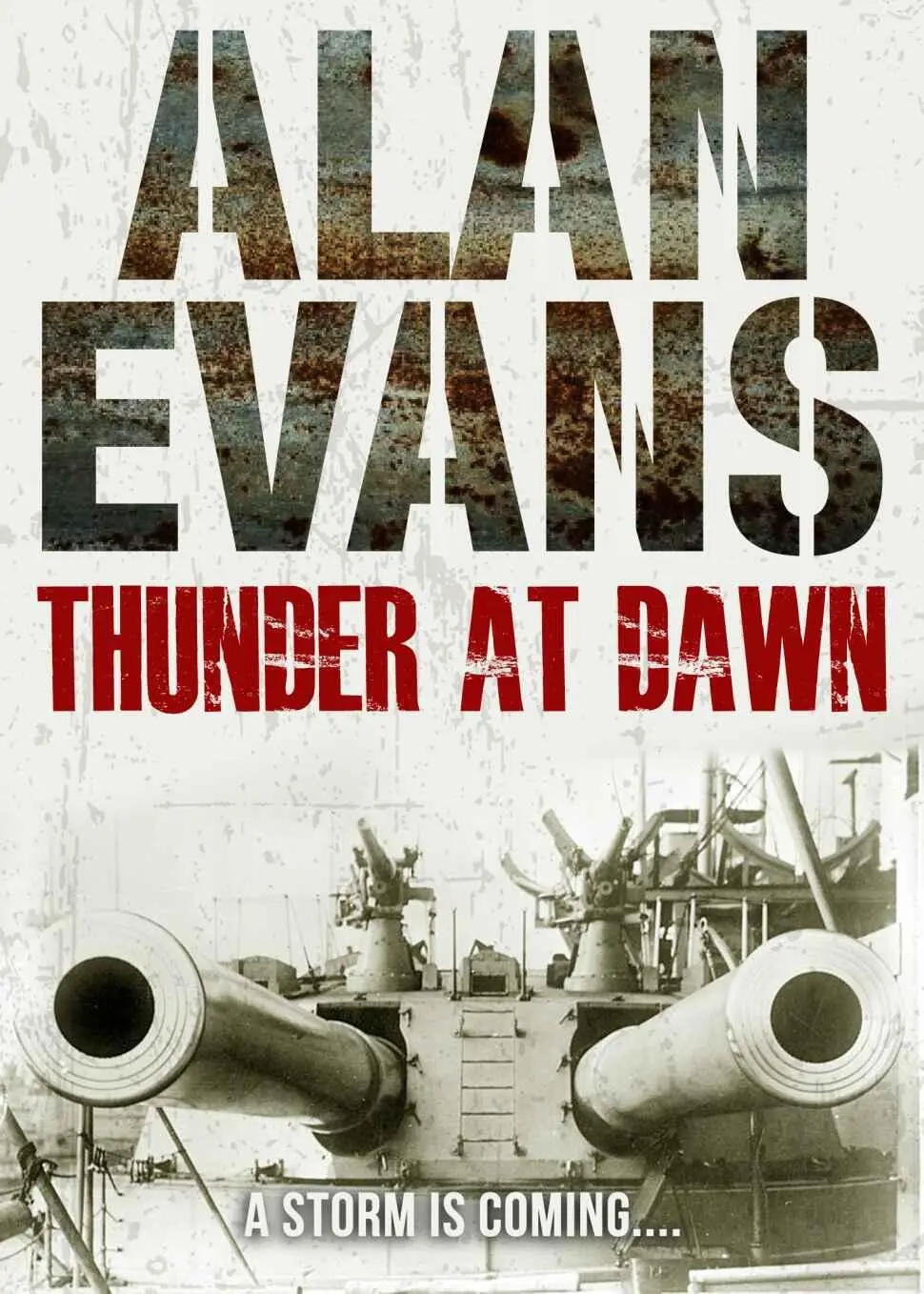
- Название:Thunder at Dawn
- Автор:
- Издательство:Endeavour Press
- Жанр:
- Год:2013
- ISBN:9780755105731
- Рейтинг книги:3 / 5. Голосов: 1
-
Избранное:Добавить в избранное
- Отзывы:
-
Ваша оценка:
Thunder at Dawn: краткое содержание, описание и аннотация
Предлагаем к чтению аннотацию, описание, краткое содержание или предисловие (зависит от того, что написал сам автор книги «Thunder at Dawn»). Если вы не нашли необходимую информацию о книге — напишите в комментариях, мы постараемся отыскать её.
After three years, the outcome of the Great War is poised on a knife-edge. One man believes he can make a difference. David Cochrane Smith, the captain of the armoured cruiser HMS Thunder, is patrolling off the coast of South America. He has attacked and sunk the Gerda, a neutral ship in a neutral port. He is labelled as mad man. Smith already has a reputation as a maverick. Now he faces professional ruin as he is called to account for the sinking. But he is certain he was right. He is sure the Gerda was one of two ships masquerading under neutral flags that are in fact supply ships for the German warships, Kondor and Wolf. These two superbly equipped German warships threaten to annihilate British shipping on the Pacific seaboard. Only an outdated cruiser and a young captain who is prepared to break all the rules stand in their way… As the battle draws to a climax, the battered HMS Thunder will be facing trials fiercer and more terrifying than any yet witnessed at sea.
‘
’ is an edge-of-the-seat WWI naval adventure that combines thrilling story-telling with meticulous research.
Alan Evans is a thriller writer known for vividly recreating the atmosphere of the First World War. His other titles include ‘
’, ‘
’ and ‘
’.
Endeavour Press is the UK's leading independent publisher of digital books. “I think a 21 gun salute is required… Alan Evans has produced a cracking thriller”
The Daily Mirror “Evans provides a different sea story, sustained suspense and vivid battle scenes”
Publishers Weekly
Thunder at Dawn — читать онлайн бесплатно полную книгу (весь текст) целиком
Ниже представлен текст книги, разбитый по страницам. Система сохранения места последней прочитанной страницы, позволяет с удобством читать онлайн бесплатно книгу «Thunder at Dawn», без необходимости каждый раз заново искать на чём Вы остановились. Поставьте закладку, и сможете в любой момент перейти на страницу, на которой закончили чтение.
Интервал:
Закладка:
The strain came on. He saw the hawser slowly straighten, the slack loop of it lifting from the sea. It tautened as Thunder eased away from the collier, and they all felt the shudder and an instant’s check before Thunder paid off again. Smith’s orders went on as he watched the tow for the first signs of the collier yawing and ordered again and again to correct it. Someone aboard the Mary Ellen was doing his best to steer and that was helping but while Thunder pulled her one way sea and gale tried to shove her the other.
It took over an hour to tow her out and around the headland into the little bay beyond. Smith grew hoarse. Someone brought him a mug of cocoa, hot so that it burned his fingers and scalded his tongue, grease floating on the top of it. He gulped it down when he could and then was hoarse again.
“Rig fenders and boarding nets. When we secure I want a party of men forward and another aft, both under a good Petty Officer who knows what he’s about on this kind of business.”
“Aye, aye, sir.” And Aitkyne hesitated then burst out, “Congratulations, sir!” He still could not believe they had plucked the Mary Ellen off the shore. Smith saw no reason for congratulations. He had done what had to be done. Had to be done. He said tiredly, “For God’s sake get her people off as soon as you can.” And: “Hands to coal ship!”
In the, only comparatively, sheltered waters of the bay Smith laid Thunder alongside the Mary Ellen and anchored fore and aft. The ships were bound together forward and aft with securing warps, and ground on the fenders hung between them. The searchlights crackled and blazed out, beams flooding on the collier’s hatches and the working parties swarmed on to her deck.
Smith squinted against the glare. If the cruisers came up with them now —! But they were not so close — if they were there at all. He thrust aside the recurring doubt and shouted, “Mr. Garrick! Use the boat derrick as well!”
Garrick lifted one hand in acknowledgment.
Normally the collier’s derricks were rigged with the cruiser’s the winches of both of them working together to hoist the coal from the collier and swing it across and inboard. That would only work so long as the collier had steam for her winches. The big boat derrick that hoisted in the pinnace was the only one long enough to reach out over the collier’s hold and hoist out coal on its own. The hands were still setting up the rigging between cruiser and collier of the other derricks when the boat derrick yanked out the first load.
‘Hands to coal ship.’ It was a fact of life for the ship’s company that she coaled every week or ten days. It was heavy, filthy work and only the Captain was excused. But this time they would remember.
Because of the gale. Aboard the collier they threw off the hatch-covers and jumped down into the holds with their shovels. The coal was packed tight and the devil to break into as always but now they worked in a gale that rolled both ships together so that the coal shifted and slid in an oily, mountainous flow and they staggered and fell as they worked. They shovelled the coal into sacks and these were swung up out of the holds by the derricks, ten sacks to a strop, swayed over and lowered to Thunder’s deck.
Between the coaling scuttles in her deck and the bunkers far below were the mess-decks. So canvas chutes were rigged between scuttles and bunkers. The sacks were wheeled on barrows to the scuttles and the motion of the ship set the barrows grinding hard or trying to run away with the men. It was hard and it was dangerous. They emptied the sacks down the scuttles and the coal fell down the chutes into the bunkers. There was never a chute that did not leak but coaldust found its way anywhere, anyway, so the mess-decks were filthy.
In the dust-filled gloom of the bunkers they worked with smarting eyes, soaked sponges tied across noses and mouths, trimming the coal. They staggered with the lift and plunge of the ship and the groaning and creaking of the two ships working together was a hellish noise in the steel drums of the bunkers, punctuated by the roar and crash as the coal came down. They always counted men into and out of the bunkers because men had been buried by coal.
In spite of the gale they worked in a frenzied haste, coaling faster than they had ever done because there was not a man who did not know what coal meant to the ship, and that time was against them. This coaling was different because the collier was sinking. Aboard Thunder they could see it. They would glance at the collier and when they looked again they saw she was a little lower in the water. The Petty Officers and men on the securing warps could feel it because as the collier sank the warps had to be eased. While they held her in to Thunder’s side they would not hold her up from the sea that claimed her. It was delicate nerve-racking work. Ease the warp too much and the collier would swing away to slam back against Thunder’s side, ease it too little and the strain would part it and the whip-crack of a parting warp could kill a man.
In the holds the coal shifted and slid and the sea pounded against the side but every now and again they would hear the surge of the water inside her. The hatch was a black rectangle against the lights and far above the men as they shovelled and sweated and cursed.
The crew of the collier were taken off as soon as she was made fast alongside. Garrick brought her Master to the wing of the bridge.
He was wild-eyed. “You should have taken us off. She could have gone down anytime. Man, you’ve only got to look at her! Every minute I thought she might go, every second! You could have taken us off. I watched you handle this ship and, by Christ! You’re a seaman! So you could ha’ taken us off but you wouldn’t . I pleaded with you to take us off and you passed us a bloody tow! Why ?” His face was haggard.
Smith did not look at him or answer him. Instead he asked, “Why did you sail south when I asked that you wait for me at Malaguay?”
The Master peered at him, bewildered. ‘What’s that got to do with it? But wait be buggered. The Consul said you needed the coal and I was to find you. You don’t suppose I put to sea in this weather for sport, do you? I did it for you, you —” He stopped, not speechless but holding back the last words. Then he said, almost pleading again, “We all thought our number was up, then you came along but you wouldn’t take us off. We’re men like yourself. Sailormen. I don’t see how you could —” He stopped again and shook his head.
Smith finally turned to him a face as haggard as his own and the eyes as wild. “I had to have coal. I had to have coal !”
The Master stepped back from those eyes but Smith turned away and back to watching his men. The Master whispered, “You’re mad! A bloody madman !”
But then Garrick took his arm and led him away.
Smith stood alone. He watched the collier sinking and his men slaving in her at risk of their lives and the Master’s charges hammered in his head … ‘bloody madman … ’ But his answer was the same. He had to have coal. Because of the cruisers. And because of Ariadne and the Elizabeth Bell and the other British shipping and hundreds of British seamen along this coast. Because of Thunder .
He knew that he was right but in his mind he saw the Master’s face and took no comfort from being right.
He handed over the bridge to Garrick and went down to the Mary Ellen . Not because of her Master nor for any fake heroics but he had sent these men down into the collier and he could no longer stand high on the bridge looking down on them like some little god. He paced her deck with that restless stride and felt the sluggish, water-laden dying of her under him. He went down into the holds where despite the searchlights the men laboured in a reeling near-darkness of dust-filled oppression and the coal slithered and slid around a man’s knees, or his waist so another would have to cease his frantic shovelling to haul him out bodily.
Читать дальшеИнтервал:
Закладка:
Похожие книги на «Thunder at Dawn»
Представляем Вашему вниманию похожие книги на «Thunder at Dawn» списком для выбора. Мы отобрали схожую по названию и смыслу литературу в надежде предоставить читателям больше вариантов отыскать новые, интересные, ещё непрочитанные произведения.










Обсуждение, отзывы о книге «Thunder at Dawn» и просто собственные мнения читателей. Оставьте ваши комментарии, напишите, что Вы думаете о произведении, его смысле или главных героях. Укажите что конкретно понравилось, а что нет, и почему Вы так считаете.