Eliot Pattison - Mandarin Gate
Здесь есть возможность читать онлайн «Eliot Pattison - Mandarin Gate» весь текст электронной книги совершенно бесплатно (целиком полную версию без сокращений). В некоторых случаях можно слушать аудио, скачать через торрент в формате fb2 и присутствует краткое содержание. Жанр: Полицейский детектив, на английском языке. Описание произведения, (предисловие) а так же отзывы посетителей доступны на портале библиотеки ЛибКат.
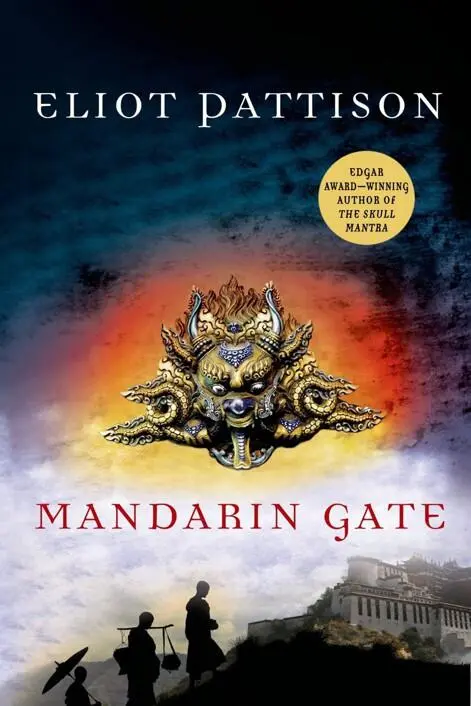
- Название:Mandarin Gate
- Автор:
- Жанр:
- Год:неизвестен
- ISBN:нет данных
- Рейтинг книги:4 / 5. Голосов: 1
-
Избранное:Добавить в избранное
- Отзывы:
-
Ваша оценка:
Mandarin Gate: краткое содержание, описание и аннотация
Предлагаем к чтению аннотацию, описание, краткое содержание или предисловие (зависит от того, что написал сам автор книги «Mandarin Gate»). Если вы не нашли необходимую информацию о книге — напишите в комментариях, мы постараемся отыскать её.
Mandarin Gate — читать онлайн бесплатно полную книгу (весь текст) целиком
Ниже представлен текст книги, разбитый по страницам. Система сохранения места последней прочитанной страницы, позволяет с удобством читать онлайн бесплатно книгу «Mandarin Gate», без необходимости каждый раз заново искать на чём Вы остановились. Поставьте закладку, и сможете в любой момент перейти на страницу, на которой закончили чтение.
Интервал:
Закладка:
“Maybe it doesn’t want to come back to life yet.”
Shan turned slowly to face the stranger, gripping his shovel tightly. It took a moment for him to discern the young woman, for the brown robe she wore blended with the hillside. She sat, legs crossed under her, by a clump of heather.
“There was an old lama who used to come to our tents when I was a girl,” she continued. “He said at such places ancient spirits are slumbering. You can’t force them awake, he said. They will wake at their chosen time. He said when they do they could walk among us and look just like another man.”
She was barely out of her teens, but the girl’s face, half of which was heavily scarred, the other half fixed in melancholy, said she had seen much of life. Her robe marked her as a lay nun, an unofficial companion to, and a student of, ordained nuns. It had become one of the ways that Tibetans evaded the ever-more onerous restrictions on donning a maroon robe.
“I have learned to trust a lot of what old lamas say,” Shan replied, and loosened his grip on the shovel.
“Abbess Tomo isn’t coming back, is she?”
“Abbess?” Shan asked in surprise.
“The head of our hermitage.”
The woman had not been just a nun, she had been the senior nun of the valley. He shook his head slowly. “She’s not coming back.”
“No one wants to talk about her. They act like maybe she just went on a retreat somewhere.”
“I saw her body.”
The woman bit her lip. “She raised me since I was ten. Since-” she pointed to the ruin of her face. “My father borrowed a truck to take our sheep to market. It was going to be like a holiday, my mother and grandmother were going with us. No one told him the brakes were bad. We went off a mountain road. There was an explosion and fire when the truck crashed at the bottom. Only a lamb and I survived. Not even all of me,” she added, gesturing again to her face.
“My name is Shan,” he said.
“I am Chenmo. Some of the older nuns are reciting death rites in secret, in one of the old hermit huts. I thought they were for Jamyang so I went last night to sit behind the hut and join in. When I heard them say her name the grief seized me so hard I could barely breathe.”
“There are many ways to say good-bye.”
Chenmo offered a small, sad nod. “They started the death rites for Jamyang after Uncle Lokesh stopped to speak with the nuns. He carried the body of the lama hermit on a mule. Now they say rites for two. I do not understand the day of blood.” She paused and scrubbed at the tears on her cheeks. “He said to watch for a Chinese with eyes like deep wells and mud in his fingernails. He said that the man would wear purple numbers on his skin. Uncle Lokesh said we could trust him.”
Day of blood. The terrible afternoon of murder and suicide would be marked indelibly in the mental calendars of the local people for years, maybe generations.
“I see everything but the numbers,” Chenmo said, forcing a smile. “What did he mean?”
Shan rolled up his sleeve and extended his forearm.
“Oh!” Chenmo said with surprise in her voice, then again “Oh,” more darkly, as she realized what they were. “Lokesh said you see secrets in deaths. Were you a murderer then?”
“No. Some ministers in Beijing felt safer if I was sent away. They didn’t understand the blessing they were bestowing on me by sending me to a prison full of lamas and monks. I didn’t either for the first few weeks. But eventually I was reincarnated.”
Chenmo nodded, as if she understood perfectly. “We know Uncle Lokesh but we have never seen you before.”
“I do not wish to disturb the tranquility of convents.” Lokesh would always be welcome in such places, he knew, but not necessarily a Chinese with a government job, however menial.
“Not a convent. A hermitage for nuns. Not a place for visitors.”
“But I was going to come. I have something to leave there.”
When Chenmo did not respond he pointed to his truck, parked near the ledge above them. She rose and warily followed him, staying several steps behind. Her uncertainty disappeared as he reached under the dashboard and pulled out the gau he had retrieved from the dead woman. Chenmo’s hand trembled as she accepted the silver amulet box, then she sobbed and clutched it tightly to her breast.
The gau seemed to release the tide of grief that had been swelling in the young novice. Tears began streaming down her cheeks. She let Shan lead her to a large flat boulder, where she sat weeping, staring at the gau in her hands.
After a few minutes he brought her a bottle of water from the truck and sat beside her as she drank.
“I am sorry,” Chenmo said. “I tried not to cry in front of the nuns.”
“I am sure they cried too, just in their own way,” Shan said.
The young woman offered a melancholy smile.
“Did you ever help Abbess Tomo in the old ruins?” he asked.
When she nodded, he continued. “There were two other people with her, two others who were killed with her in the ruins. A Chinese man with tattoos and a foreigner. Did you know them?”
“No Chinese came, not to the ruins.”
“But there was a foreigner.”
Chenmo stared at the gau as she spoke. “Mother Tomo said not to speak of it. They were secret, brought in by secret people.”
Shan weighed her words. There was more than one foreigner. “You mean the resistance. The purbas.” The local Tibetan underground had taken to calling themselves after the dagger used in Tibetan ritual.
“They don’t use any names. Dharamsala, is all. They say it like a password.” It was the town in northern India that was the capital of the Tibetan government in exile. “Sometimes they come across from India. They work in the shadows and go back in shadow.”
Shan had seen the secret ways. There were prayers brought from senior lamas and secret letters carried for families separated by the closing of the border. But there were also fuel trucks that mysteriously caught fire and pylons for remote power lines or phone towers that toppled in the night. Public Security might be obsessed with finding renegade monks but when they caught scent of such operatives they became rabid hounds. The most aggressive of the young resisters did not always adhere to the pacifist ways of their elders.
“She said think of them as phantoms, protector demons who can’t be seen. Is that what you are?”
Shan shrugged. “I am just a former convict, here for all to see.” As he digested her words, he grew more alarmed. “You mean the purbas brought in the Westerners?”
Chenmo stared at the old gau again, as if consulting it. “Jarman. Amerika,” she said, using the Tibetan terms for Germany and the United States. “They make films. They told us if they could film the restoration project and show the film in the West it would protect it, that Beijing couldn’t destroy it then.”
“Why you?”
“Because it was ours. I mean the hermitage was part of the convent once. We are where the spark is kept alive, after the convent was bombed.”
“And the foreigners were filming the restoration?”
“Yes. Using little cameras. Doing interviews.”
“You mean video cameras?”
Chenmo shrugged and made a circle with a thumb and a finger and held it to her eye. “Little cameras.” There were still many Tibetans, Shan reminded himself, who had little or no experience with modern technology, and little or no inclination to gain any.
“Were these foreigners staying at your hermitage?”
“These are dangerous times, the abbess would warn us. There are Chinese in the hills. Bonecatchers, and others who beat up farmers. We couldn’t risk bringing them to Thousand Steps. Only a few of us at the hermitage were to know. She said if the government discovered we were harboring illegal foreigners they would destroy the hermitage, ship us all to prison.” The northern townships of Lhadrung County were one of the regions of Tibet that were still off-limits to foreigners, because of their many prison camps.
Читать дальшеИнтервал:
Закладка:
Похожие книги на «Mandarin Gate»
Представляем Вашему вниманию похожие книги на «Mandarin Gate» списком для выбора. Мы отобрали схожую по названию и смыслу литературу в надежде предоставить читателям больше вариантов отыскать новые, интересные, ещё непрочитанные произведения.










Обсуждение, отзывы о книге «Mandarin Gate» и просто собственные мнения читателей. Оставьте ваши комментарии, напишите, что Вы думаете о произведении, его смысле или главных героях. Укажите что конкретно понравилось, а что нет, и почему Вы так считаете.