Tom Schreck - On the Ropes
Здесь есть возможность читать онлайн «Tom Schreck - On the Ropes» весь текст электронной книги совершенно бесплатно (целиком полную версию без сокращений). В некоторых случаях можно слушать аудио, скачать через торрент в формате fb2 и присутствует краткое содержание. Жанр: Криминальный детектив, на английском языке. Описание произведения, (предисловие) а так же отзывы посетителей доступны на портале библиотеки ЛибКат.
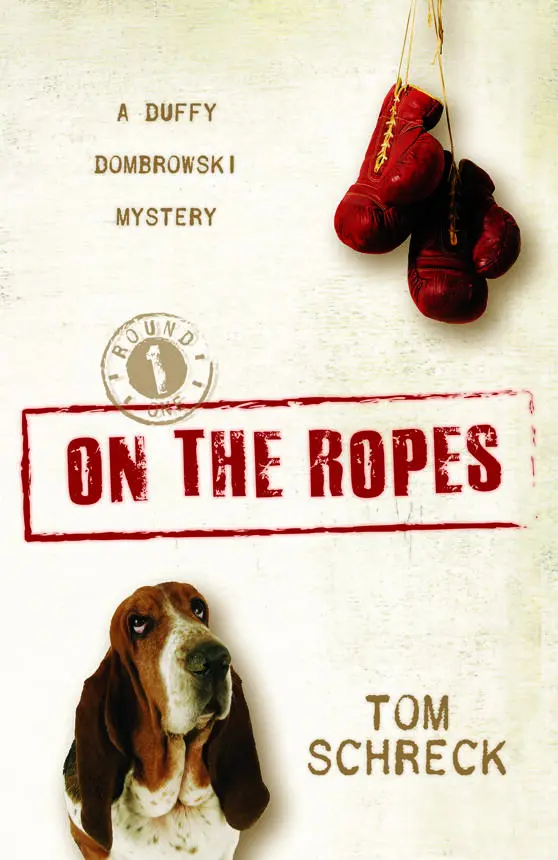
- Название:On the Ropes
- Автор:
- Жанр:
- Год:неизвестен
- ISBN:нет данных
- Рейтинг книги:5 / 5. Голосов: 1
-
Избранное:Добавить в избранное
- Отзывы:
-
Ваша оценка:
On the Ropes: краткое содержание, описание и аннотация
Предлагаем к чтению аннотацию, описание, краткое содержание или предисловие (зависит от того, что написал сам автор книги «On the Ropes»). Если вы не нашли необходимую информацию о книге — напишите в комментариях, мы постараемся отыскать её.
On the Ropes — читать онлайн бесплатно полную книгу (весь текст) целиком
Ниже представлен текст книги, разбитый по страницам. Система сохранения места последней прочитанной страницы, позволяет с удобством читать онлайн бесплатно книгу «On the Ropes», без необходимости каждый раз заново искать на чём Вы остановились. Поставьте закладку, и сможете в любой момент перейти на страницу, на которой закончили чтение.
Интервал:
Закладка:
“Walanda thought Shondeneisha had been kidnapped by someone named ‘Webster.’ Do you have any idea what she was talking about?”
“No, I don’t. Look, Mr. Dombrowski,” Jacquie’s tone changed almost imperceptibly. “I loved my sister, but years ago I had to detach from her. I tried and tried and she kept going back. I really didn’t know much about her life for the last three years. I don’t mean to be difficult, but I really should go.”
“I understand, Jacquie,” I said. “Thanks for speaking with me.”
Jacquie was no help. In some ways I don’t blame her for distancing herself from the cesspool of a life that Walanda lived. She was doing something positive, and maybe her way of changing things meant being the best she could be. Honorable, even if your sister winds up dead, I suppose.
After work I got Al, and we took a trip over to Walanda’s old house. I hoisted Al onto his side of the Eldorado and we headed out. I threw in some Elvis from ’56. It was the original rockabilly sound that changed the face of music forever. To me, listening to Scotty Moore play the guitar riff to “When My Blue Moon Turns to Gold Again” was just about as good as music got-simple, with feeling.
I was singing along, curling my lip in the exact right spots and adding the bass to my voice when it was needed, when Al started to mess up my rhythm by playing with the power windows. He would plop a fat paw on the switches and then marvel at the hum of the descending window. He did it over and over again, paying absolutely no attention to my interpretation of the King’s music. Eventually, Al allowed the window to go all the way down and he stuck his head out the window. The wind blew his ears back as he surveyed the passing landscape with a watchful eye.
I parked in front of Walanda’s old place, hooked Al up to the leash, and took a walk. Al’s tail started wagging, and he started barking when he realized where we were. I hadn’t thought about Al returning to his old home, and it was kind of sad.
It was the kind of neighborhood where people interacted from stoop to stoop, porch to porch, or up and down the sidewalk. Back in the late sixties, urban planners started building high-rise projects in this neighborhood in an attempt to homogenize the poor. That way they could be kept out of sight and up in the air, and they wouldn’t be on the street being offensive to the eyes of the suburbanites. The projects removed the way people from the inner city interact, and that’s why they were destined to be a failure from the start. Sure, high-rises were a tad more antiseptic, but they took away the humanity of everyday life and attempted to compartmentalize lives. If you don’t believe me, go to the projects in your town and see how they’re doing. Most are abandoned or turned into something else.
Walanda’s neighborhood was always full of activity. It wasn’t all positive activity, but the idea that everything going on in the streets of urban areas is drug traffic, crime, or drug use is ridiculous. The street can be a wonderland of personal interactions, both positive and negative.
Kids create playgrounds in their imaginations, using what the city has to offer for their amusement, and it seldom has to do with slides and swing sets. Mothers catch up on hairstyles, recipes, and childcare. Adolescents play hide-and-seek with their hormones as packs of girls and boys spy each other up and down the streets in coming-of-age rituals. Old folks go to church or go through their daily routines in the neighborhoods they’ve spent their whole lives in.
A group of women were gathered three houses up from Walanda’s old place, chatting in a circle. Usually, when a white guy approaches a group of black people in an almost all-black neighborhood, there’s a guarded resistance and for good reason. White people usually mean police or some sort of other authority who seldom venture into these neighborhoods to pass out sweet potato pie. I had some slack because I was known as a decent guy who did social work and as a fighter. Most of the local boxers were brothers and I had some respect there as well.
One of the three ladies was a recovering crack addict named Laila. I hadn’t been her caseworker, but I had run a few groups she was in and she liked me.
“Hey Duffy,” Laila said. “What you doin’ out here in the hood?”
“I wanted to see what I could find out about Walanda,” I said.
Al jumped up her leg, getting about as far as her knee. Laila returned the affection. Clearly they were old friends.
“That girl was a shame,” the woman to Laila’s right said. She was very dark skinned and had tight little braids in her hair. “Started to have it together and then lost it even worse. For real, she shoulda stayed in the Nation.”
“You guys ever see her with somebody she shouldn’t have been with?” I asked.
“That child never stopped bein’ with people she shouldn’t been with, Duff,” Laila said.
“I guess that was a stupid question. Ever hear her talk about ‘Webster’ or ‘The Webster’?”
“She went on and on about some ‘Webster’ taking her stepdaughter Shony for hoin’,” the third woman said. She was lighter skinned and freckled with a short and very wide nose. “I don’t know what that girl was talkin’ ’bout.”
“Did you know what she was talking about?” I asked the darker woman.
“Nah, that girl crazy from the crack.”
“Anybody ever hear about ‘Webster’ or anybody like that pimping?”
“All her men were pimps and she went on the street when she need to get high. Everybody know that,” said Laila.
“Anything having to do with ‘Webster’?”
“No,” the light-skinned woman said. “But there was one ugly white dude used to come ’round givin’ her crack. Big ugly-ass biker dude. They’d go for a ride or something. I don’t know if he was pimping her or what.”
“I never heard no ‘Webster’ stuff,” the dark woman said.
“Tell you what, though, that Shony a pretty girl,” said Laila. “Like a young Whitney Houston. She wasn’t Walanda’s, but Walanda loved her.”
“Shony’s a good girl too. Sings in church, volunteers with the old folks, and gets good grades,” said the light-skinned woman.
“That’s right. My gramma is in the county home, and Shony and the other church girls come sing for her every Sunday afternoon,” said the darker woman.
“Duff, that girl was Walanda’s hope,” Laila said. “It was like Walanda was goin’ put every ounce of whatever positive she had left inside her for that child to make up for all of the years she’s done wrong.”
“I think she was also givin’ Shony all the love that she lost when Benjamin was killed in that home,” the light-skinned woman shook her head. “That was a damn shame, him gettin’ murdered. Walanda ain’t never been right after that.”
“Anyone know where Shony’s father is?” I asked.
“Her natural father was that crackhead Bertrand. He ain’t around no more. Walanda was livin’ with Tyrone for a while with Shony,” Laila said.
“Tyrone? That man is a stone-cold pervert,” said the dark-skinned woman.
“Crackhead sell his mother for a rock. I heard he moved to the country or somethin’. That boy need to be locked up,” said the light-skinned woman.
“He’s that bad?” I said.
“Walanda was always afraid he’d turn Shony out,” the dark woman said. “He might too, if it meant getting’ his ragged ass some crack.”
“Know if he did?”
“Don’t think so. You know that Walanda was crazy like a fox sometime. She took a bread knife to him once. Cut up his ass good too,” said the dark woman.
“And no one knows about ‘Webster’ except her going on about it?”
Читать дальшеИнтервал:
Закладка:
Похожие книги на «On the Ropes»
Представляем Вашему вниманию похожие книги на «On the Ropes» списком для выбора. Мы отобрали схожую по названию и смыслу литературу в надежде предоставить читателям больше вариантов отыскать новые, интересные, ещё непрочитанные произведения.











Обсуждение, отзывы о книге «On the Ropes» и просто собственные мнения читателей. Оставьте ваши комментарии, напишите, что Вы думаете о произведении, его смысле или главных героях. Укажите что конкретно понравилось, а что нет, и почему Вы так считаете.