Andrew Taylor - The Anatomy Of Ghosts
Здесь есть возможность читать онлайн «Andrew Taylor - The Anatomy Of Ghosts» весь текст электронной книги совершенно бесплатно (целиком полную версию без сокращений). В некоторых случаях можно слушать аудио, скачать через торрент в формате fb2 и присутствует краткое содержание. Жанр: Исторический детектив, на английском языке. Описание произведения, (предисловие) а так же отзывы посетителей доступны на портале библиотеки ЛибКат.
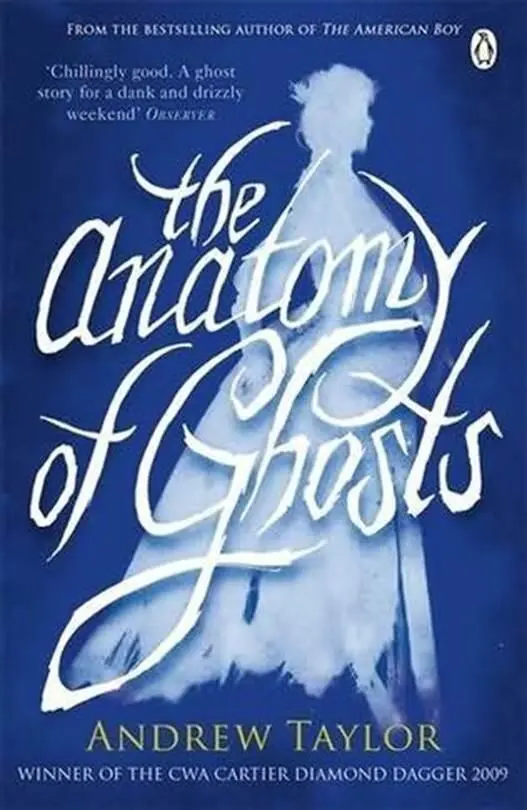
- Название:The Anatomy Of Ghosts
- Автор:
- Жанр:
- Год:неизвестен
- ISBN:нет данных
- Рейтинг книги:4 / 5. Голосов: 1
-
Избранное:Добавить в избранное
- Отзывы:
-
Ваша оценка:
The Anatomy Of Ghosts: краткое содержание, описание и аннотация
Предлагаем к чтению аннотацию, описание, краткое содержание или предисловие (зависит от того, что написал сам автор книги «The Anatomy Of Ghosts»). Если вы не нашли необходимую информацию о книге — напишите в комментариях, мы постараемся отыскать её.
The Anatomy Of Ghosts — читать онлайн бесплатно полную книгу (весь текст) целиком
Ниже представлен текст книги, разбитый по страницам. Система сохранения места последней прочитанной страницы, позволяет с удобством читать онлайн бесплатно книгу «The Anatomy Of Ghosts», без необходимости каждый раз заново искать на чём Вы остановились. Поставьте закладку, и сможете в любой момент перейти на страницу, на которой закончили чтение.
Интервал:
Закладка:
Holdsworth said carefully, ‘Have I heard the name elsewhere? It seems familiar.’
‘It’s possible. Or you may have come across other members of the family. Their principal seat is in Northumberland. Our Mr Whichcote belongs to a cadet branch. He was admitted at this college as a pensioner some ten or twelve years ago but he did not take his degree. Like so many of our young men, he was not what you would call a hard-reading man. However, he still resides in Cambridge and has many friends here.’
He would have said more but Dr Carbury had a fit of coughing and spluttering. The servant was at his side in a moment, offering a glass of water. Carbury took a sip and waved the man away. His complexion had become mottled, and he was sweating. He pushed his chair back and stood up.
‘Pray excuse me,’ he said to Holdsworth. ‘I have some reading to do before bed. My servant will wait up for you in the Lodge. We shall meet again at breakfast, no doubt.’
Saying a general good night to the company, Carbury hurried from the room. The conversations around them began again, at a higher volume than before.
Holdsworth glanced down at the book on the table and turned the page. Here was the wager that had just been recorded: The Revd Mr Miskin wagers Mr Crowley two bottles of wine that the ghost will not appear again before the end of term.
‘So the college has a ghost?’ he said.
‘No, sir, we merely have a foolish story.’ Richardson closed the book and handed it to the servant. ‘The undergraduates make up tales to frighten each other.’
8
The gardens of Lambourne House ran down to the north bank of the River Cam. The previous owner, Mr Whichcote’s great-uncle, had built the elegant pavilion there; its tall windows had a fine prospect over the water, with Jesus Green and Midsummer Common beyond. On the ground floor was a loggia where one could sit and take the air on fine afternoons. The pavilion seemed far removed from the bustle of Cambridge, though in fact Mr Essex’s Great Bridge into the town was only a few hundred yards away in one direction, and the gaol in the castle gatehouse a few hundred yards in another.
The principal apartment was on the first floor, a large, south-facing room in the form of a double cube. Mr Whichcote’s great-uncle had used it as a gallery to display his collection of antique statuary; he also applied himself there to the main occupation of his declining years, a biographical and critical study of Archbishop Ussher. The room was entirely separate from the house, which was why Philip Whichcote usually entertained his bachelor parties there. Some of his visitors preferred to be discreet about their comings and goings, and for these retiring souls the river frontage had much to recommend it, particularly in the warmer weather.
On Friday, 26 May, Whichcote played cards after dinner with a group of young friends, some from Jerusalem, some from other colleges. Despite its noble proportions, the room did not look its best in the merciless early evening sunlight. It was better in the evening, when candlelight cast a forgiving glow on ragged curtains, on frayed Turkey carpets spotted with burns, and on walls stained with smoke and with the damps of winter.
By now most of the guests had gone. Only Harry Archdale was left. He sat with his host at a table beside one of the windows. He was a plump youth with large, wet lips and a small chin. When and if he reached the age of twenty-five, he would acquire complete control of a fortune estimated at nearly £3,000 a year. He was playing piquet with Whichcote and was inordinately excited because he had won the last game. This had distracted him from the fact that he had lost not only the previous five but also the partie as a whole.
Augustus, the little footboy, slipped into the room and sidled around the walls until he reached his master’s chair. He murmured in Mr Whichcote’s ear that Mr Mulgrave was waiting his pleasure up at the house.
‘Well, I had you on the run that time, eh?’ Archdale said, beaming and perspiring and seeming plumper than ever, as though someone were inflating him with gas. ‘You can’t deny that – you’d better look to your winnings! Another partie ?’
Whichcote smiled at his guest. ‘I regret we must postpone it. I have a small matter of business to attend to.’
The animation slipped from Archdale’s face. ‘Philip,’ he said in a rush, ‘I rode out to Barnwell yesterday afternoon and tried to see Frank. But they wouldn’t let me in. There’s nothing wrong, is there? I thought you said he is on the mend?’
‘Indeed he is. Your feelings do you credit, Harry, but you must not disturb yourself in the slightest. I have it on very good authority that he is making excellent progress. Why, I believe he may soon remove to London to be with his mother. They would not let him travel if he were not in good health, would they?’
‘I suppose not. But why is he like this? I cannot understand it.’
‘It’s simple enough. His imagination is disordered. You saw what he was like that last day when you dined with him at the Hoop. Full of fears and fidgets. I had supper with him in college that evening, you know, and he was in such a melancholy state one could hardly distinguish it from mania. Poor fellow, I have seen this happen before – he had been living too hard; some men can take it, others can’t. Frank is not as strong as you, I’m afraid.’
‘I’ve always been robust.’
‘Quite so. But not everyone is so fortunate in his constitution. Frank’s nervous prostration is nothing out of the way. All that is needed is a little time away from the world. Nine times out of ten, tranquillity is the best medicine. If I’ve seen it answer once I’ve seen it answer a dozen times. You may depend upon it that after the Long Vacation Frank will be back among us and quite his old self.’
‘Still, I wish they’d let me see him.’
‘I am sure they soon will.’ Whichcote smiled at him. ‘Now – much as I wish you would stay, did you not tell me you had invited a party of friends to supper?’
‘Supper?’ Archdale pulled out his watch, a handsomely enamelled French piece. ‘Good God, is it as late as that? Devil take it, I had meant to work at my exercise for Mr Richardson before supper.’
‘Ricky will wait, I am sure.’
‘You do not understand. This is to be my entry for the Vauden Medal. And my guardian wishes to see it before I submit it. He dines in Jerusalem on Sunday, and he has a most particular interest in the medal, because his brother won it.’
‘Surely that’s no reason why you should trouble yourself in the matter?’
‘It is if I wish him to increase my allowance. I must at least enter for it. No, I must go. I must not waste an instant.’
Whichcote summoned Augustus. Archdale pushed back his chair and stood up. Almost immediately he lost his balance and was forced to cling to the table, knocking over his glass and spilling what was left of his wine. The footboy steadied him. Archdale pushed the servant’s arm away.
‘Clumsy oaf,’ he said. ‘Look what you made me do.’
Whichcote had crossed the room to a writing table. ‘You may as well sign these now,’ he said. ‘Then we’re square for next time.’
Archdale staggered to the writing table and scrawled his signature at the foot of a note of hand for sixty-four guineas. Afterwards, Whichcote conducted his visitor to the punt moored at the little jetty on the river bank. Augustus followed, carrying Archdale’s cap and gown with a certain reverence. Archdale was a fellow-commoner, so the cap was velvet with a gold tassel, and the gown was richly trimmed with gold lace. Whichcote and the footboy manoeuvred him from the safety of dry land.
Читать дальшеИнтервал:
Закладка:
Похожие книги на «The Anatomy Of Ghosts»
Представляем Вашему вниманию похожие книги на «The Anatomy Of Ghosts» списком для выбора. Мы отобрали схожую по названию и смыслу литературу в надежде предоставить читателям больше вариантов отыскать новые, интересные, ещё непрочитанные произведения.


Обсуждение, отзывы о книге «The Anatomy Of Ghosts» и просто собственные мнения читателей. Оставьте ваши комментарии, напишите, что Вы думаете о произведении, его смысле или главных героях. Укажите что конкретно понравилось, а что нет, и почему Вы так считаете.