Michael JECKS - The Abbot's Gibbet
Здесь есть возможность читать онлайн «Michael JECKS - The Abbot's Gibbet» весь текст электронной книги совершенно бесплатно (целиком полную версию без сокращений). В некоторых случаях можно слушать аудио, скачать через торрент в формате fb2 и присутствует краткое содержание. Год выпуска: 1998, Жанр: Исторический детектив, на английском языке. Описание произведения, (предисловие) а так же отзывы посетителей доступны на портале библиотеки ЛибКат.
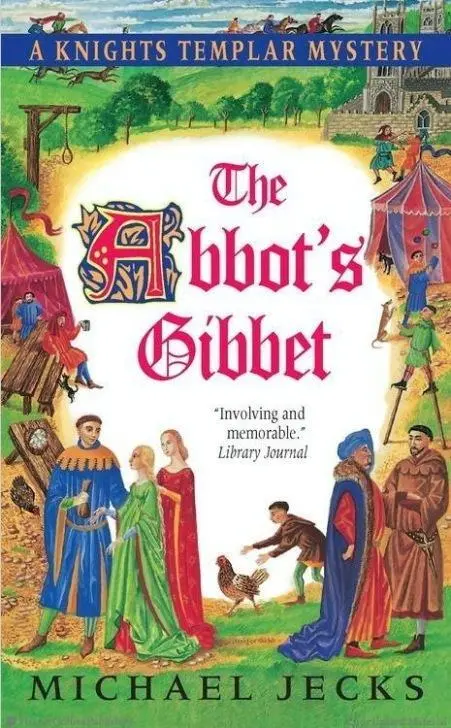
- Название:The Abbot's Gibbet
- Автор:
- Жанр:
- Год:1998
- ISBN:нет данных
- Рейтинг книги:3 / 5. Голосов: 1
-
Избранное:Добавить в избранное
- Отзывы:
-
Ваша оценка:
The Abbot's Gibbet: краткое содержание, описание и аннотация
Предлагаем к чтению аннотацию, описание, краткое содержание или предисловие (зависит от того, что написал сам автор книги «The Abbot's Gibbet»). Если вы не нашли необходимую информацию о книге — напишите в комментариях, мы постараемся отыскать её.
Former Knight Templar Sir Baldwin Furnshill, Keeper of the King's Peace, and Simon Puttock, bailiff of Lydford, have just arrived in Tavistock as guests of Abbot Robert Champeaux when the body is found. The crime falls within the Abbot's jurisdiction, and when he asks Simon and Baldwin to investigate, they can hardly refuse. But with an unidentifiable victim, they're badly hampered in their inquiries.
Nonetheless there's no shortage of suspicious behaviour to spur them on. Elias, the cook near whose shop the gruesome remains were found, clearly has something to hide. A surprisingly aggressive young monk has been behaving in an ungodly fashion. And the town is awash with strangers, any one of whom could be concealing a sinister past.
Can Simon and Baldwin unravel the complex web of intrigue that has brought death to Tavistock, as the undercurrents of anger and violence that lie beneath the bustling activity of the fair grow ever fiercer?
The Abbot's Gibbet — читать онлайн бесплатно полную книгу (весь текст) целиком
Ниже представлен текст книги, разбитый по страницам. Система сохранения места последней прочитанной страницы, позволяет с удобством читать онлайн бесплатно книгу «The Abbot's Gibbet», без необходимости каждый раз заново искать на чём Вы остановились. Поставьте закладку, и сможете в любой момент перейти на страницу, на которой закончили чтение.
Интервал:
Закладка:
“That is a good idea,” Baldwin said. He looked at the Abbot. “Could you arrange for us to do that?”
“I shall speak to Holcroft and tell him to have a watchman join you,” he said. “For now, don’t look so fretful! You can only do your best; and it’s difficult to see how you could be expected to resolve a murder when you don’t even know who the dead man was.”
Margaret saw Baldwin smile politely, but she knew him too well to believe that it was genuine. The knight disliked puzzles. He always wanted to find the truth in any situation, and she was convinced that he was irritated by the paucity of facts upon which he could build a case. She saw him open his mouth, but before he could speak there was a knock at the door. A monk opened it and stood back to let the visitors enter.
Peter was standing near the door, and when he looked up he saw the Venetians. Seeing them reminded him of the girl, and the memory brought the blood rushing to his face. He hardly heard the Abbot’s introductions.
“Ah, my friends, please meet Antonio da Cammino and his son Pietro, from Venice. They have been visiting the Bishop of Exeter, and came here to see the fair and discover whether they might be able to profit from it.”
As he went round the people in the room and introduced them all to the Italians, Margaret noticed that the youth made no attempt to display interest. He hardly bothered to meet the gaze of the men as he was introduced, and soon walked to the window, peering out with apparent petulance.
His father was plainly disconcerted at such rudeness, and threw a despairing glance at his son’s back. Margaret walked over to divert him. It would be inexcusable for the two to argue in the Abbot’s chamber. “Sir, have you just arrived?”
“No, I have been here for a day already.” She was surprised that he spoke perfect English, with only the faintest trace of an accent. He saw her confusion, and his face lightened. “You are surprised to hear me speak your tongue so well? I was born in this country. My father was a merchant and lived here for long periods while I was young. I learned English before I learned my own language.”
“And you come back to England often? Are you on business now?”
It was hard to place his age, she thought. His looks were timeless, with an easy poise that was entirely foreign. His eyes wrinkled with a charming, and flattering, appreciation. “Yes, I am here to discuss matters with the good Abbot.”
“But you will have some time for diversions?” she asked. “To visit the fair and see the things on sale?”
“Oh, yes! I have already been to the fair to see what kind of goods are offered. It is more varied here than many other fairs, especially in Venice.” His eyes left her and went to his son, who stood with his back to the people in the room, one arm resting on the wall by the window.
“And you, Pietro?” she asked as he turned to face the others.
“Me, signora? You ask about diversions? There is nothing I want in this town, save one thing,” he said quietly. “But I am not allowed that.”
“If all you can do is carp and moan, leave us and seek your own amusement! Do not insult the Abbot’s hospitality,” his father said coldly.
There was silence in the room as the two men eyed each other, the son pale, the older man with an angry gleam in his light gray eyes. The youth shook his head in a quick gesture of despair, and walked from the room.
The Abbot poured Antonio wine and waved him toward a seat, and the man gave an embarrassed shrug as he accepted it. “I must apologize for my son. I am sorry he was so ungracious, my lord Abbot.”
“The young are so often difficult to understand,” Champeaux observed.
While the men chatted, Margaret sat in a corner with Jeanne. The men’s conversation revolved around the business of the fair, and she was uninterested. Matters of finance, such as how many visitors were likely to come over the three days of the fair, how many horses would be sold and whether the King’s own cloth procurers would deign to arrive, were of supreme unimportance to her. For Margaret, the only interest in the market lay in seeing all the goods on display, and buying something for her daughter back at Lydford.
“Were you married to Sir Ralph for long?” she asked tentatively.
“For five years, I think.”
“You must have found the moors a strange sight after Bordeaux.”
“I did, although there was a memory of it for me. I was orphaned when I was young, and my uncle took me to live with him in Bordeaux, but before that I had lived not far from Tiverton to the north, so seeing Devon again was to see the land where I should have been living if my parents had not died. The only hardship was living so far from a town, but I soon became used to it.”
Margaret nodded. She could imagine that for a town-dweller the move to the wilds of Dartmoor would have been hard. “When I return to Lydford, you must come and visit us. It is hard for a widow when so few people live nearby. You will make new friends with those we know in Lydford.”
“That would be very kind of you,” Jeanne said, and her gaze fell upon Baldwin. When she glanced back at Margaret, her eyebrow was raised in a silent question, and Margaret had to stifle a giggle. She had no idea her plan was so transparent.
“Do you have any children?” she asked, and saw a shadow pass over her new friend’s face.
“No, none. It has been the regret of my life.”
“We only have the one. Our son died this year,” Margaret said softly.
This was the first time she had felt able to leave her daughter behind since her son, Peter, had died. When he had gone, she had almost suffered a brain fever, especially since she had felt as if she had also lost her husband. Simon had always been a model husband, but he felt the lack of a son very acutely. When Peter had been born, Simon was delighted, seeing in his boy a future companion who would carry on his name, and perhaps begin a dynasty that could become a noble family. The shock when their son had died had been all the greater.
She glanced at him. Simon was listening to the conversation and adding his own comments. The men were talking about tin now, and she could see that the Abbot was pleased with what he heard from his bailiff. Simon, she knew, was respected among the miners because he had shown himself to be shrewd and fair, upholding the rights of the tinners whenever he could, but punishing them when they tried to overstep the mark. Seeing the Abbot treating her husband’s remarks with such respect made her feel a glow of pride. Abbot Champeaux was an important man in Devon.
Baldwin, she could see, was still worrying at the problem of the murdered man. She wished they would return to discussing the killing; it was vastly more interesting than this talk of metal and wool. Her attention wandered to the anxious features of Antonio da Cammino. He was staring at the door through which his son had left, and looking at him, Margaret could feel a little of his pain. Margaret was a sensible woman, born and raised on a farm, and she had seen how young creatures could turn on their parents. Seeing Antonio’s expression made her remember that no matter how careful were the parents, their children could always prove to be a disappointment. Fleetingly she wondered how her dead son might have turned out.
Simon saw the sudden dullness in his wife’s eyes and quickly left the conversation, bringing the bottler to top up her wine.
While he spoke to Abbot Champeaux and Cammino, Baldwin noticed Margaret and Simon together. They looked happy with each other again, now that both had overcome their sadness. He could watch the affection between Simon and his wife with pleasure, but it sometimes reminded him of his own loneliness. Then he caught a measuring look from Jeanne.
Читать дальшеИнтервал:
Закладка:
Похожие книги на «The Abbot's Gibbet»
Представляем Вашему вниманию похожие книги на «The Abbot's Gibbet» списком для выбора. Мы отобрали схожую по названию и смыслу литературу в надежде предоставить читателям больше вариантов отыскать новые, интересные, ещё непрочитанные произведения.







Обсуждение, отзывы о книге «The Abbot's Gibbet» и просто собственные мнения читателей. Оставьте ваши комментарии, напишите, что Вы думаете о произведении, его смысле или главных героях. Укажите что конкретно понравилось, а что нет, и почему Вы так считаете.