D. Wilson - The First Horseman
Здесь есть возможность читать онлайн «D. Wilson - The First Horseman» весь текст электронной книги совершенно бесплатно (целиком полную версию без сокращений). В некоторых случаях можно слушать аудио, скачать через торрент в формате fb2 и присутствует краткое содержание. Год выпуска: 2013, ISBN: 2013, Издательство: Little, Brown Book Group, Жанр: Исторический детектив, на английском языке. Описание произведения, (предисловие) а так же отзывы посетителей доступны на портале библиотеки ЛибКат.
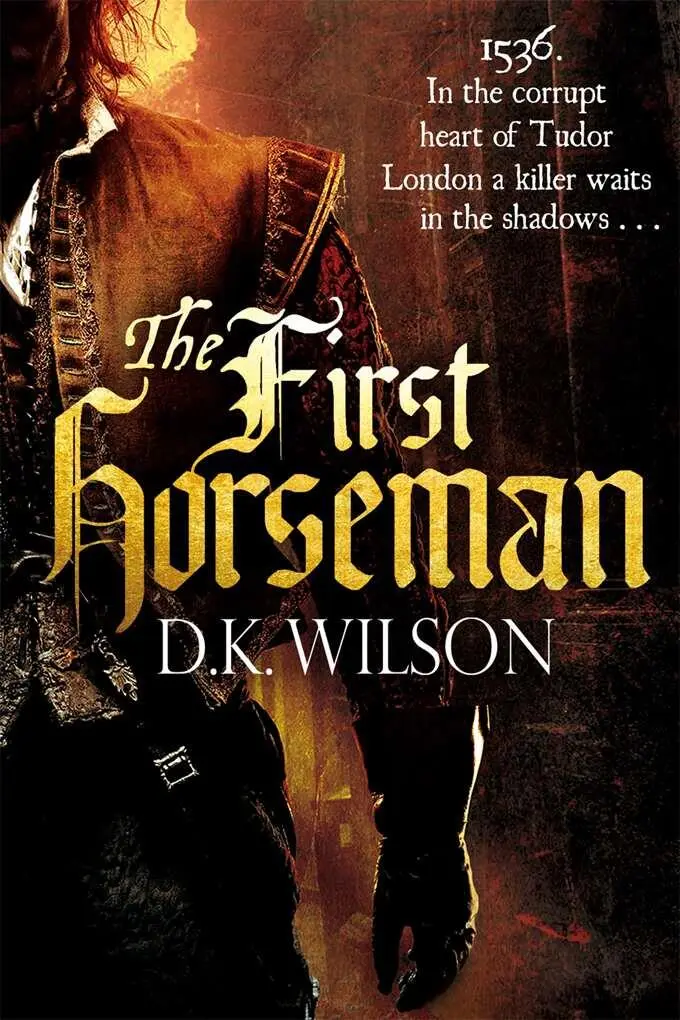
- Название:The First Horseman
- Автор:
- Издательство:Little, Brown Book Group
- Жанр:
- Год:2013
- ISBN:9781405518871
- Рейтинг книги:5 / 5. Голосов: 1
-
Избранное:Добавить в избранное
- Отзывы:
-
Ваша оценка:
The First Horseman: краткое содержание, описание и аннотация
Предлагаем к чтению аннотацию, описание, краткое содержание или предисловие (зависит от того, что написал сам автор книги «The First Horseman»). Если вы не нашли необходимую информацию о книге — напишите в комментариях, мы постараемся отыскать её.
The First Horseman — читать онлайн бесплатно полную книгу (весь текст) целиком
Ниже представлен текст книги, разбитый по страницам. Система сохранения места последней прочитанной страницы, позволяет с удобством читать онлайн бесплатно книгу «The First Horseman», без необходимости каждый раз заново искать на чём Вы остановились. Поставьте закладку, и сможете в любой момент перейти на страницу, на которой закончили чтение.
Интервал:
Закладка:
The preacher clutched the reading desk and for several moments gazed keenly round the congregation. Not a sound disturbed the expectant silence. When, at last, he spoke it was in a strong, deep, booming voice that brooked no contradiction. ‘The fifteenth of St John in the fine English of William Tyndale, which I would that you all did read:
“The servant is not greater than his lord. If they have persecuted me, so will they persecute you; if they have kept my saying, so will they keep yours. All these things will they do unto you for my name’s sake, because they have not known him who sent me. If I had not come and spoken unto them, they should not have had sin; but now have they nothing to cloak their sin withal. He that hates me hates my father.”
‘Christ here speaks to us of masters and servants and enemies and I would that we dwell briefly on each of these. What, then, do we know of masters? “Why”, you say, “they are even those that give us orders.” Aye, and so they do. Yet do they not also feed you, pay your wages, commend your diligence and chastise your indolence? Even so, does our heavenly Lord, for sure it is you never had nor can have a more just, a more generous or a more caring master…’
Barnes spent several minutes on this theme before moving on to his next heading.
‘But what said this good Lord, this best of all lords, about servants? “The servant is not greater than his lord.” You all know that to be true. What a topsy-turvy world that would be where servants tried to rule over their masters. Yet what do we see in our own land today? A rebel rabble in the North who would dictate to our sovereign lord the king the membership of his Council, the laws to be passed by his parliament, the ordering of worship in his church! Yet is there more to Christ’s words than this: “If they persecuted me, they will persecute you… If they kept my saying, they will keep yours.” The servant is identified with his master. He wears his livery. He is known for his lord’s man. He carries his lord’s messages. He defends his lord’s honour when others seek to besmirch his name. He goes to war in his lord’s army. Mayhap he will die for his lord… as has honest Master Packington. For why does his cadaver lie there?’ Barnes made a dramatic gesture towards the coffin. ‘For loyally serving his Lord Christ — even unto death. Be not deceived, good neighbours.’ Barnes paused again to glare at the congregation and it must have seemed to every person present that the preacher caught his eye, and his alone. ‘Be not deceived. Master Packington was slain for being good servant to his heavenly Master, for openly wearing Christ’s livery. For speaking Christ’s truth to all who would hear. And, even now, his spirit stands before his Lord to hear his gracious commendation, “Well done, good and faithful servant, enter into the joy of your Lord.”’
It was true, then. For all his outward respectability, Robert had been a member — and, seemingly, a prominent member — of this heretical underworld. My mind recoiled at the thought but could no longer reject it.
Barnes was now working up to his peroration. The words tumbled excitedly from his lips and were reinforced by dramatic gestures. ‘Thus we come to the third type of whom Christ spoke: his enemies. These are they, he says, who hate him and hate his Father. Why did men hate the good Christ? Who could possibly hate our good Lord? Hear again what he says: “If I had not spoken to them, they would not have had sin, but now have they nothing to cloak their sin withal.” Christ denounced the priests and Pharisees of ancient Jewry for what they were — hypocrites, blind guides, men who paraded their false piety before the world to win the praise of the common people.’ Barnes turned to gaze on the rows of clergy in their chancel pews. ‘These were his enemies; sinners who were struck to the quick by his words of truth. Scripture tells us “He knew what was in men’s hearts” and it was because Christ revealed to his enemies the truth about themselves that they tried to silence him.
‘What is the question on every Londoner’s lips in these days? Is it not, “Who has done this monstrous thing? Who has struck down our beloved Master Packington?” Well, I will give you now the answer: it is the enemies of Christ. The servant is not greater than his master. Robert Packington was proud to wear his Lord’s livery and it was his Lord’s sworn foes who set another to silence him. The Jewish leaders in Jerusalem would not soil their own hands with Christ’s blood; they had the Roman governor, Pontius Pilate, do their evil work for them. Our modern hypocrites, the Roman priests of London, who are enemies alike to Christ and to King Henry, paid a desperate villain to slay Christ’s servant, Robert Packington. So, my neighbours, as you pray for the soul of our dear brother departed, pray also that his enemies may be brought to justice. But pray, above all, that the true Gospel, for which Master Packington died a holy martyr, may be set forth among us with the blessing of our sovereign lord, the king, and to the confusion of Christ’s enemies.’
For several breathless moments the only sound to be heard in St Pancrate’s was the preacher’s footfalls as he descended from the pulpit. Then pandemonium broke out. Men cheered. Others shouted, ‘Shame!’ ‘Heretic!’ or ‘Lutheran!’ It was fully five minutes before sufficient order could be restored for the service to be concluded. After the coffin had been interred and we all spilled out on to the street, the congregation split into groups. Some stood in the narrow lane. Others made their way homeward. But all were talking excitedly about what they had heard.
Chapter 17
It was difficult to maintain the routine of the workshop in those days. The beaters often laid aside their tools to discuss the latest incidents in our divided city and I had to beat the furnace boy for neglecting his task and allowing the fire to grow too cold. People who came in through the door wanted to gossip rather than spend money. In truth, there were few customers to be had. The times were too uncertain for people to be thinking of buying plate or jewels. Some there were who came to sell precious items or raise money against them, so that they could conceal coin against a better time. Neither I nor my neighbours were much disposed to lend in such an atmosphere of uncertainty. The threat from the northern rebels seemed to have passed but the feeling of insecurity lingered. A common rumour persisted that the Emperor and the King of France were joining forces, at the pope’s behest, to invade the realm of England’s ‘heretic’ king. One could never be sure who might be thrown into jail for speaking against the doings of our sovereign lord; for expressing opinions that were either too Catholic or too radical. Panic was, in fact, led by the government. Orders went out from Cromwell’s office that every priest in the City was to be searched for ‘offensive weapons’. Any item so adjudged was to be confiscated, with the exception of ‘a knife for meat’. Citizens were abandoning their parish churches in favour of others where partisan preachers to their liking were to be found. Not that one had to listen to sermons to discover what the rival parties were advocating. The streets were awash with pamphlets and broadsides, printed or hand-copied, then passed surreptitiously from person to person or boldly nailed to doorposts at dead of night.
Saturday 18 November was the day appointed by the coroner for the inquest into Robert’s death. Along with other witnesses I took my reserved place in a crowded Mercers’ Hall. Punctual upon the appointed hour, Master Kernish entered with his clerk and called for silence. He swore in a twelve-man jury of solid citizens. It did not please me to see Simon Leyland of their number and I wondered whether we might expect some self-important intervention from him.
Читать дальшеИнтервал:
Закладка:
Похожие книги на «The First Horseman»
Представляем Вашему вниманию похожие книги на «The First Horseman» списком для выбора. Мы отобрали схожую по названию и смыслу литературу в надежде предоставить читателям больше вариантов отыскать новые, интересные, ещё непрочитанные произведения.









Обсуждение, отзывы о книге «The First Horseman» и просто собственные мнения читателей. Оставьте ваши комментарии, напишите, что Вы думаете о произведении, его смысле или главных героях. Укажите что конкретно понравилось, а что нет, и почему Вы так считаете.