Donald Westlake - What's The Worst That Could Happen?
Здесь есть возможность читать онлайн «Donald Westlake - What's The Worst That Could Happen?» весь текст электронной книги совершенно бесплатно (целиком полную версию без сокращений). В некоторых случаях можно слушать аудио, скачать через торрент в формате fb2 и присутствует краткое содержание. Год выпуска: 1996, Жанр: Иронический детектив, на английском языке. Описание произведения, (предисловие) а так же отзывы посетителей доступны на портале библиотеки ЛибКат.
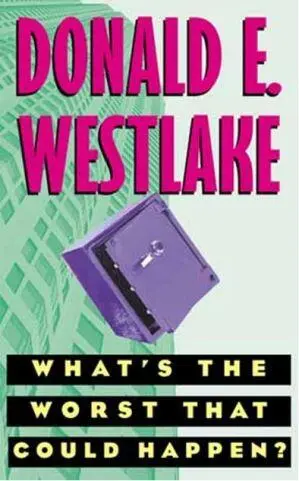
- Название:What's The Worst That Could Happen?
- Автор:
- Жанр:
- Год:1996
- ISBN:нет данных
- Рейтинг книги:5 / 5. Голосов: 1
-
Избранное:Добавить в избранное
- Отзывы:
-
Ваша оценка:
What's The Worst That Could Happen?: краткое содержание, описание и аннотация
Предлагаем к чтению аннотацию, описание, краткое содержание или предисловие (зависит от того, что написал сам автор книги «What's The Worst That Could Happen?»). Если вы не нашли необходимую информацию о книге — напишите в комментариях, мы постараемся отыскать её.
What's The Worst That Could Happen? — читать онлайн бесплатно полную книгу (весь текст) целиком
Ниже представлен текст книги, разбитый по страницам. Система сохранения места последней прочитанной страницы, позволяет с удобством читать онлайн бесплатно книгу «What's The Worst That Could Happen?», без необходимости каждый раз заново искать на чём Вы остановились. Поставьте закладку, и сможете в любой момент перейти на страницу, на которой закончили чтение.
Интервал:
Закладка:
“You’ll hardly know I’m here, my sweet.”
“Hardly.”
“Will we dine together, love?”
“Not tonight,” she said, to punish him. She knew he’d had a woman out there on the Island, she could feel it in her antennae; on the other hand, she didn’t really and truly want to know the miserable details, not for sure and certain, because then she would have to do something drastic, if only to satisfy her pride, as powerful and overweening as his. “I’m dining out tonight,” she announced. “With friends.” Then, relenting a bit, she said, “Tomorrow night we could have dinner, if you have any appetite after your meeting with the judge.”
“I know I’ll have an appetite then,” he said, and smiled his oh-so-roguish smile at her, adding, “Will I see you later tonight, my lotus blossom?”
She was about to refuse, just on general principles, but the gleam in his eye snagged her. He was, as she well knew, as rascally in bed as out, which was sometimes wearing but sometimes fun. “We’ll see,” she said, with half a smile, and permitted him to bite her earlobe before he scampered off and she returned to the servants, to inform them that they would be wanting the coral -colored napkins on the tables, as any fool could tell from the centerpieces, not the peach.
17
“I don’t think I like this much,” Dortmunder said.
“Why not?” Andy asked, and pointed at the bright color photo of the main reception room, with its working marble fountain and deep maroon plush sofas. “I think it’s snazzy.”
“I don’t mean the look of it,” Dortmunder said. “I mean the getting into it.”
“Oh, well,” Andy said. “Sure, that.”
Years ago, Dortmunder and his friends had discovered what a great help in their line of work the architectural magazines could be, with their glossy photos of rich people’s residences, room after room of what would or would not be worth the picking, plus blueprints of houses and gardens, plus visible in the backgrounds of many of the pictures this or that exterior door, with its hardware in plain sight.
The Max and Lutetia Fairbanks apartment in the new N-Joy had been given this treatment, of course, several months back, in one of the high-toned interiors magazines, and Andy had found a copy at a used-magazine store this afternoon and brought it over to Dortmunder’s place, where they sat with beers side by side on the sofa, the magazine open on the coffee table in front of them, turning back and forth over the six pages of photos and copy. And Dortmunder didn’t like what he saw. “The problem is,” he said, “time.”
“Not much lead time,” Andy said.
“You could say that.”
“I did say it.”
“He’s gonna be there tonight,” Dortmunder said, “and he’s gonna be there tomorrow night, and then he’s going down to somebody’s head.”
“Hilton Head, it’s an island down south.”
“An island down south I’m not even gonna think about. So it’s tonight or tomorrow night, if we’re gonna get him at home in New York, and it sure as hell isn’t gonna be tonight, so that leaves tomorrow night, and that isn’t very much lead time.”
“Like I said,” Andy pointed out.
“And first,” Dortmunder said, “there’s the question of how do you get in. A private elevator from inside the theater lobby that doesn’t go anywhere except to that one apartment, that’s how they get in.”
“And it has an operator,” Andy said, “a guy in a uniform inside the elevator there, that pushes the button. Suppose we could switch for the operator? Take his place?”
“Maybe. Not much time to set that up. What if we bought tickets and went into the theater? It doesn’t say here, but don’t you figure they’ve got some window or something, they can look out and see the stage, watch the show if they feel like it?”
“Well, the problem there is,” Andy said, “I went by the place this morning, and it’s got some musical playing there, and it’s sold out for the next seven months.”
“Sold out?” Dortmunder frowned. “What do you mean, sold out?”
“Like I said. It isn’t like going to the movies, John, it’s more like taking an airplane. You call up ahead of time and say this is when I wanna fly, and they sell you a ticket.”
“For seven months later? How do you know you’re gonna feel like going to some particular show seven months from now?”
“That’s the way they do it,” Andy said, and shrugged.
“So switch the elevator operator,” Dortmunder said. “Except the ushers and people in the theater probably know the real guy.”
“Probably.”
“Lemme think,” Dortmunder said, and Andy sat back to let him think, while Dortmunder read through the article in the magazine all over again, the round sentences about volumes of space, and tensions between the modern and the traditional, and bold strokes of color, all rolling past his eyes like truck traffic on an interstate. “Says here,” he said, after a while, “the apartment is serviced by the hotel staff. That’d be maids and like that, right?”
“Right,” Andy said.
“Hotel maids, with those big carts they have, clean sheets, toilet paper, soap, all that stuff, and the dirty laundry they take away. Are they gonna go down to the lobby with all that and take the elevator from there up to the apartment?”
“They’d look kind of funny,” Andy agreed, “pushing one of those hotel carts around a theater lobby.”
“And a hotel lobby,” Dortmunder said. “And the street, because the hotel and the theater are different entrances. So that’s not the way they do it, is it?”
“A service elevator,” Andy said.
“Has to be. An elevator down from somewhere in the hotel. Probably one of the regular service elevators, except the elevator shaft goes down those extra floors.”
“And it won’t have any operator,” Andy guessed. “The maids can push those buttons for themselves.”
Dortmunder at last reached for his beer, then quickly straightened it before much spilled. “We’ve got today and tomorrow,” he said. “When May comes home, we’ll pack some stuff and go check in at the hotel. I’ll have to go over to Stoon’s place and buy a credit card, something that’s good for a few days.”
“Once you’re in,” Andy said, “you give me a call and tell me what room you’re in.”
“And you come over late—”
“Around one in the morning, right?”
“And we toss the hotel.”
“And we find the elevator.”
“And I get my ring.”
“And a couple other little items along the way,” Andy said. Smiling at the photos in the magazine, he said, “You know, a fella could just take a truckload of that stuff there and go downtown to Bleecker Street somewhere and set up an antique shop.”
Dortmunder drank beer. “You do that,” he said. “And I get my ring.”
18
The concept of horizontal expansion in the corporate world is that the elements, if carefully chosen, will increase one another’s business and therefore profit. It was estimated that 23 percent of the guests registered at the N-Joy Broadway Hotel took in the show at the N-Joy Broadway Theater while they were in town, and that in fact 67 percent of those had chosen that particular hotel because they’d come to New York expressly to see that specific show. Conversely, 19 percent of non-hotel-guest theatergoers chose to dine in the hotel’s main dining room before or after seeing the show, a respectable number, but one which management thought could be increased. They had a good show, a good hotel, and a good restaurant; the combination had to be a winner.
Читать дальшеИнтервал:
Закладка:
Похожие книги на «What's The Worst That Could Happen?»
Представляем Вашему вниманию похожие книги на «What's The Worst That Could Happen?» списком для выбора. Мы отобрали схожую по названию и смыслу литературу в надежде предоставить читателям больше вариантов отыскать новые, интересные, ещё непрочитанные произведения.










Обсуждение, отзывы о книге «What's The Worst That Could Happen?» и просто собственные мнения читателей. Оставьте ваши комментарии, напишите, что Вы думаете о произведении, его смысле или главных героях. Укажите что конкретно понравилось, а что нет, и почему Вы так считаете.