Leslie Charteris - The Saint 49 Count On The Saint
Здесь есть возможность читать онлайн «Leslie Charteris - The Saint 49 Count On The Saint» весь текст электронной книги совершенно бесплатно (целиком полную версию без сокращений). В некоторых случаях можно слушать аудио, скачать через торрент в формате fb2 и присутствует краткое содержание. Город: New York, Год выпуска: 1980, ISBN: 1980, Издательство: Doubleday, Жанр: Детектив, на английском языке. Описание произведения, (предисловие) а так же отзывы посетителей доступны на портале библиотеки ЛибКат.
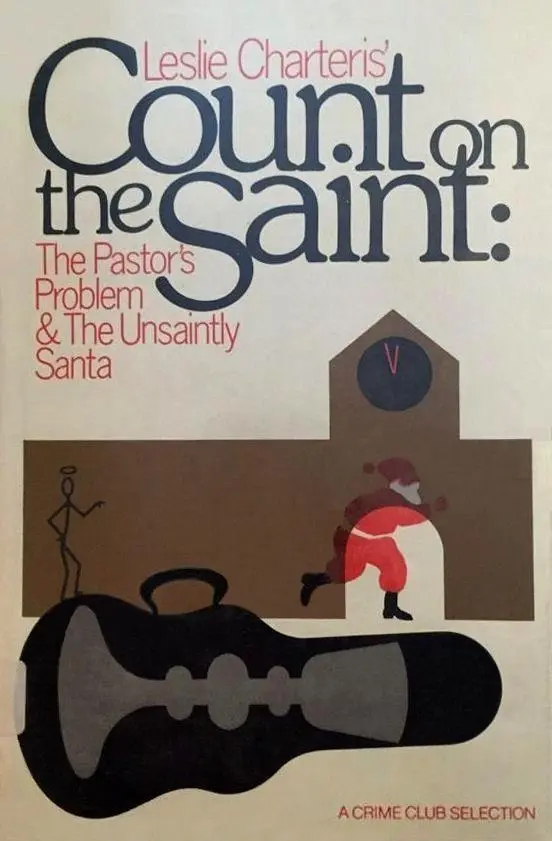
- Название:The Saint 49 Count On The Saint
- Автор:
- Издательство:Doubleday
- Жанр:
- Год:1980
- Город:New York
- ISBN:978-0-385-17191-5
- Рейтинг книги:5 / 5. Голосов: 1
-
Избранное:Добавить в избранное
- Отзывы:
-
Ваша оценка:
The Saint 49 Count On The Saint: краткое содержание, описание и аннотация
Предлагаем к чтению аннотацию, описание, краткое содержание или предисловие (зависит от того, что написал сам автор книги «The Saint 49 Count On The Saint»). Если вы не нашли необходимую информацию о книге — напишите в комментариях, мы постараемся отыскать её.
, Father Bernardo, pastor of St. Jude’s church, has a dilemma: the church owns a three-hundred-year-old jewel-encrusted silver chalice, bequeathed under the condition that it never be sold. But St. Jude’s is a desperately poor parish, and the money from the sale of the chalice would greatly relieve the plight of the parishioners. When The Saint comes up with an ingenious plan to steal the chalice and send Father Bernardo a “donation” for its assessed value,
appears solved — until someone steals the chalice from The Saint!
In
, our hero finds himself in Cambridge shortly before Christmas, when a string of murders involving St. Enoch’s College are committed by a homicidal maniac dressed in a Santa Claus suit. With Christmas Day fast approaching The Saint must prevent this
from delivering anymore deadly presents.
The Saint 49 Count On The Saint — читать онлайн бесплатно полную книгу (весь текст) целиком
Ниже представлен текст книги, разбитый по страницам. Система сохранения места последней прочитанной страницы, позволяет с удобством читать онлайн бесплатно книгу «The Saint 49 Count On The Saint», без необходимости каждый раз заново искать на чём Вы остановились. Поставьте закладку, и сможете в любой момент перейти на страницу, на которой закончили чтение.
Интервал:
Закладка:
“Most kind,” echoed Nyall.
“And Professor Rosco?” Simon asked.
“I’m afraid we could not locate him,” said Burridge.
“He hasn’t been in the college all morning,” added Nyall. “We left a message in his study in case he returned.”
If the Saint was disappointed at the non-appearance of the man he most wanted to meet he did not allow it to show.
“Perhaps he may come along later,” he said, and proceeded to introduce the two men to Chantek, whom Nyall admitted to knowing by sight but whom the dean could not recall at all, and then to administer to their liquid needs.
From that moment until most of the meal was consumed the Saint guided the conversation along paths that had nothing to do with the events that had brought them together. He was the perfect host, seeing to the requirements of his guests, listening and chatting and allowing them their silences. Once or twice he caught Chantek’s eye and smiled at her puzzled expression. She had expected some sort of interrogation, not a convivial get-together. But the Saint knew exactly what he was doing.
They talked about student grants, speculated on the likely repercussions of government cuts in the education budget, recalled places they had visited and people they had met, and gradually the atmosphere thawed until by the time the plates were pushed towards the centre of the table the gathering almost resembled that of old friends.
The process was helped by the standard of the cuisine, which was better than the Saint had hoped, and the quality of the wines, which were everything he expected. The fact that Darslow swallowed the vintage Lafite as if it were lager and threatened at any moment to slide from view added to rather than subtracted from the relaxed mood around the table.
Finally, when the cheeseboard was in place and the port circulated, he brought the conversation adroitly around to the subjects that most interested him. He had casually enquired about the process of appointing a new Master for the college, and the dean had explained about the make-up of the committee that would make the decision.
“I expect we shall convene in the New Year,” said Bur-ridge. “It would not do to go too long without a Master.”
“But surely it’s merely an honorary post,” said the Saint. “The college can function from day to day whether there is a Master or not.”
Burridge shook his head and smiled thinly as he leant his elbows on the table and placed his fingertips together in a mannerism Simon had noticed him employ several times during the course of the lunch whenever he wished to emphasise a point.
“To be the Master of St. Enoch’s is an honour of course, but though in some colleges the Master might be just a figurehead, this is not the case at St. Enoch’s,” the dean explained. “The tradition here is that the Master has almost total executive control. It comes down to us from the time when the places of learning were controlled by monks who would unquestionably obey their abbot.”
“You mean that once appointed he can do anything he likes?” Simon asked in mild surprise.
Nyall answered: “Almost, yes. But of course there are limits, even if they are broad ones.”
“Supposing a Master wanted to do something which the other fellows objected to,” suggested the Saint. “Could you get it thrown out or would you have to like it or lump it?”
“Usually a compromise is reached,” Burridge said. “If the Master had all the staff against him, the difficulties that would be put in his way would be such that it is doubtful if he could carry on in the face of their opposition.”
“But if some were for and some against, it would be possible, I suppose,” said the Saint.
“I suppose it would,” Burridge agreed. “But the situation is hardly likely to arise.”
Simon studied the dean’s face as he pursued his questioning and was conscious of the man’s strength. Not in the physical sense, though his frame was wiry enough to make him powerful above the average, but rather his force of will. He might speak slowly and pedantically but the words were underscored by an inner strength and always there was the hint of a fire behind the eyes and a tension in the long-fingered hands which belied his outward calm.
“Last night you mentioned that you objected to some of Sir Basil’s plans for the future of the college,” Simon reminded him. “Couldn’t those plans have led to just such a situation?”
“That question is now, alas, academic,” put in Nyall, but the Saint ignored him and continued to concentrate his attention on the dean.
“But couldn’t they?” he repeated.
“It is possible,” Burridge admitted.
“You didn’t like Sir Basil, did you, Dr. Burridge?”
Simon’s tone was even and the very directness of the question robbed it of offence.
The dean returned the Saint’s stare and for several seconds the two men appraised each other in a silence that grew steadily more tense.
“I had nothing against him personally,” said Burridge at last, and there was a new and harsher edge to his voice. “But I most certainly did not like what he was planning to do to St. Enoch’s.”
Burridge paused and the others round the table waited for him to continue. When he did so the even tenor of his speech was quickly shaken and then broke completely, and what began as an explanation rapidly turned into an impassioned diatribe.
“I have seen his like too many times before. I have seen what they’ve done to other colleges. I didn’t want him here but I was overruled. I feared for the future of St. Enoch’s. Sir Basil and his so-called progressive ideas would have been the ruin of the college, as has happened elsewhere. Once the colleges of Cambridge and Oxford were seats of learning, of intellectual debate and reasoning. We produced scholars of the arts, great philosophers, statesmen, men who shaped and expanded the culture of the world. But not now. Once knowledge was the goal; not now. Now all that matters is the degree, a slip of parchment, a ticket to halfway up the executive ladder. Instead of scholars we produce salesmen. Instead of broadening minds we are narrowing them, channelling them for a specific use, turning out fuel for the furnaces of commerce and industry, all in the hallowed name of progress. Progress to what? That’s a question Sir Basil and his like never stop to consider. Bigger. Better. Newer. That’s all they worry about. Well, it may be all very well for the modern universities to follow the trend. But not Cambridge. That was not why we were founded, that is not why we have survived, and that is not how we are going to continue to survive.”
Throughout his speech the Saint had never taken his eyes off the dean and had felt the heat of the fire that flared in the man’s eyes and the force of emotion behind the unconscious clenching and unclenching of his hands. The silence that followed his tirade was as brittle as glass; even the waiters clearing away the bar had stopped to listen.
Only one man seemed unaffected, and it was he who shattered the quiet. Edwin Darslow giggled.
“Hear, hear,” he chuckled. “Quite right. Don’t want to get a name for turning out economists and people like that, do we? Eh, Nyall?”
The Saint looked quizzically at the bursar, who coloured slightly beneath his gaze.
“I think Professor Darslow has over enjoyed your hospitality, Mr. Templar,” Nyall remarked acidly. “The fact that I have a degree in economics has always been a strange source of amusement to the professor.”
“Always telling other people what to do with their money, but never doing it themselves,” retorted Darslow. “Like racing tipsters. If they were any good they’d back the horses themselves, not tell other people about them.”
Читать дальшеИнтервал:
Закладка:
Похожие книги на «The Saint 49 Count On The Saint»
Представляем Вашему вниманию похожие книги на «The Saint 49 Count On The Saint» списком для выбора. Мы отобрали схожую по названию и смыслу литературу в надежде предоставить читателям больше вариантов отыскать новые, интересные, ещё непрочитанные произведения.




Обсуждение, отзывы о книге «The Saint 49 Count On The Saint» и просто собственные мнения читателей. Оставьте ваши комментарии, напишите, что Вы думаете о произведении, его смысле или главных героях. Укажите что конкретно понравилось, а что нет, и почему Вы так считаете.