Cath Staincliffe - Split Second
Здесь есть возможность читать онлайн «Cath Staincliffe - Split Second» весь текст электронной книги совершенно бесплатно (целиком полную версию без сокращений). В некоторых случаях можно слушать аудио, скачать через торрент в формате fb2 и присутствует краткое содержание. Жанр: Детектив, на английском языке. Описание произведения, (предисловие) а так же отзывы посетителей доступны на портале библиотеки ЛибКат.
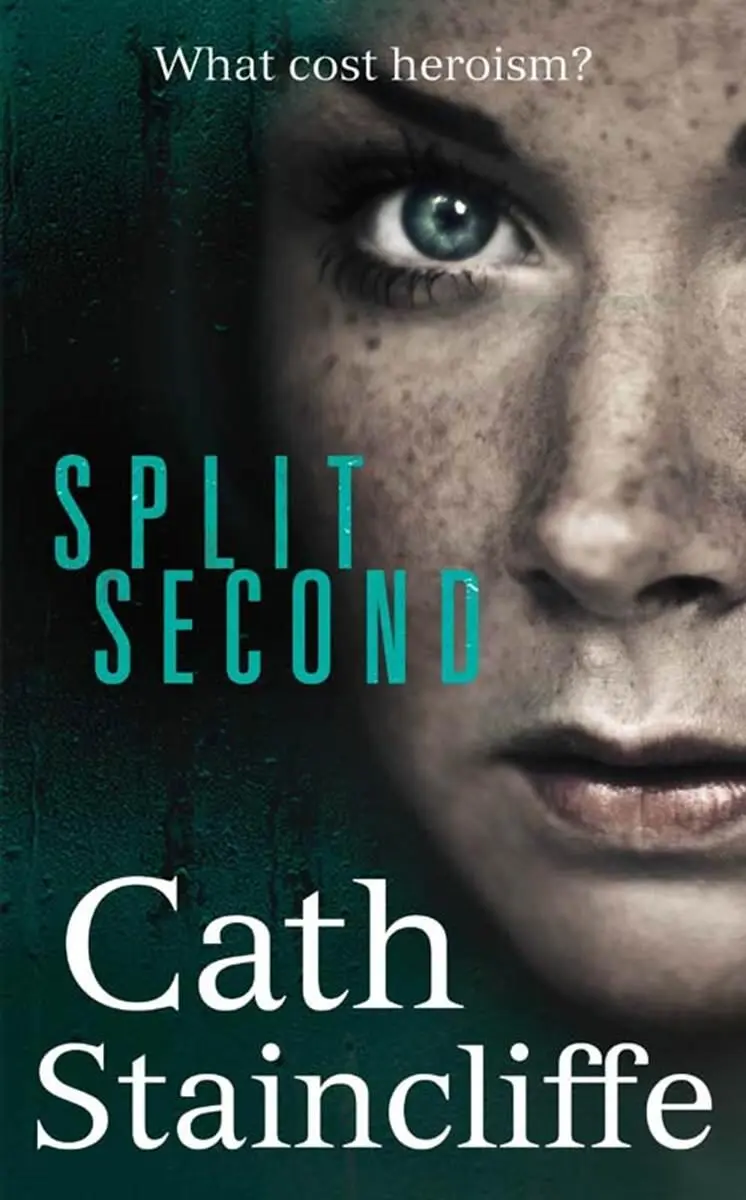
- Название:Split Second
- Автор:
- Жанр:
- Год:неизвестен
- ISBN:нет данных
- Рейтинг книги:4 / 5. Голосов: 1
-
Избранное:Добавить в избранное
- Отзывы:
-
Ваша оценка:
Split Second: краткое содержание, описание и аннотация
Предлагаем к чтению аннотацию, описание, краткое содержание или предисловие (зависит от того, что написал сам автор книги «Split Second»). Если вы не нашли необходимую информацию о книге — напишите в комментариях, мы постараемся отыскать её.
Split Second — читать онлайн бесплатно полную книгу (весь текст) целиком
Ниже представлен текст книги, разбитый по страницам. Система сохранения места последней прочитанной страницы, позволяет с удобством читать онлайн бесплатно книгу «Split Second», без необходимости каждый раз заново искать на чём Вы остановились. Поставьте закладку, и сможете в любой момент перейти на страницу, на которой закончили чтение.
Интервал:
Закладка:
The judge summed up after the break. He told the jury they must decide whether the prosecution had proved that the defendants were guilty as charged. Any uncertainty and a guilty charge could not be agreed. He began to define the laws of murder, and Emma’s concentration drifted. She made her way out of the court as quietly as she could. Thomas Garrington’s mother gave her an acid look, quick so that no one else could see, and Emma felt sick inside. She couldn’t stop thinking about what Luke’s mother had said: ‘It’s what you do now that matters.’
She thought of her life, her job, Laura and the Kims, her flat – less lonely since the holiday. She had the girls round for nights now and again. She thought of the bingeing and the cutting. Her mum and dad. Luke’s mum was right. She had been brave, but that was like penance really. Most of the time she wasn’t brave and she wasn’t happy and it just went on and on. She let it go on and on. Like she was stuck on a travelator going nowhere. Or a luggage carousel, the last bag that no one claimed, going round and round for ever. And she was sick of it all.
Andrew
When they failed to reach agreement in the couple of hours left at the end of the afternoon, the jury was sent home for the night. Andrew’s parents had invited him and Val to eat with them that evening. Colin and Izzie would be there, and the kids.
Andrew was ready to leave; he called up to Val, ‘We should go.’
She came to the top of the stairs. ‘My head’s killing me. I’m going to go to bed.’
‘Do you want me to stay?’ he said.
‘No, I’m going to try and sleep.’
‘Val, if this is about Louise Murray, I’m so sorry…’ He began to climb the stairs.
‘It’s not,’ she said.
‘What then?’
‘I told you, I’ve got a headache.’
He reached the top step, leant against the railing on the landing. ‘No. You’re still freezing me out. I want to help. Tell me what’s going on.’
‘I can’t do this now, Andrew. I can’t even think about it. Not while twelve people out there are deciding on the verdict. I haven’t got space in my head.’ She looked harrowed, her eyes burning. ‘That’s all I can cope with at the moment.’
‘Okay.’ He understood. ‘But afterwards.’ He looked at her. ‘I love you,’ he said. ‘You know, everybody said you were amazing on the stand. I wish I could have seen you. And they’ll remember that, the jury.’
‘You weren’t so bad yourself.’ She choked off a little sob.
He put his palm against her cheek. ‘We’ll be all right,’ he told her. ‘It’s nearly over.’ He gave her a hug.
‘Tell them I’m sorry,’ she whispered. ‘I really just need to lie down.’
‘Okay.’
They drew apart and he went back downstairs. He accepted that all the energy she had was focused on the outcome of the trial. Once they’d got beyond that, then there’d be a chance to pick up the pieces. To work out how they could salvage their relationship. He wanted her back. He would listen to what she needed, and do all he could to make things right between them. She was weakened by the depression and it had felt like she was holding out on him deliberately, being cold and unresponsive, pushing him away almost as if she was forcing him to give up on her. Well, he wouldn’t. He wouldn’t throw away twenty-five years. He would be stronger than that, strong enough for both of them if necessary. And his resolution would give them firm ground on which to build their future.
His mother had made a chicken casserole and creamy mashed potatoes. Comfort food, he thought. They were all eager to discuss the court case, the minutiae of replies and rejoinders. The manoeuvrings of the defence. Speculating on who had been lying, who they believed. The spirited debate was a complete contrast to the absence of interaction in his own house. We’re living in a mausoleum, he thought, buried alive with our dead son.
He told them what he thought of doing if they lost the case, and they all agreed to back him. Colin said he’d need legal advice about whether they had grounds to bring a civil suit.
‘I can ask Mr Sweeney,’ said Andrew.
‘You won’t need to,’ his mother said, setting down a cut-glass bowl of fruit salad in the middle of the table. ‘Any fool could tell they were guilty as sin.’
‘But they can only convict on the evidence,’ Andrew pointed out. ‘Gut feelings, instinct – they don’t count.’
‘The evidence is there,’ Izzie insisted. ‘The girl on the bus for a start.’ The chatter went on, and Andrew thought back to the haze of days after it had happened, to the numbness that had enveloped him. The way he had felt there was a veil between himself and the rest of them.
On his way out, his mother contrived to catch him on his own. ‘You and Val are having problems?’
‘Colin been shooting his mouth off, has he?’ He felt a scratch of irritation.
‘I have eyes in my head, Andrew,’ she said wryly.
‘I have tried to help. It’s tough. And please don’t quote “in sickness and in health” at me.’
‘She’s still off work?’
‘Yes.’ He pulled his coat on, grabbed his scarf from the hook on the wall.
‘Does she still see her friends?’
‘Yes, not as much, but yes.’ He paused, collecting his thoughts. ‘I know losing Jason, the strain, something’s bound to give, but I don’t want to lose her too.’ His eyes ached.
If he lost Val, he would lose so much more. The joint experiences they had shared, not just with Jason, but everything that had come before: the lost babies, the hardware store, burying her parents, her brother’s sudden departure for a monastic life. And their marriage: how they’d discovered each other’s charms and irritants, the way they had grown together, the intimacies no one else had knowledge of. And their love: the way his heart used to leap at the sight of her, his senses quicken at her scent. Then at last the wonder of parenthood: the ins and outs of vaccinations, parents’ evening, holidays, as well as all the little domestic rituals the three of them developed, the familiarities, like bedtimes spent checking the room for moths. Learning Jason’s foibles: the way he got carsick, his inability to sit through a meal without knocking something over, the sound of him singing, his voice fluting like clear water. And always Jason, at the centre, the sun they orbited.
His mother moved to hug him. ‘We’re here,’ she said, ‘always.’
‘I know,’ he said. Moved by her understanding. Grateful to her for not coming out with advice or platitudes.
It was late, but Andrew wasn’t ready to go straight home. He rang Louise. ‘You okay?’
‘Not really,’ she said.
‘Fancy some company?’
‘I don’t think so – Ruby’s here. It’s not a great time.’
‘Of course, another day then.’ He was disappointed.
‘Yeah, thanks for ringing. Andrew?’ she said quickly, before he could finish the call. ‘It’s going to be okay.’
He assumed she meant the verdicts. ‘You think?’
‘I do. We just have to wait.’
CHAPTER TWENTY
Andrew
The call came late on the second day of deliberations. Val answered it; something quickened in her eyes and he knew.
‘The jury’s back,’ she said.
He held his hand out for the phone. ‘I’ll ring the others.’
‘Andrew.’ It was a plea. He saw the fear lancing through her eyes, her face blanched white.
‘Oh Val.’ He reached her, held her.
‘I can’t bear it.’ She was weeping. He could feel the bones in her shoulders, the span of her ribs. She was skeletal.
‘I know,’ he murmured. ‘I know. We’ll go together, we’ll be together.’ And he heard the prayer in his words.
Читать дальшеИнтервал:
Закладка:
Похожие книги на «Split Second»
Представляем Вашему вниманию похожие книги на «Split Second» списком для выбора. Мы отобрали схожую по названию и смыслу литературу в надежде предоставить читателям больше вариантов отыскать новые, интересные, ещё непрочитанные произведения.



Обсуждение, отзывы о книге «Split Second» и просто собственные мнения читателей. Оставьте ваши комментарии, напишите, что Вы думаете о произведении, его смысле или главных героях. Укажите что конкретно понравилось, а что нет, и почему Вы так считаете.