Cath Staincliffe - Split Second
Здесь есть возможность читать онлайн «Cath Staincliffe - Split Second» весь текст электронной книги совершенно бесплатно (целиком полную версию без сокращений). В некоторых случаях можно слушать аудио, скачать через торрент в формате fb2 и присутствует краткое содержание. Жанр: Детектив, на английском языке. Описание произведения, (предисловие) а так же отзывы посетителей доступны на портале библиотеки ЛибКат.
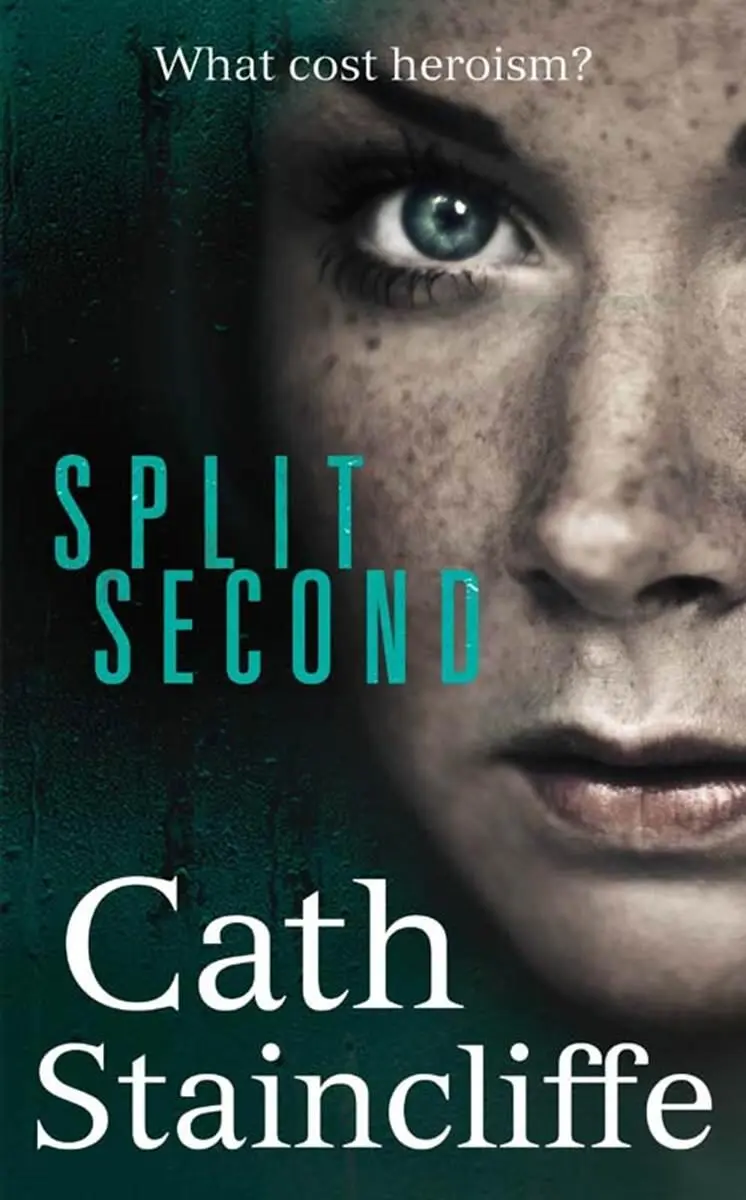
- Название:Split Second
- Автор:
- Жанр:
- Год:неизвестен
- ISBN:нет данных
- Рейтинг книги:4 / 5. Голосов: 1
-
Избранное:Добавить в избранное
- Отзывы:
-
Ваша оценка:
Split Second: краткое содержание, описание и аннотация
Предлагаем к чтению аннотацию, описание, краткое содержание или предисловие (зависит от того, что написал сам автор книги «Split Second»). Если вы не нашли необходимую информацию о книге — напишите в комментариях, мы постараемся отыскать её.
Split Second — читать онлайн бесплатно полную книгу (весь текст) целиком
Ниже представлен текст книги, разбитый по страницам. Система сохранения места последней прочитанной страницы, позволяет с удобством читать онлайн бесплатно книгу «Split Second», без необходимости каждый раз заново искать на чём Вы остановились. Поставьте закладку, и сможете в любой момент перейти на страницу, на которой закончили чтение.
Интервал:
Закладка:
‘I want you to leave.’ Punishing him.
‘Oh, for Chrissakes, Val.’
‘I mean it.’
‘Well I’m not going anywhere. This is our house, I’m not leaving. You’re too distressed to make any sensible-’
‘Don’t tell me how I feel!’ she snarled at him.
‘I’m not leaving you. I’m not going anywhere. We have the court case to get through; when that’s over we can talk. But nothing happens till then.’
‘You can sleep in the spare room.’
He groaned. ‘This…’ He was overcome, took a breath. ‘We are both devastated.’
‘Really?’ she said sarcastically. ‘I can’t think why.’
He didn’t know how to reach her, felt unmoored, caught in the slipstream of her bitter grief. ‘We can’t decide anything in this chaos… I haven’t done anything wrong, Val.’
‘You have no idea,’ she said. And she turned and went past him and up the stairs.
Andrew sat outside, cradling a Scotch, taking solace from the peace in the garden, the scents of the night. Watching the moths around the wall lamp (they would have given Jason the heebie-jeebies) and the bat, still patrolling hither and thither, swift and silent in its tumbling flight.
He was tempted to call Louise, but imagined she’d be less than pleased to hear him moaning about Val: all those dreaded clichés, my wife doesn’t understand me, our marriage is all but over. And he didn’t want to sully their friendship with the mess of his marriage.
Was it over? Him and Val? He tried to see the future, a version where they stayed together and came through it, then an alternative one where they separated, and neither felt real.
Perhaps losing Jason was too much for them. He had been the heart of their relationship, and without him there simply wasn’t enough to sustain them.
I’m forty-eight, thought Andrew. I could have another forty years. And the prospect frightened him.
CHAPTER FIFTEEN
Louise
The court was almost full. Louise and Ruby were close to the aisle on the front row of the public gallery. Below them was the dock where Thomas Garrington and his accomplice (co-defendant, as all the lawyers put it) Nicola Healy sat. They had identified her in court but the reporters and everyone else were still instructed not to publish or broadcast her name because of her age. If she was found innocent, her anonymity would be preserved.
Beyond the dock, lower down in the court, were the lawyers, the clerks and court recorder, the jury to the left, the witness box to the right and more places for the press and members of the public. The press benches were crammed with reporters. She wondered if the hacks who had savaged Luke’s reputation were among them.
Louise felt tense; her mouth kept filling with saliva as if she was going to be sick. She had been told that the opening address by the prosecution would be followed by a showing of the CCTV tape from the bus. She knew what the tape depicted and she would not stay to watch. The thought of seeing Luke abused, vilified and assaulted, of seeing those last few moments before they had chased him off the bus, on him like a pack of hyenas, was more than she could stomach. Pain studded her heart, the chill of sorrow spread over her skin. And she did not want to let those images into her head, or Ruby’s. She did not want Luke’s fear to stick, frozen and pixelated in her mind, corroding other memories, other pictures.
As the prosecutor, Mr Sweeney, drew his address to a close, Louise got ready to move.
‘And in this courtroom, ladies and gentlemen, we will prove to you beyond any doubt that Thomas Garrington and Nicola Healy attacked Luke Murray with intent to murder, and when Jason Barnes attempted to intervene and stop the attack, he was dealt a fatal wound with a knife wielded by Thomas Garrington. Listen carefully to the witnesses we will bring, consider the evidence and then deliver a verdict as you see fit. Your Honour, we would now like to show the jury CCTV footage taken on the bus.’
Louise nodded her head to Ruby, and the two of them walked up and out of the door at the back of the public gallery. The usher there said she would tell them when that evidence had been dealt with.
The waiting area outside the courtroom ran the width of the building, a long marble-floored hallway with full-length windows that looked out on to Crown Square. There were little clots of people here and there waiting to enter or leave the various trials.
Louise hadn’t seen Andrew here yet. He had told her he was a witness and would only be able to sit in court once he had given his testimony. The same with his wife. Louise guessed some of the people in the public gallery were other members of the Barnes family, and some would be the parents of Conrad Quinn and Nicola Healy and Thomas Garrington.
The lad looked nothing like she had imagined him, nothing like the glimpse she’d seen on Declan’s phone camera. Here, he just looked like a kid who had messed up and was out of his depth. Nothing in his appearance or his demeanour screamed racist or killer. And the girl, skinny as a rake, biting her nails, looked scared to death.
Even as she thought this, there was a well of hatred in her for what they had done. What they had taken. Louise had made an impact statement, which would be taken into account if they were convicted and would affect sentencing. How could you put it into words? It was like something physical, something pulled from your guts, sucked from the marrow of your bones. Shards lodged in your heart. Like losing sight or hearing, like the light going dim and the future reduced to a feat of endurance.
Down the hall, a young man in a tracksuit was crying, wiping at his face with the heel of his hand. An older man beside him patted him on the back, talking quietly.
Out of the window, Louise saw a child, four or so, run after a balloon that skittered along the ground then bounced and rose in the breeze. Louise’s mother used to do a number with balloons, she suddenly remembered, but couldn’t recall the song she sang. The balloons were swirly metallic colours. She had given Louise one and Louise had tied it up next to her wardrobe. They’d used it for a game of keepsie-upsie. Was it Christmas time?
‘Mum.’ Ruby nudged her. The usher had come out of the court. It was time to go back in. Louise fought the ripple of apprehension, the urge to turn and go the other way, ignored the roiling in her stomach and followed her daughter.
Emma
The woman said, ‘It’s time now,’ and Emma felt the ground tilt and her vision darken.
‘You’ll be fine,’ said Laura.
Emma tried to smile but her face was beyond her control.
Laura gave her a quick hug. ‘Good luck. I’ll be watching.’
Laura had found her sobbing in the toilets at work a fortnight ago, almost gibbering with terror at the prospect of appearing in court. She had got another letter telling her when to come to court, and a phone call offering her a visit in advance to have a look round. She hadn’t slept. Her leg hurt.
‘You can bring a friend,’ Laura told her, after she had stopped crying. Laura was looking at the leaflet that had come with the letter. ‘I’ll come.’
‘Will you?’
‘Yeah, course,’ Laura said.
‘What if I say the wrong thing?’
‘You won’t. Just tell them what you saw, that’s all. Stick to your guns.’
Now Emma followed the usher into the court and took her place in the witness box. She swore on the Bible to tell the truth. The judge told her to speak up. She felt inadequate already.
Out of the corner of her eye she saw Laura take a seat in the public gallery. There they were, the two defendants, in the dock. Emma looked away, but she had already noticed that he wore a suit and shirt and tie and the girl next to him wore a plain dark dress. He looked tired, the big eyes duller than Emma remembered.
Читать дальшеИнтервал:
Закладка:
Похожие книги на «Split Second»
Представляем Вашему вниманию похожие книги на «Split Second» списком для выбора. Мы отобрали схожую по названию и смыслу литературу в надежде предоставить читателям больше вариантов отыскать новые, интересные, ещё непрочитанные произведения.

Обсуждение, отзывы о книге «Split Second» и просто собственные мнения читателей. Оставьте ваши комментарии, напишите, что Вы думаете о произведении, его смысле или главных героях. Укажите что конкретно понравилось, а что нет, и почему Вы так считаете.